3 Stones You Will Never Regret Choosing—and Why Designers Love Travertine
Calacatta Monet brings layered colour, Calacatta Viola delivers timeless burgundy contrast, and Travertine offers a tactile surface unlike conventional marble.
Public price snapshot
Recent starting references for comparable raw slabs
| Market | Public price | What it covers |
|---|---|---|
| Calacatta Monet Marble | About US$1,000/m² (US$92.90/ft²) locally vs from US$440/m² (US$40.88/ft²) through China | Raw-slab material reference only. Colour range, background clarity, pattern scale, repairs, dimensions, finish, usable yield, logistics, fabrication, and installation affect the final quote. |
| Calacatta Viola Marble | About US$1,400/m² (US$130.06/ft²) locally vs from US$600/m² (US$55.74/ft²) through China | Raw-slab material reference only. Origin, creamy background, burgundy colour, bundle matching, repairs, dimensions, finish, usable yield, logistics, and fabrication affect the final price. |
| Travertine | About US$400/m² (US$37.16/ft²) locally vs from US$200/m² (US$18.58/ft²) through China | Raw-slab material reference only. Colour, cut direction, pore structure, filled or unfilled finish, slab dimensions, treatment, usable yield, logistics, and fabrication affect the final quote. |
Three materials that create colour, contrast, and texture
Calacatta Monet, Calacatta Viola, and Travertine are all expressive natural materials, but they do not create the same type of luxury. Monet is layered and varied, Viola is graphic and recognisable, and Travertine relies on texture, pores, and quiet geological bands.
Natural stone names describe a family rather than a guaranteed appearance. Approve current full-slab photographs, close-ups, dimensions, finish samples, repair information, and a labelled cutting layout before production.
1. Calacatta Monet: a richer and more varied composition
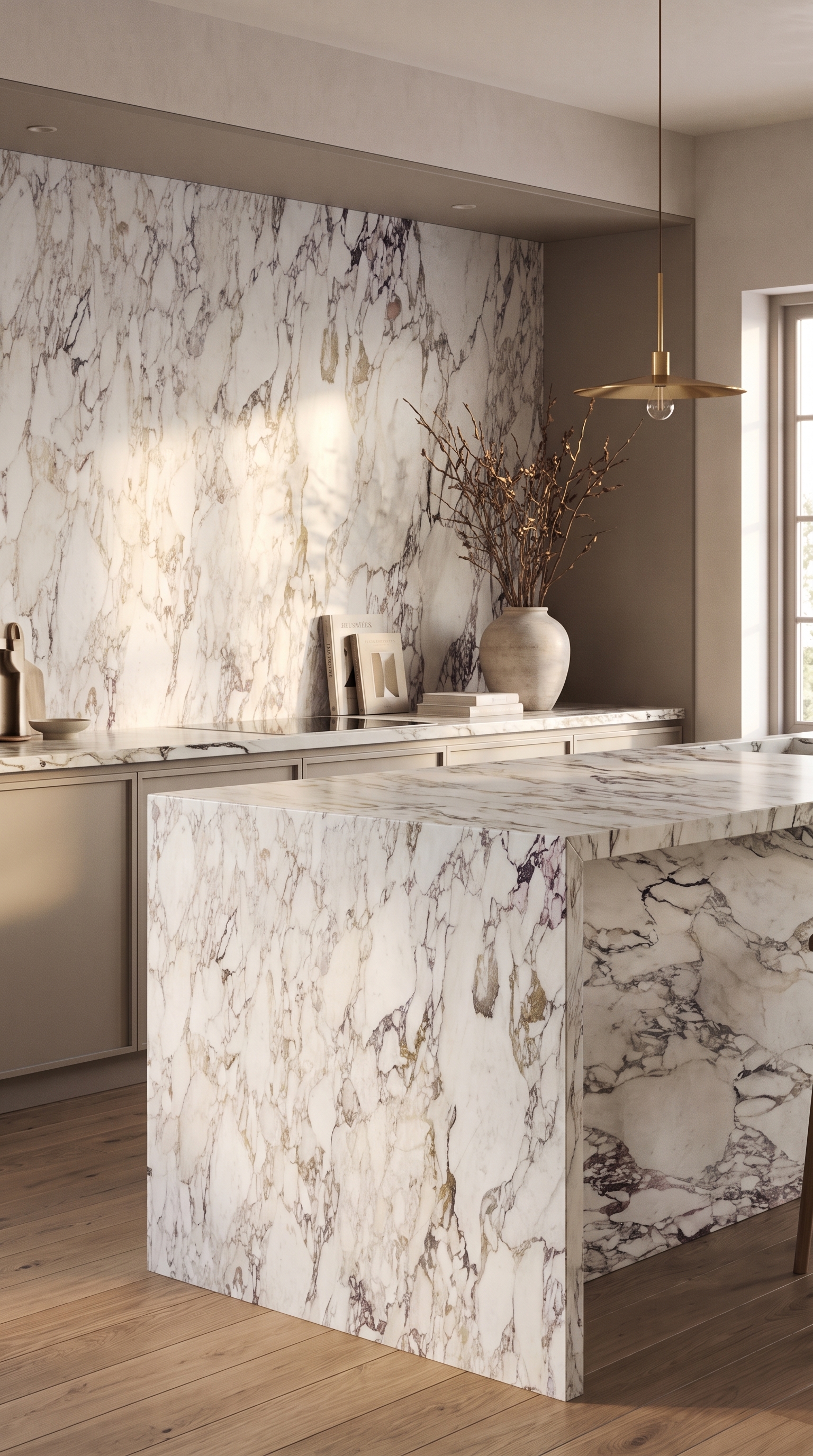
Calacatta Monet normally begins with a creamy white background, but individual slabs can contain burgundy, plum, gold, green-grey, and charcoal movement. Compared with the more recognisable cream-and-burgundy look of Calacatta Viola, Monet often feels more layered and unpredictable.
That variation makes it especially effective on large islands, feature walls, fireplaces, and vanities where the full composition can be seen. The strongest colours should be positioned deliberately rather than divided into unrelated small cuts.
A recent local reference may be around US$1,000 per square metre (US$92.90 per square foot), while sourcing through China starts around US$440 per square metre (US$40.88 per square foot).
2. Calacatta Viola: the unmistakable classic
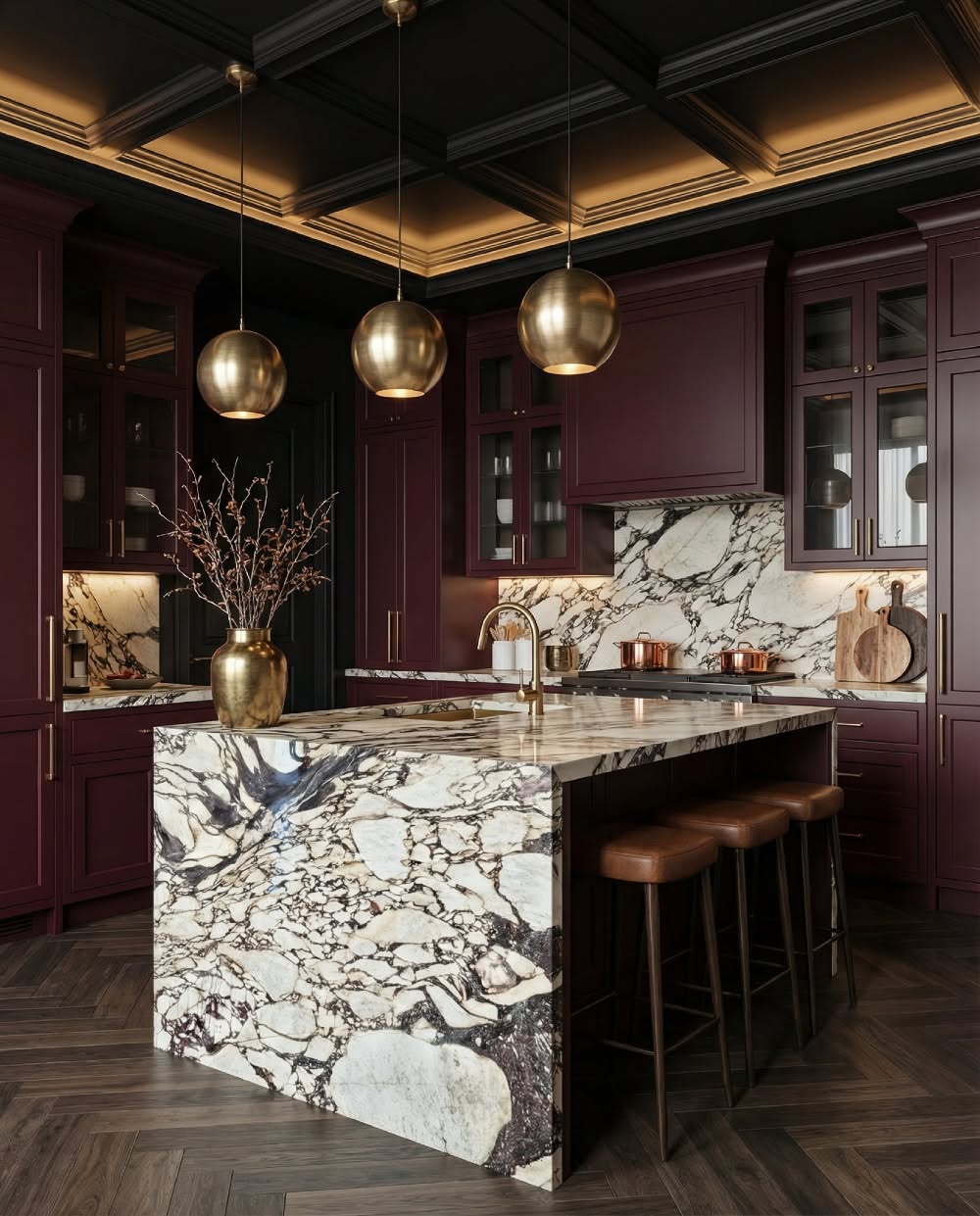
Calacatta Viola combines a creamy field with bold burgundy, plum, and violet movement. It works in modern, classical, and old-world interiors because the palette feels historic while the broken pattern can look highly contemporary.
It is marble, so acidic foods and cleaners can etch the surface, and scratches or patina may develop in a heavily used kitchen. Many owners still select it because few materials create the same warmth and visual identity.
A recent local reference may be around US$1,400 per square metre (US$130.06 per square foot), while sourcing through China starts around US$600 per square metre (US$55.74 per square foot).
3. Travertine: the texture designers keep returning to
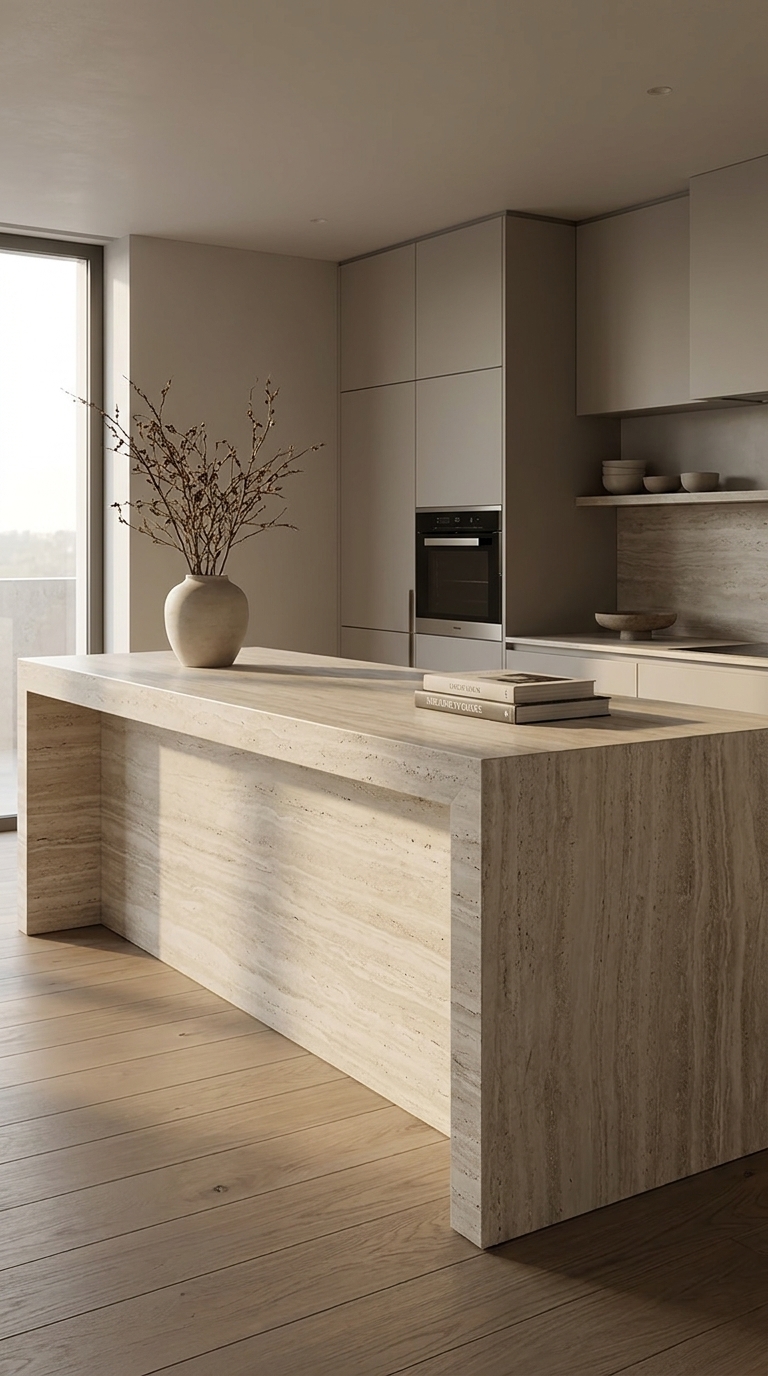
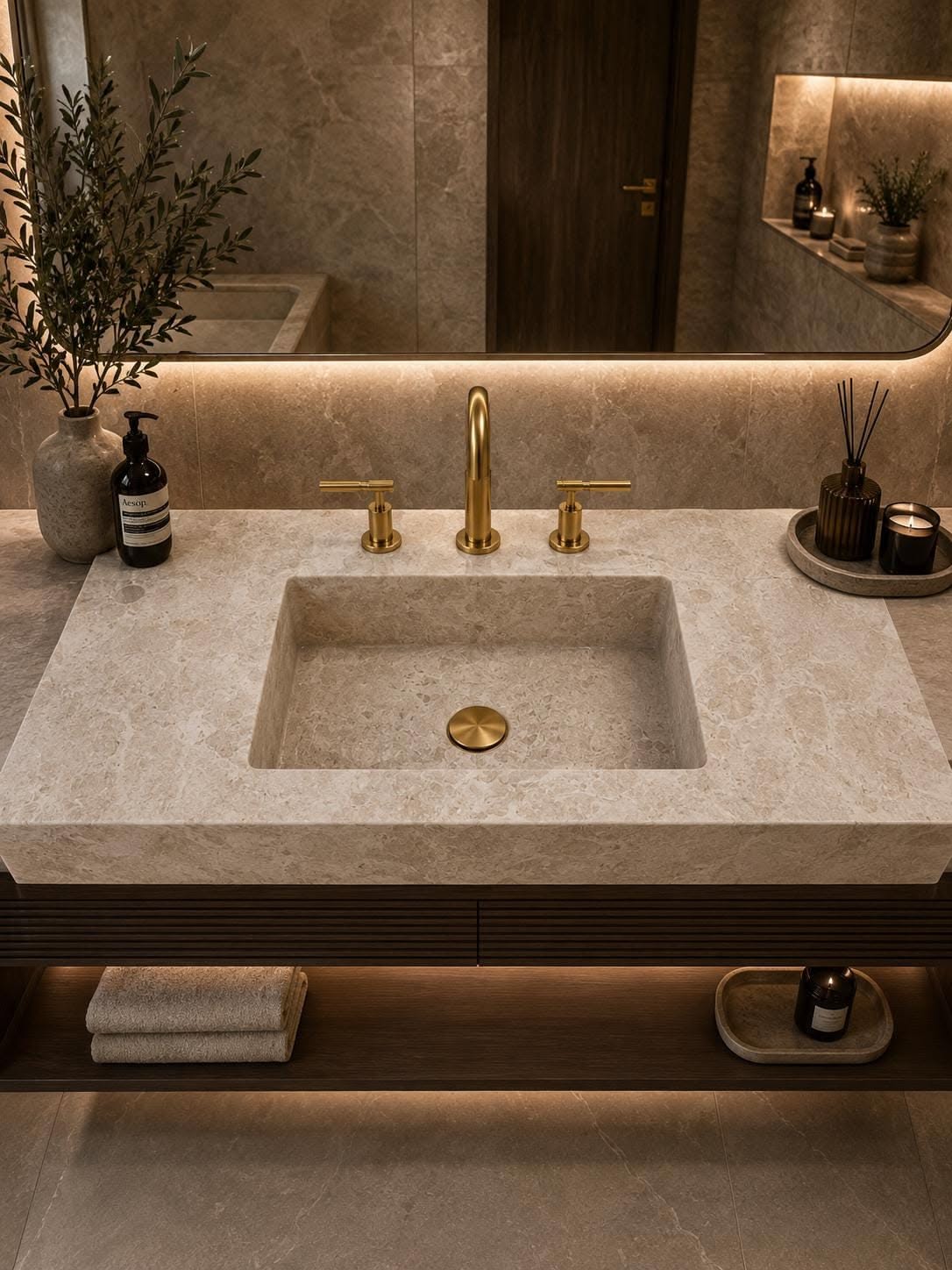
Travertine looks and feels different from conventional polished marble. Its natural voids, layered deposits, and softer tonal movement give walls, floors, furniture, vanities, and kitchen surfaces an architectural, tactile quality.
It is also more varied than the familiar beige version. Travertine can be ivory, cream, silver-grey, walnut, gold, or rust-red. Vein cutting reveals long parallel bands, while cross cutting produces a cloudier pattern. Honed, brushed, filled, and unfilled finishes each create a different character.
Open pores create the raw, sculptural texture many designers love. For working surfaces such as countertops, islands, and vanities, filling the holes is usually more practical because open voids can collect food, oil, water, soap, and dirt.
A recent local reference may be around US$400 per square metre (US$37.16 per square foot), while sourcing through China starts around US$200 per square metre (US$18.58 per square foot). Confirm whether filling, finishing, reinforcement, sealing, and fabrication are included.
Choose the type of character you want to live with
Choose Calacatta Monet for layered colour and an artwork-like composition. Choose Calacatta Viola for the most recognisable cream-and-burgundy contrast. Choose Travertine when natural texture and architectural warmth matter more than a perfectly uniform surface.
For all three, compare complete project scopes rather than raw material prices alone. Confirm usable yield, finish, filling, repairs, layout, fabrication, edge work, cut-outs, packing, freight, duties, delivery, and installation.
Questions people usually ask
How is Calacatta Monet different from Calacatta Viola?
Calacatta Monet often contains a broader mixture of burgundy, plum, gold, green-grey, and charcoal movement. Calacatta Viola is better known for bold burgundy or violet areas against a creamy background. Exact slabs vary, so compare full-slab images rather than names alone.
Should Travertine be filled for a countertop?
Filling is usually the more practical choice for countertops, islands, and vanities because open pores can collect food, oil, water, soap, and dirt. Confirm the fill colour and finish on a sample before production.
Can Travertine be used in wet areas?
It can be used in a correctly designed wet-area assembly, but the project needs appropriate stone selection, waterproofing, drainage, ventilation, joint treatment, sealing, and maintenance. The stone itself is not the waterproofing system.