3 Countertop Edge Profiles That Can Make a Kitchen Look More Expensive
An expensive slab can still look unfinished when the edge profile does not suit the design. Compare mitered, ogee, and bullnose edges—and learn when each one works best.
Why can expensive stone still make a kitchen feel ordinary?
The slab is only one part of the finished countertop. Thickness, edge shape, seam placement, vein matching, overhang, and the way the profile continues around corners all influence whether the installation feels deliberate or generic.
An edge profile should support the architecture rather than compete with the stone. A sharp modern island, a decorative traditional kitchen, and a curved family benchtop should not automatically receive the same edge treatment.
These three profiles cover very different design directions: the mitered edge creates visual mass, the ogee adds ornament, and the bullnose softens the entire composition.
1. Mitered edge: the modern monolithic look
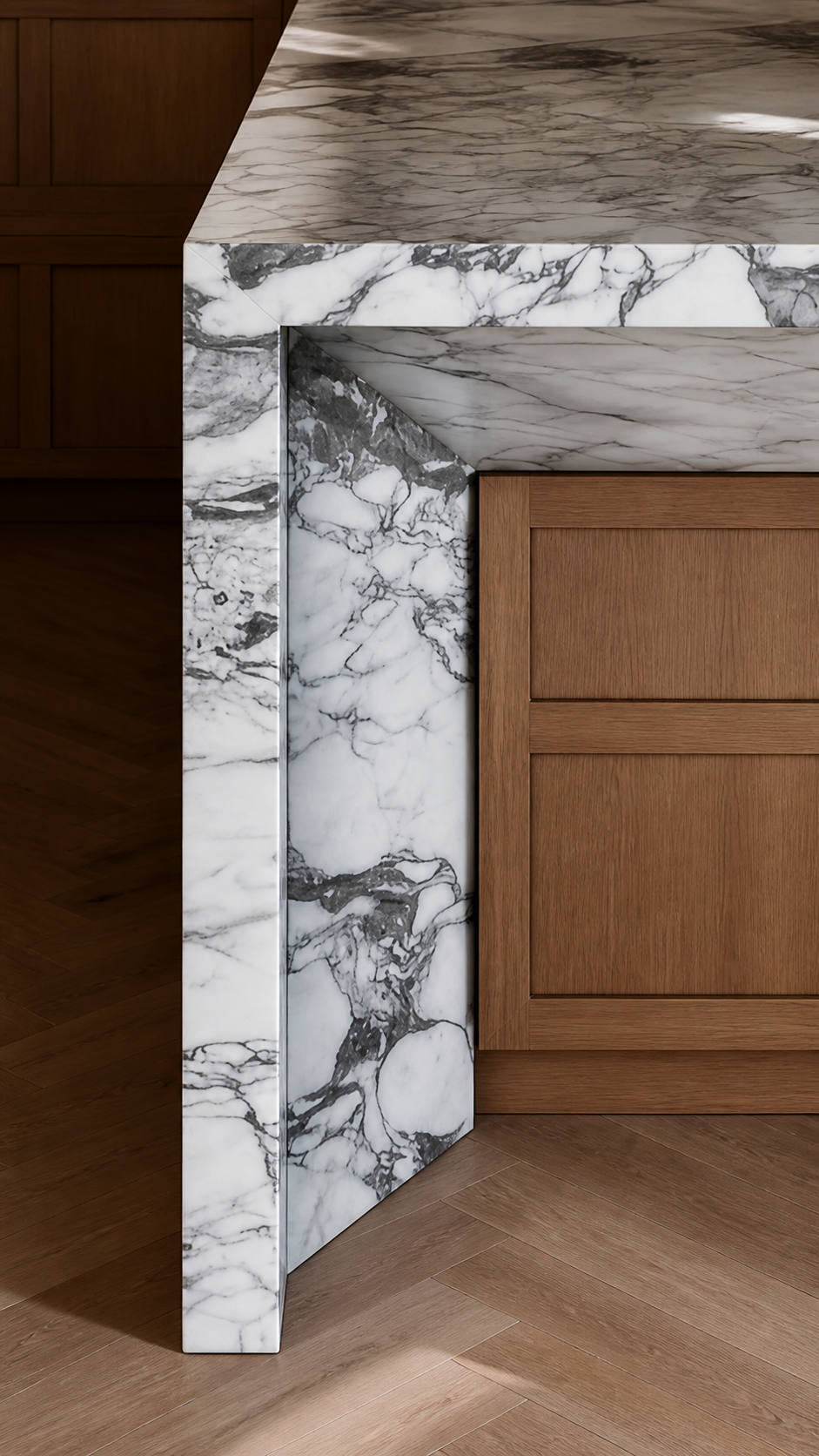
A mitered edge is made by cutting adjoining pieces at approximately 45 degrees and joining them so the countertop appears much thicker than the slab itself. It is often used on waterfall islands because the top and side can read as one continuous stone volume.
The result depends heavily on fabrication. Tight miters, aligned veining, appropriate reinforcement, and a well-finished seam create the illusion of a solid block. Poor vein matching or a visible glue line can make the same expensive material look less convincing.
Some designs add a recessed or undercut detail beneath the built-up edge. The shadow line makes the thick stone feel lighter and can give the countertop an almost floating appearance. This treatment suits contemporary kitchens, but it needs precise coordination with the cabinets and support below.
2. Ogee edge: a decorative S-curve
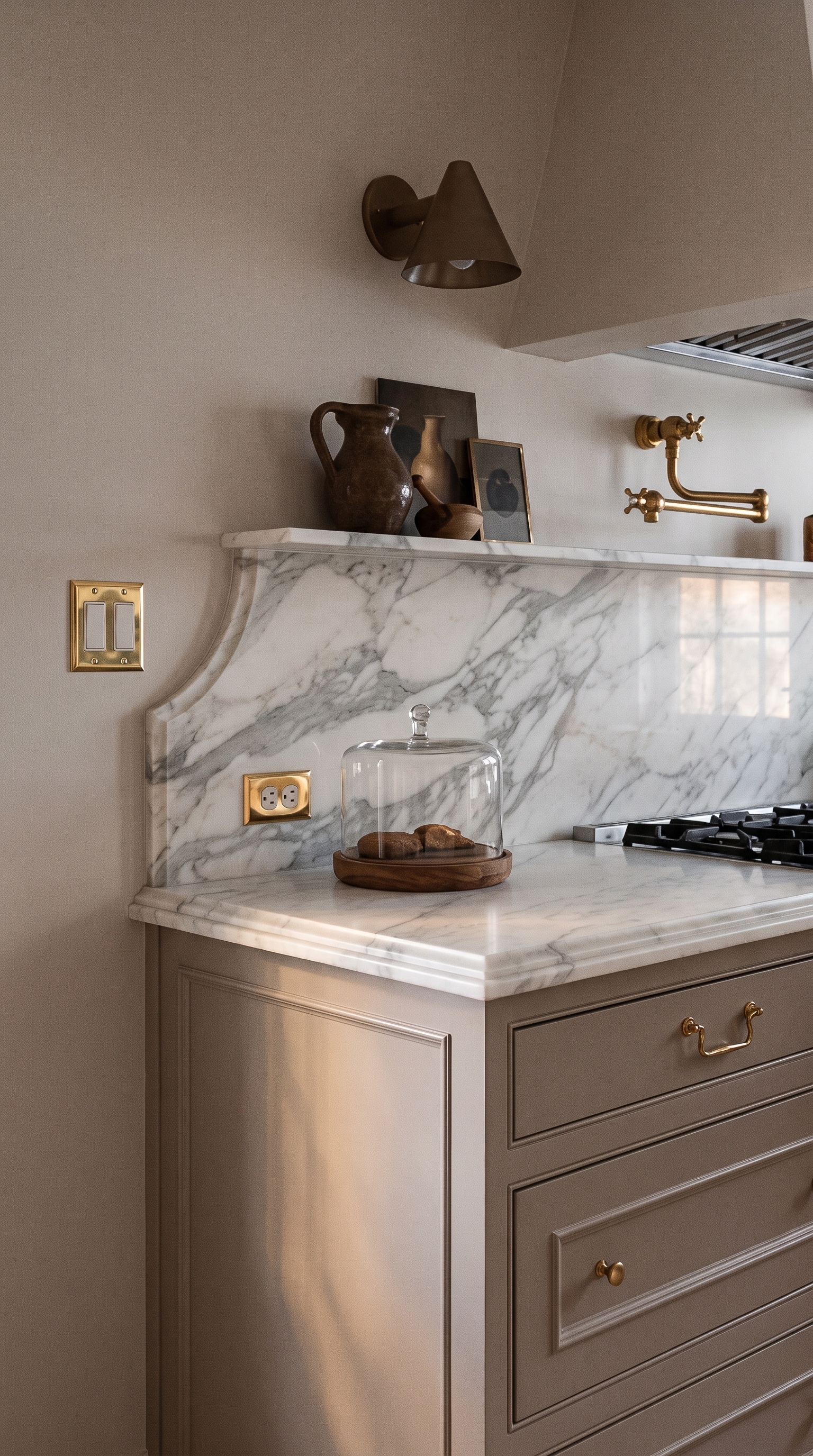
The ogee profile uses a flowing S-shaped curve, usually combining a concave section with a convex lower section. It gives the edge more movement and makes the craftsmanship visible even when the stone pattern is relatively quiet.
Ogee edges work especially well in classic, traditional, and transitional interiors. They can connect naturally with framed cabinetry, decorative mouldings, brass hardware, and shaped stone backsplashes.
The profile needs enough material and a skilled fabricator to keep the curve crisp and consistent. Because it contains more detail than a simple eased edge, it also deserves a little more attention during cleaning, particularly around cooking areas.
3. Bullnose edge: the most versatile rounded option
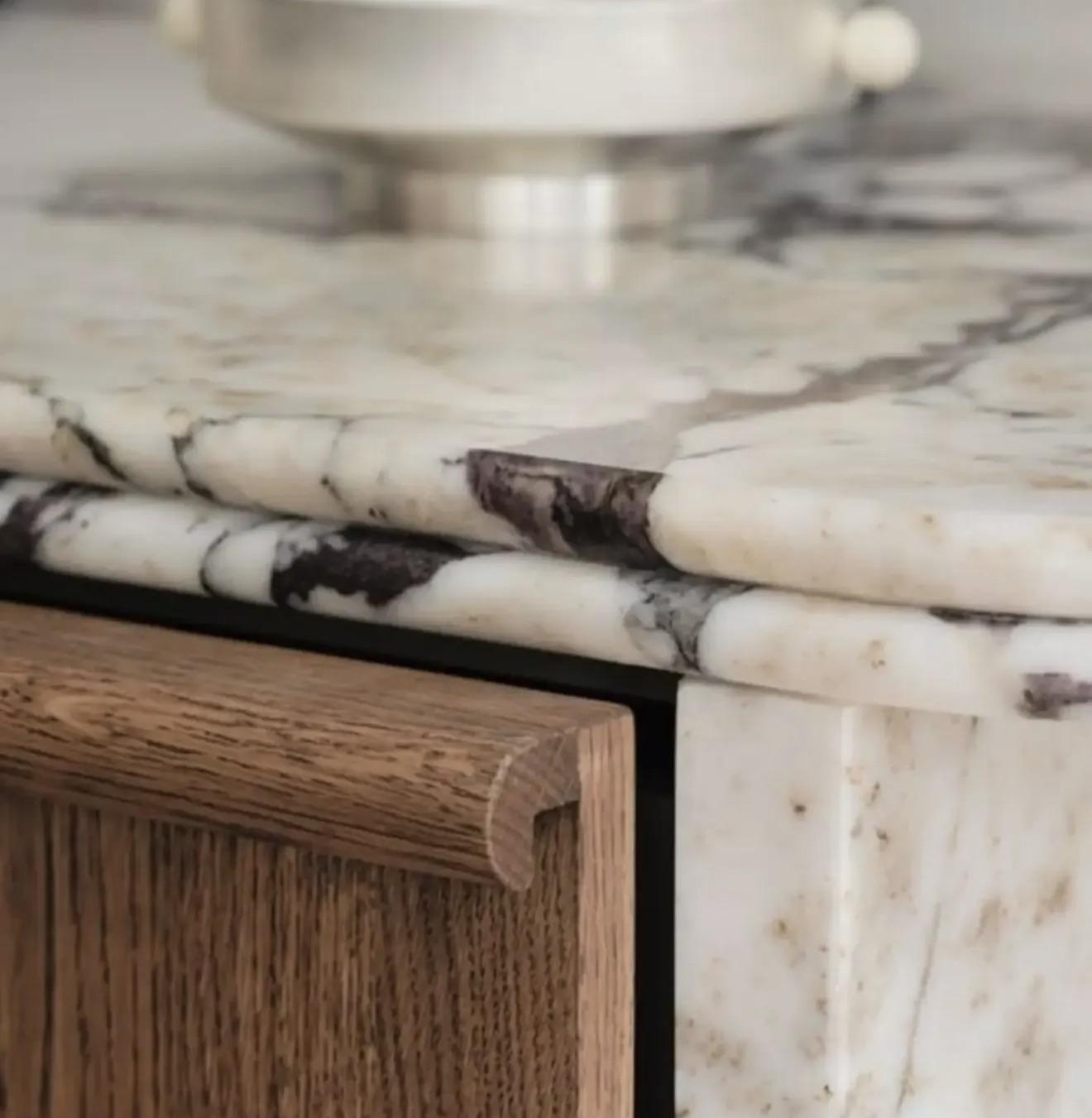
A bullnose edge replaces a sharp corner with a smooth rounded profile. Full bullnose, half bullnose, demi-bullnose, and stacked variations create different amounts of softness while retaining the practical benefit of a comfortable edge.
The shape is especially useful on curved islands, breakfast bars, and busy family kitchens. With no sharp upper corner, it feels natural to touch and is more forgiving around children and high-traffic circulation areas.
Bullnose is not limited to traditional design. A restrained half bullnose can look clean and contemporary, while a fuller or layered profile can feel more decorative. The key is to choose the radius and thickness in proportion to the island rather than treating every rounded edge as the same detail.
Do not forget the exposed edge of the backsplash
A countertop can be beautifully fabricated and still feel unresolved when the exposed end of the backsplash uses a completely unrelated detail. Where the backsplash edge remains visible, repeat the countertop profile or simplify it in a clearly intentional way.
The same principle applies to window returns, shelves, end panels, and stone upstands. Decide these terminations before fabrication so the shop can allow enough material and finish every visible edge consistently.
Before approving production, ask for a full-size edge sample in the actual stone. A small drawing cannot show how the profile will interact with the veining, slab thickness, polish, and light in the finished room.
Questions people usually ask
Does a mitered edge mean the entire countertop is made from a thicker slab?
Usually no. A separate strip or adjoining panel is mitered to the top so the visible edge appears thicker. The support, seam, and vein matching should be reviewed with the fabricator.
Is an ogee edge suitable for a modern kitchen?
It can be, but it introduces a decorative traditional note. In a very minimal kitchen, a mitered, eased, or subtle half-bullnose edge may integrate more naturally.
What is the difference between full and half bullnose?
A full bullnose rounds both the top and bottom of the edge into a continuous curve. A half bullnose usually rounds the upper portion while leaving more of the lower face visible.
Should the backsplash use the same edge profile as the countertop?
When the backsplash has an exposed edge, repeating or deliberately simplifying the countertop profile usually creates a more coherent finish. Confirm every visible termination before fabrication.