Cristallo vs Patagonia: 2 Translucent Stones Worth Seeing Backlit
Cristallo and Patagonia can both glow under backlighting, but they create completely different rooms. Compare their natural movement, translucency, selection risks, and recent raw-material price references before choosing a slab.
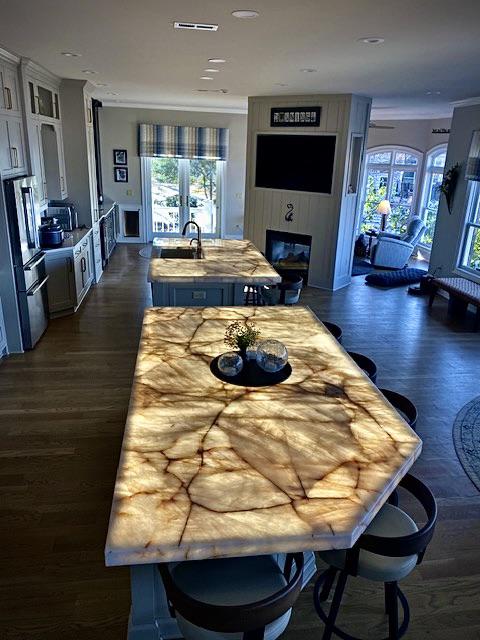
Public price snapshot
Recent raw-slab material references in US dollars
| Market | Public price | What it covers |
|---|---|---|
| Cristallo Quartzite | US$90–150/ft² (US$969–1,615/m²) local vs from US$32.52/ft² (US$350/m²) through China | Premium raw-slab material only. The China figure is a starting reference before packing, freight, duties, fabrication, local delivery, and installation. Translucency, colour, slab dimensions, thickness, repairs, and usable yield affect the quote. |
| Patagonia | About US$86.15/ft² (US$927/m²) local vs about US$41.61/ft² (US$448/m²) through China | Selected raw-slab material only. Patagonia prices vary sharply by crystal clarity and distribution, background, structural soundness, resin and repairs, slab size, thickness, and backlighting suitability. |
Looking for a translucent stone? Start with these two
Backlighting can make natural stone feel less like a countertop and more like a piece of architecture. The effect is dramatic, but the stone still has to look good when the lights are off. That is the first reason Cristallo and Patagonia deserve to be compared side by side.
Cristallo is luminous and elegant, with crystalline depth and bold internal lines. Patagonia is more irregular and theatrical, combining pale mineral fields, dark fragments, warm colour, and large crystal windows. Both can transmit light, but they do not create the same mood.
Do not choose either material from a small sample or a trade name alone. Translucency, movement, repairs, thickness, and usable yield can change from one slab to the next, and a successful backlit installation begins with the exact slab rather than a catalogue photograph.
1. Cristallo: beautiful before the light is switched on
Cristallo is a Brazilian quartzite sold in several natural variations. Some slabs are cloudy and quiet; others show strong grey, taupe, gold, or smoky lines moving through the crystalline background. Those internal lines give the surface depth, so the stone can already be a focal point without any artificial light behind it.
That matters in a real home. Backlighting may be used only at night or for entertaining, while the stone still has to carry the kitchen during normal daylight. A strong Cristallo slab does both: it reads as a bold natural stone when unlit and becomes luminous when the lighting system is turned on.
Cristallo works especially well on an island, bar front, reception desk, vanity, or feature wall. For a kitchen countertop, inspect the slab under neutral light first, then ask for a backlighting test so the colour does not become too yellow, patchy, or uneven when illuminated.
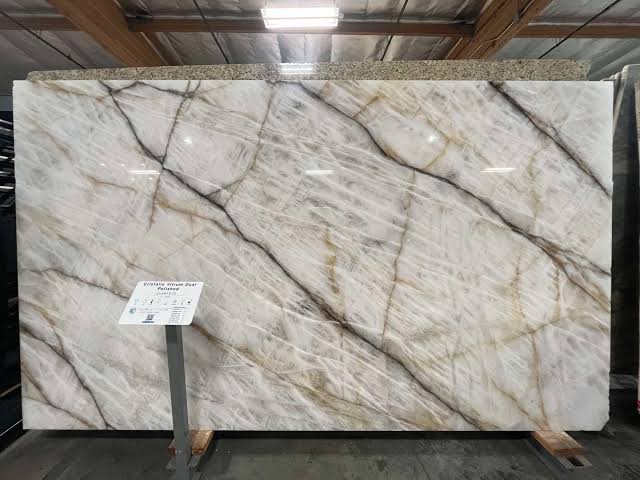
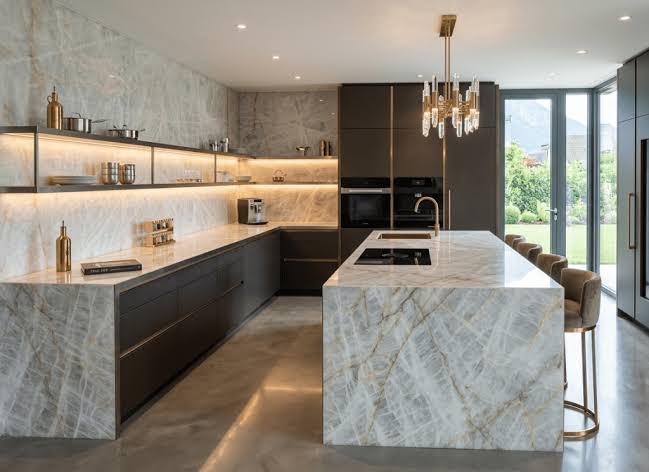
What changes when Cristallo is backlit
When light passes through the more translucent parts of Cristallo, internal structure that looked soft in daylight becomes much more visible. Fine lines overlap, pale areas glow, and the surface develops a sense of depth that an opaque countertop cannot reproduce.
The lighting should be designed as part of the stone package, not added at the end. LED spacing, colour temperature, diffusion, support, ventilation, access for maintenance, and the distance between the light source and the slab all affect whether the result looks even or shows bright dots and dark bands.
Premium Cristallo raw slabs can be advertised locally at roughly US$90–150 per square foot (US$969–1,615 per square metre), material only. A recent China sourcing reference starts around US$32.52 per square foot (US$350 per square metre), before packing, freight, duties, fabrication, delivery, and installation.
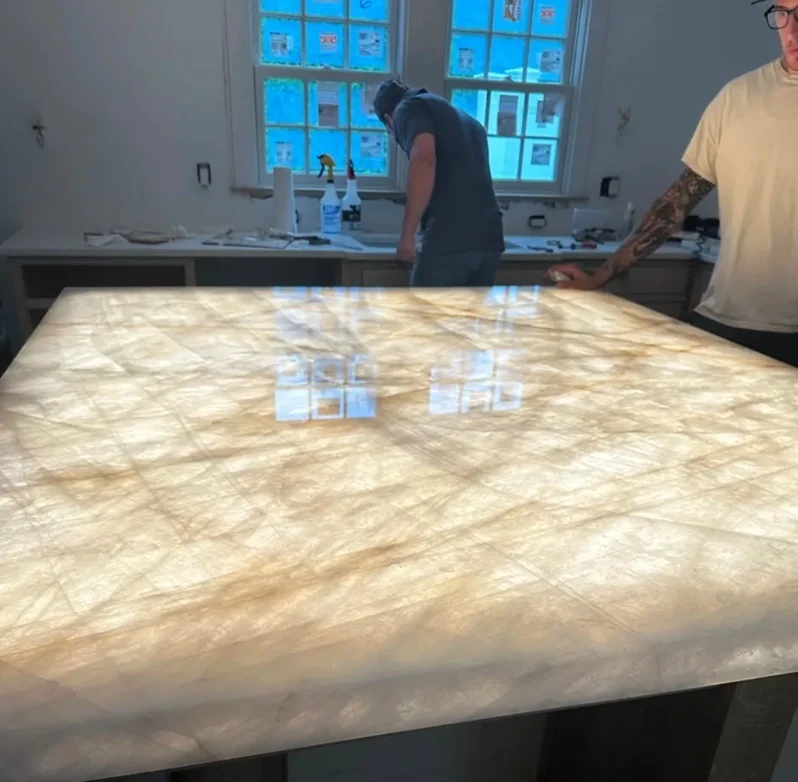
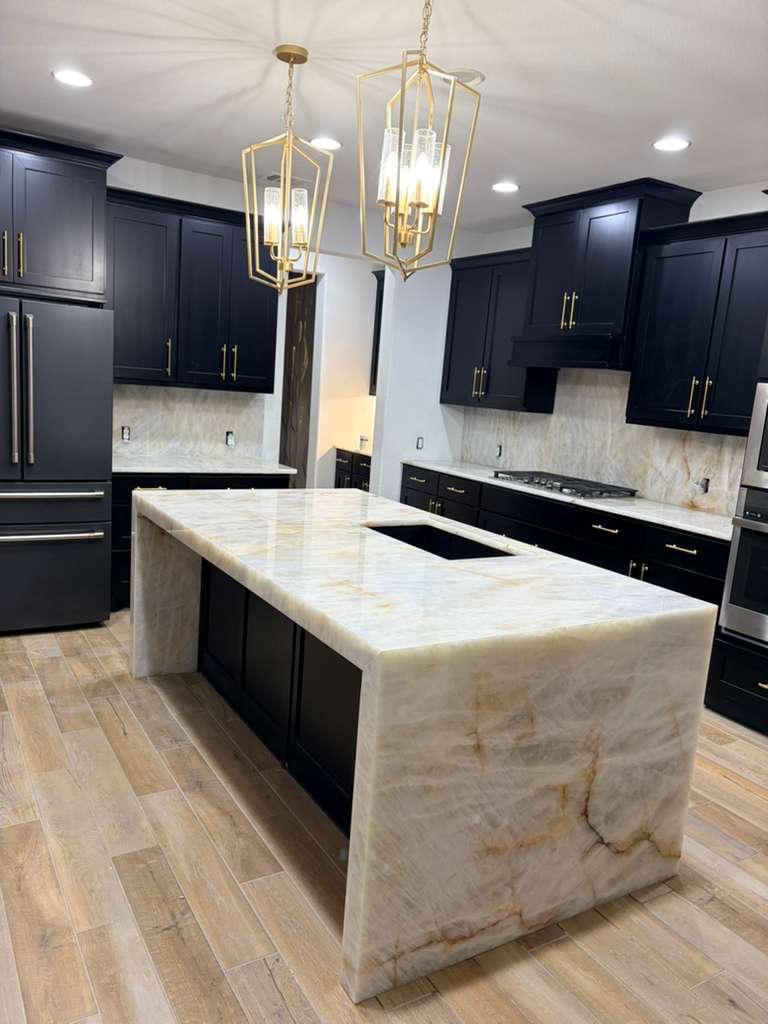
2. Patagonia: a geological spectacle rather than a quiet surface
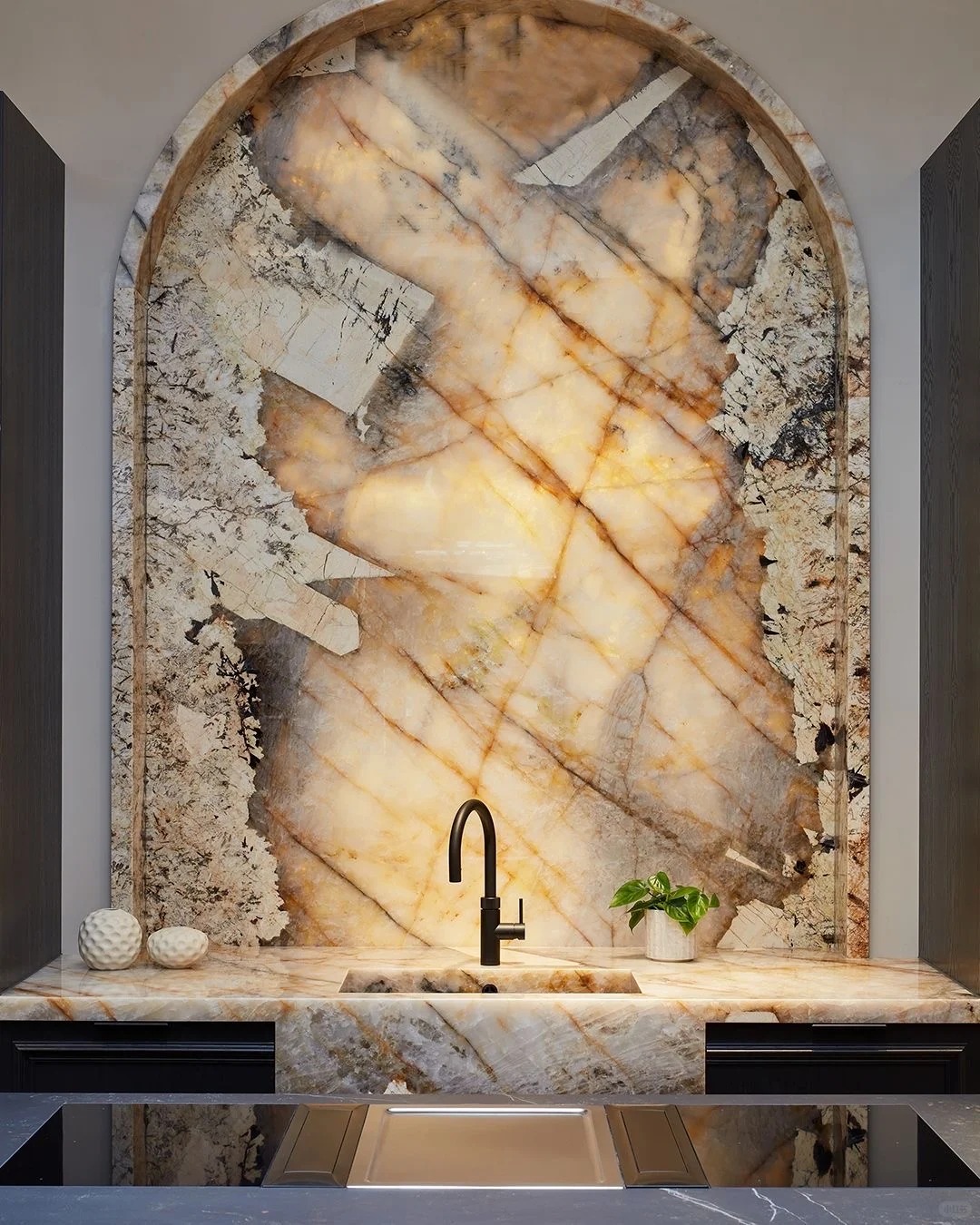
If Cristallo is elegant, Patagonia is pure drama. Material sold as Patagonia typically combines large pale mineral fields, translucent crystal areas, dark fragments, and warm grey, cream, brown, or gold movement. No two slabs arrange those elements in exactly the same way.
That irregularity gives a kitchen energy. A long island, full-height backsplash, vanity, or feature wall can become the first thing a guest notices. It also makes the cutting layout unusually important: one careless cut can remove the strongest crystal window or leave the most interesting part of the slab in a waste piece.
Patagonia is commonly sold as Brazilian quartzite, although the commercial market may also describe related material as granite. The label does not replace documentation. Confirm the actual material, stated country of origin, slab dimensions, thickness, finish, mesh or resin reinforcement, and current full-slab images before approving a quote.
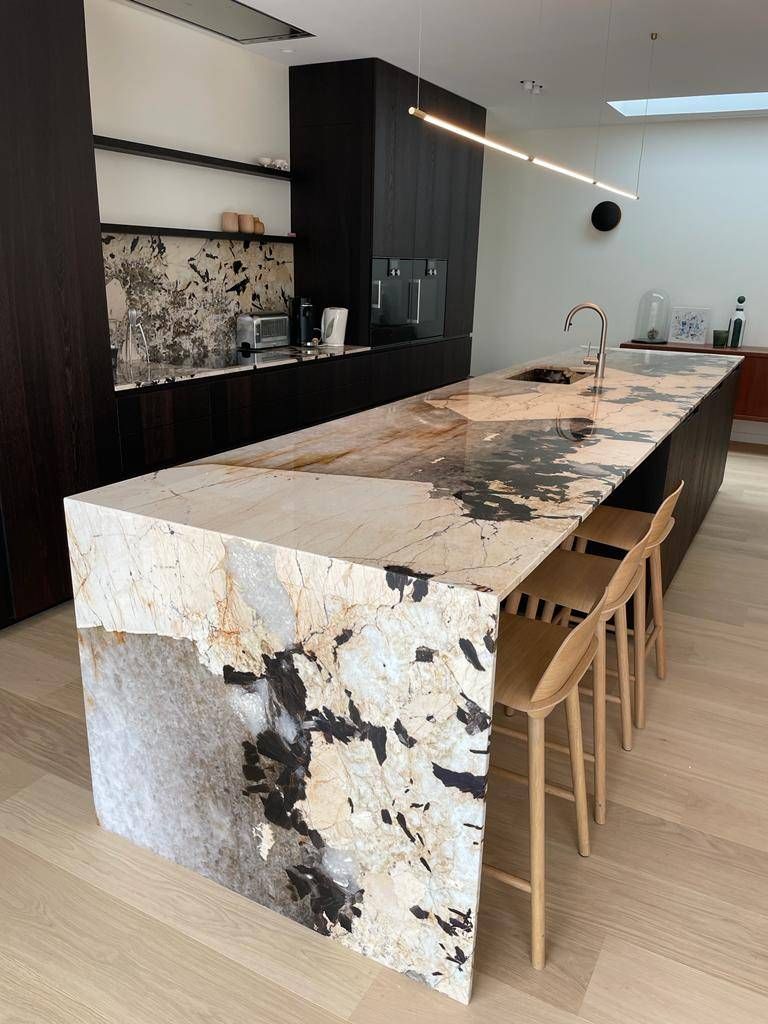
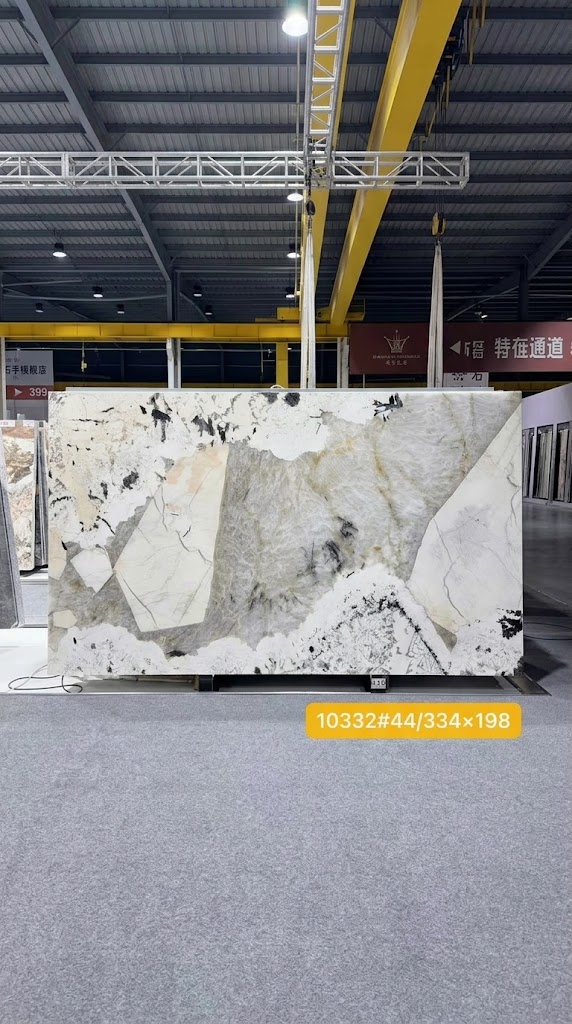
Why some Patagonia slabs cost much more than others
Large crystals can increase the visual impact, but size alone does not define quality. Clear and well-distributed translucent areas, an attractive balance between light and dark zones, strong usable dimensions, low oxidation, limited structural fissuring, and fewer intrusive repairs can all support a higher price.
For a backlit project, ask to see the slab illuminated before cutting. A crystal window that looks clear from the front may reveal internal clouding, resin, mesh shadows, or uneven transmission once the light is behind it. For an island, the fabricator must also decide how those dense crystal areas and the surrounding minerals will be supported and cut.
A recent local reference was about US$86.15 per square foot (US$927 per square metre) for raw material, compared with approximately US$41.61 per square foot (US$448 per square metre) through China. Treat those as comparison points, not fixed prices: two Patagonia slabs with the same name may have very different grades and usable yield.
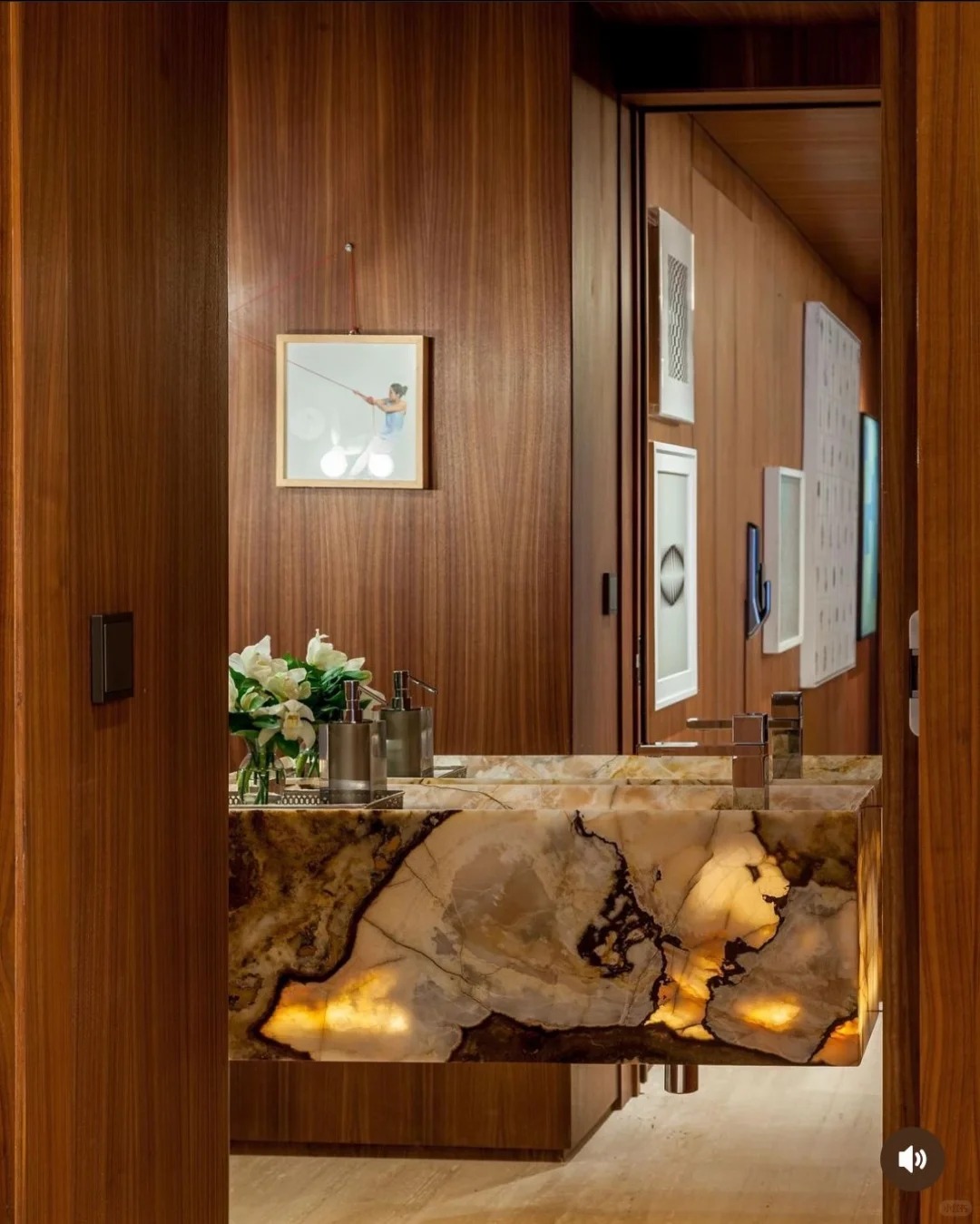
Do not compare a local installed quote with a raw-slab price
Every price in this article should be read with its scope. Raw slab material is not the same as a finished countertop. Packing, international freight, insurance, duties, local taxes, templating, cutting, edge work, cut-outs, reinforcement, the lighting system, delivery, and installation can materially change the final project cost.
Backlit stone also needs more coordination than a standard countertop. The fabricator, cabinetmaker, electrician, lighting supplier, and installer need an agreed build-up before production begins. Access panels and replaceable components are worth planning because the stone may last much longer than the lighting hardware behind it.
Send John the full-slab image, close-up video, dimensions, thickness, stated origin, price scope, and the application you are planning. He can help you compare whether the offer is genuinely equivalent and what should be checked before the slab is cut.
Cristallo or Patagonia: which one should you choose?
Choose Cristallo when you want a pale, luminous stone that is still elegant and visually complete with the lights off. Its internal lines and crystalline depth suit refined kitchens, bars, vanities, and commercial feature walls.
Choose Patagonia when you want the stone to behave like a large piece of natural art. It is bolder, less predictable, and highly dependent on the exact slab and cutting layout, but the right material can create a feature that no printed surface can reproduce.
Whichever you prefer, approve the slab twice: once under ordinary neutral light and once with a backlighting test. The best translucent stone should work in both conditions.
Public price references
Product information describing Cristallo as Brazilian quartzite and showing several commercial selections and finishes.
A public US material-only reference of approximately US$90–150 per square foot for Cristallo Quartzite.
Natural-stone information identifying Patagonia as Brazilian material and describing its polished, translucent areas.
Background on Patagonia's crystal formations, translucency, fabrication requirements, and the factors that influence project cost.
Questions people usually ask
Is every Cristallo slab translucent?
Cristallo is known for crystalline depth and semi-translucent areas, but light transmission varies from slab to slab and across a single slab. Test the exact material with the proposed lighting before designing the final assembly.
Is Patagonia quartzite or granite?
Patagonia is a commercial stone name and is commonly sold as Brazilian quartzite, while some suppliers describe related material as granite. Confirm the documentation and, when performance is critical, test the selected slab rather than relying only on the label.
Does a larger crystal area always make Patagonia more expensive?
Not by itself. Crystal clarity and distribution, overall composition, fissures, oxidation, repairs, slab dimensions, thickness, and usable yield all contribute to grade and price.
Can Cristallo or Patagonia be used for kitchen countertops?
Both are used for countertops, but the exact slab, reinforcement, fabrication plan, edge design, support, sealing, and owner's maintenance expectations should be reviewed before production. Patagonia can be especially demanding because different mineral zones may behave differently during fabrication.
What should be included in a backlit stone quote?
Ask for the exact slab, thickness, finish, cutting layout, reinforcement, substrate or support, diffusion layer, LED type and spacing, driver locations, ventilation, maintenance access, fabrication, packing, freight, local delivery, and installation scope.