How We Pack Stone Slabs for Safer LCL Shipping
Traditional wooden slab crates work well inside a full container. But when a client only buys a few slabs, an A-frame crate is usually the safer way to move stone through warehouses, freight forwarders, and ports.
The traditional wooden crate was made for full containers
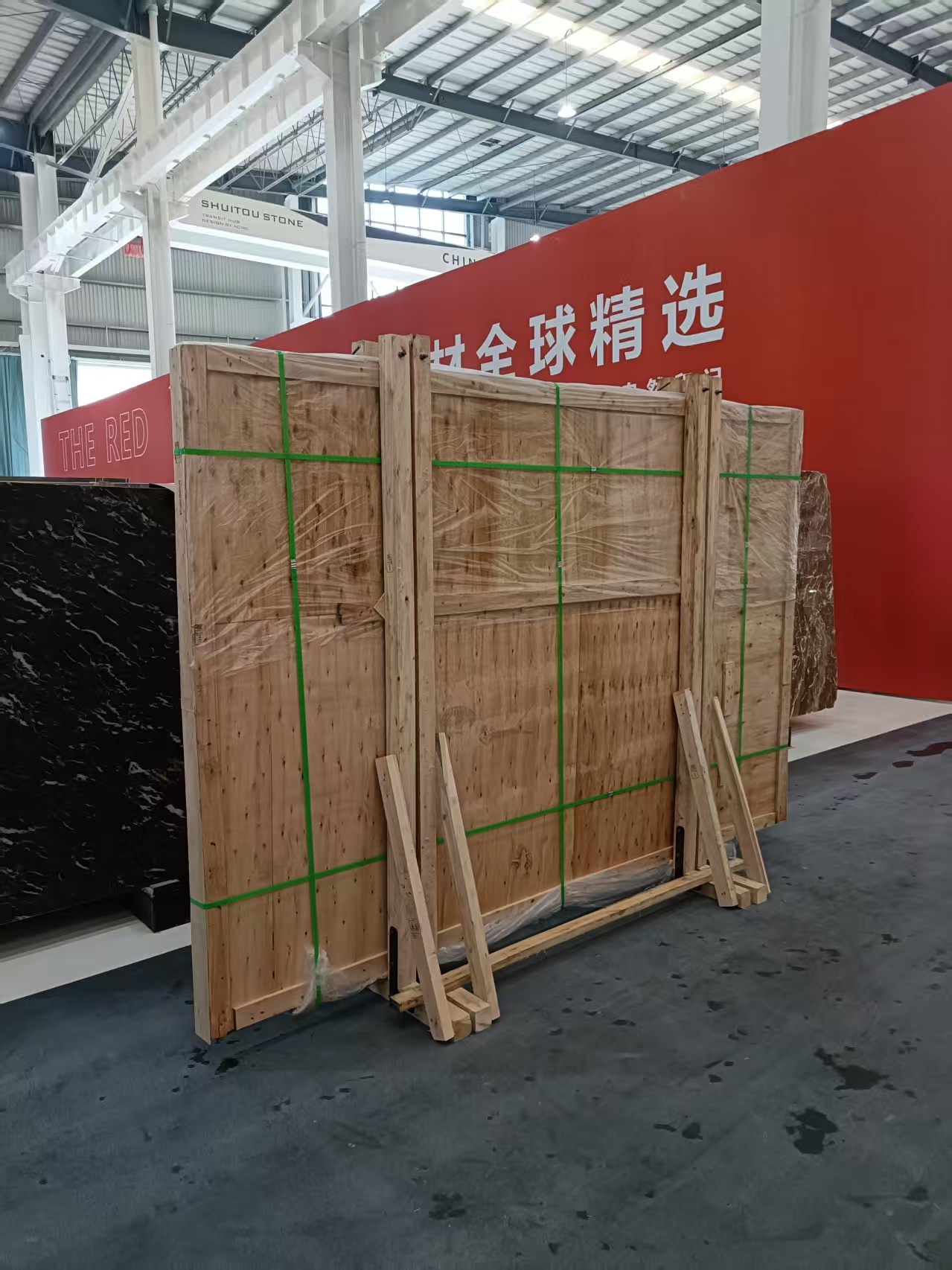
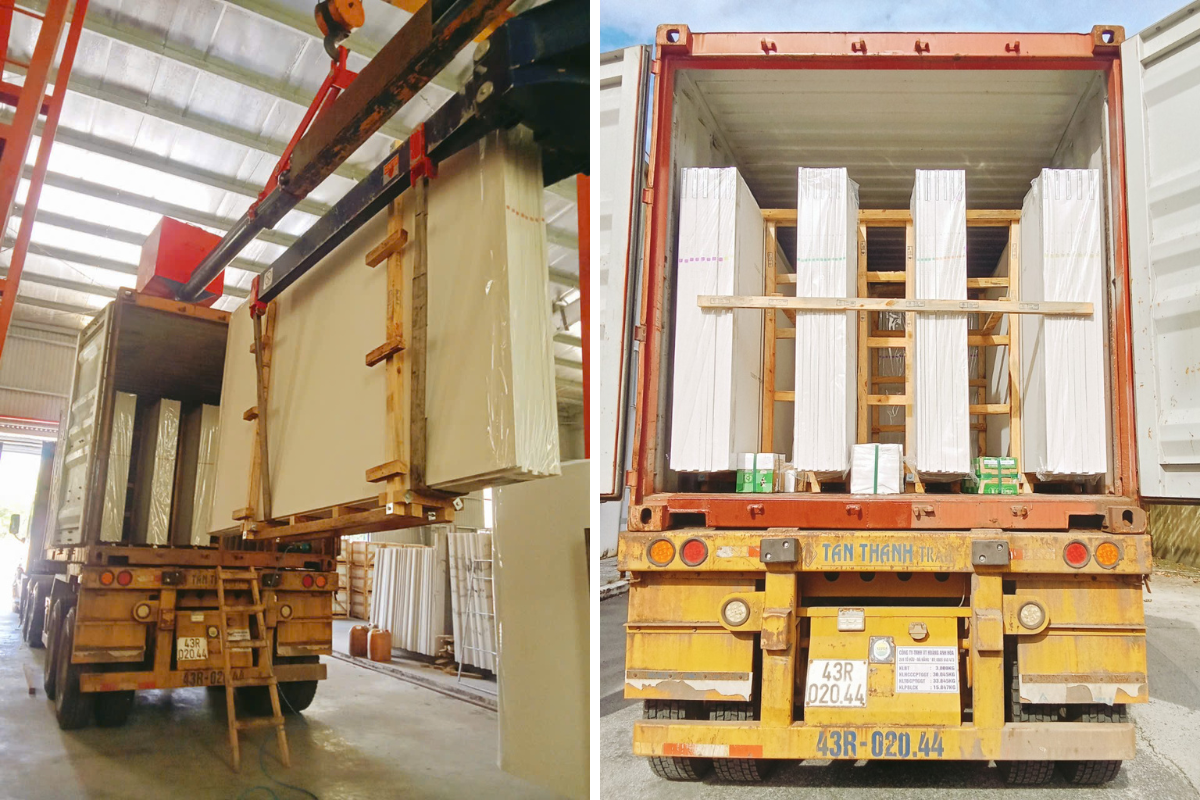
The upright wooden slab crate is the old B2B way to ship stone. It makes sense when a factory or supplier is loading a full container of slabs. A 20-foot or 40-foot container may hold several crates, often six or seven depending on the slab size, weight, and packing plan.
In that situation, the crates are not traveling alone. The whole container is stone. The crates can be placed tightly, then braced with timber bars so they do not move inside the container. The stability comes from the whole loading system: crate, container wall, neighboring crates, and reinforcement together.
For a full-container shipment, this can work very well. It is simple, familiar, and efficient for factories that load stone every day.
The problem starts when the order is small
Many overseas clients are not buying a full container. They may only need a few marble slabs, a small countertop project, or several cut-to-size pieces. That kind of shipment is usually LCL, which means less than container load.
With LCL, your crate may be moved to a freight forwarder warehouse, unloaded, stored, moved again, and combined with other people's cargo. You cannot control what is placed beside it, how carefully other cargo is handled, or whether something heavy touches the wooden crate during consolidation.
The traditional upright wooden crate becomes less ideal in this situation. It was designed to be stable as part of a full container system, not to be moved many times as one standalone item among mixed cargo.
Handling equipment is another hidden risk
Stone yards often use special long-fork equipment for slab crates. In China, many stone people call it a pao che. It is made for moving heavy stone packs safely from the side.
But not every port, warehouse, or freight forwarder has that equipment. Many places only have a normal forklift. If a crate is tall, flat, and lightly supported at the base, normal forklift handling can feel unstable. The crate may sway, lean, or become awkward to position.
That is where risk quietly increases. The stone itself may be packed well, but the wrong handling method can still create chips, cracks, corner damage, or a dangerous unloading situation.
Why we prefer an A-frame crate for LCL slab orders
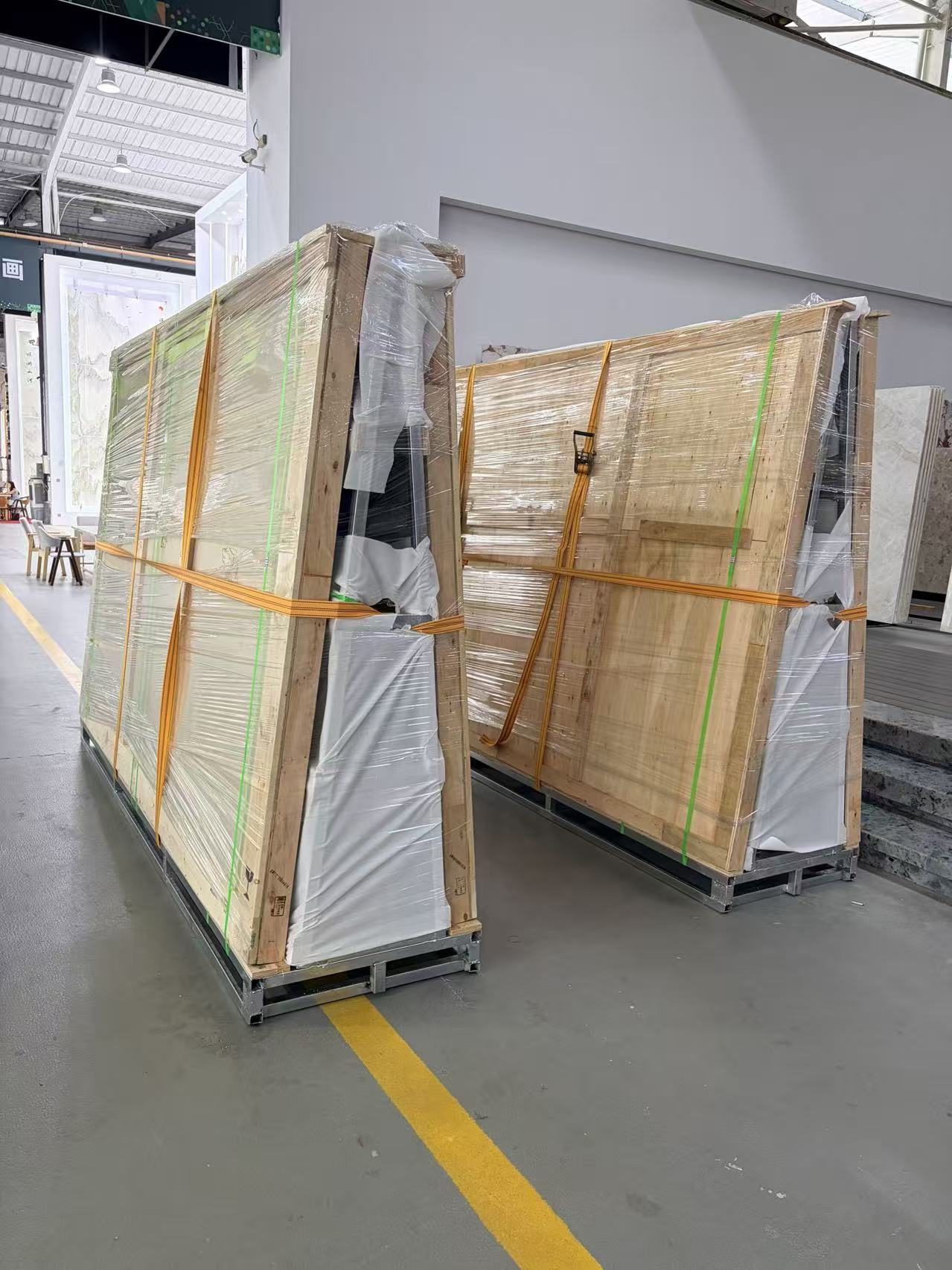
For small slab orders, we prefer an A-frame crate. The important difference is the structure. The center is a steel frame, and the slabs sit on angled sides. Instead of standing straight and relying mostly on the outer wooden crate, the weight of the slabs leans inward toward the center frame.
That angle matters. It makes the load feel more grounded and more predictable. The crate is not a light, tall wooden box trying to stand by itself. It is a balanced frame where the weight naturally wants to settle toward the middle.
An A-frame crate can usually be handled by a normal forklift, and it can also be lifted by crane when needed. That flexibility is useful for LCL shipments, because the crate may pass through different warehouses and handling teams before it reaches the final destination.
Safer does not mean careless
An A-frame crate is not magic. The slabs still need edge protection, cushioning, plastic wrapping, proper strapping, and a packing plan based on thickness, size, material, and destination.
But for LCL stone slab shipping, the A-frame structure solves the main problem: it is more stable as an individual shipping unit. It does not depend on a full container of similar crates around it to stay safe.
That is why we use this packing style when a client is buying only a few slabs. The goal is simple: make the stone easier for ordinary warehouses to handle, reduce unnecessary movement risk, and give the slabs a better chance of arriving the way they left Shuitou.
Questions people usually ask
What does LCL mean for stone shipping?
LCL means less than container load. Instead of booking a whole container, your stone shipment shares container space with other cargo. This makes handling and packing choices more important.
Is a traditional wooden crate bad for stone slabs?
No. Traditional wooden crates can work well for full container shipments where several crates are braced together. The risk is higher when one small crate moves through mixed-cargo warehouses by itself.
Why is an A-frame crate safer for small slab orders?
The slabs lean toward a center steel frame, so the weight is more stable. The crate can usually be handled by forklift or crane, which is helpful when the shipment passes through freight forwarder warehouses and ports.