Italian vs Turkish Calacatta Viola: Same Name, Different Marble
Both can bring white stone and dark violet drama to a room. But the Italian Calacatta Viola we source starts around US$600/m2, while a Turkish Calacatta Viola option starts around US$300/m2 - and their full slabs do not tell the same visual story.
Public price snapshot
Current material starting points for these two options
| Market | Public price | What it covers |
|---|---|---|
| Italian Calacatta Viola | From US$600/m2 | Starting reference for the raw slab material we are comparing. The best white background, deeper burgundy colour, slab size, and selection will increase the price. |
| Turkish Calacatta Viola option | From US$300/m2 | Starting reference for the raw slab material shown in this comparison. Pattern, thickness, bundle, and usable yield affect the final material budget. |
| Starting-price difference | About US$300/m2 | About 50% lower at these starting points. Neither number includes fabrication, packing, freight, local taxes, or installation. |
Calacatta Viola is a look, but origin still matters
It is easy to see why these two stones get compared. Both have a white to creamy background, broken by dark purple, burgundy, charcoal, or black movement. Both can turn a vanity, bar, fireplace, or island into the focal point of a room.
But the words on a slab label are not a quarry certificate. Italian Calacatta Viola is also known in the trade as Breccia Medicea or Breccia di Seravezza and is associated with Tuscany and the Apuan marble region. Turkish material sold as Calacatta Viola has a related visual language, but it is a different origin and should be selected as its own stone, not as a guaranteed replica of the Italian material.
That distinction matters because a name can make two stones sound interchangeable. Full slabs make clear that they are not.
Italian Calacatta Viola: warmer, deeper, and more wine-red
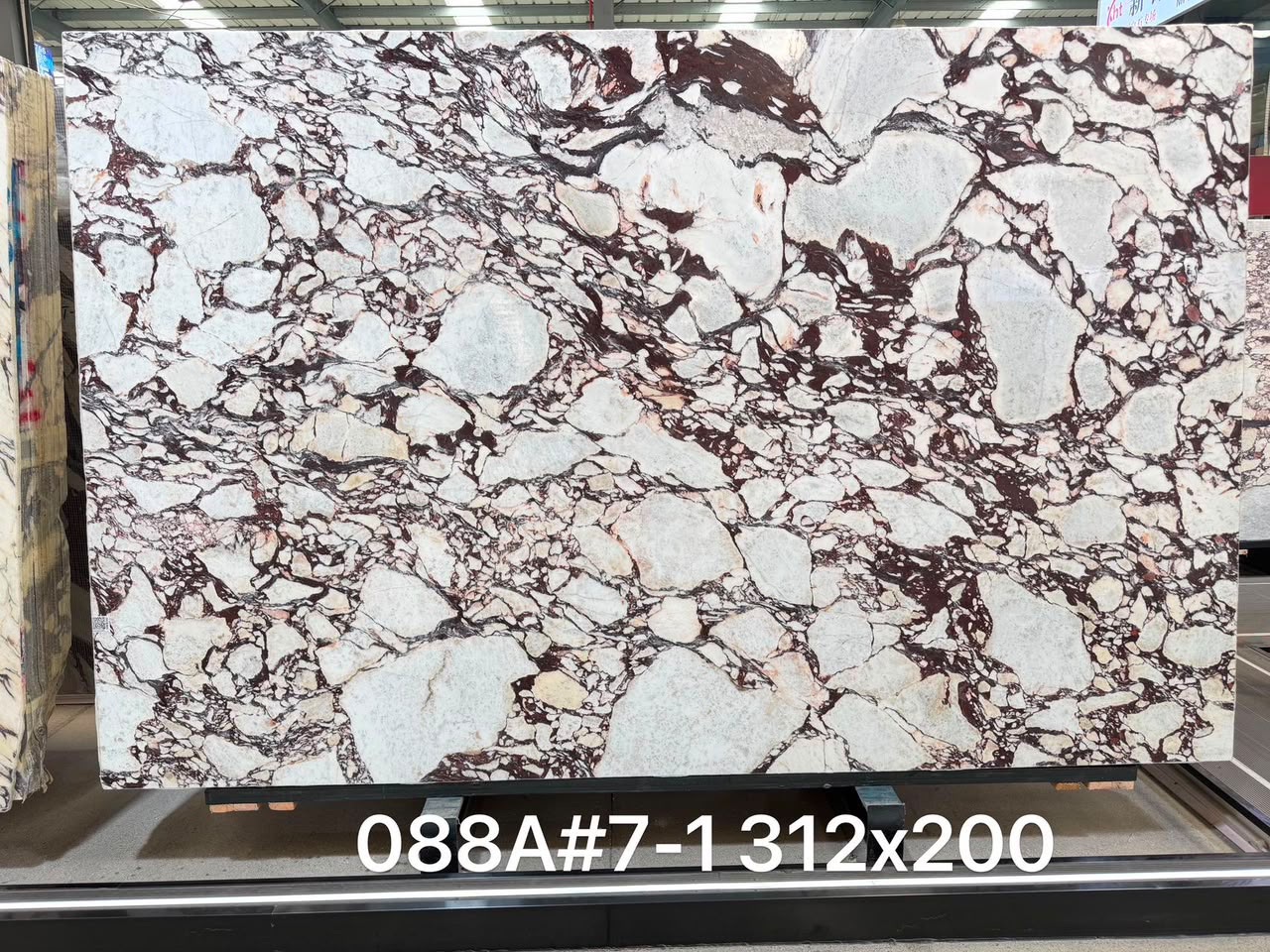
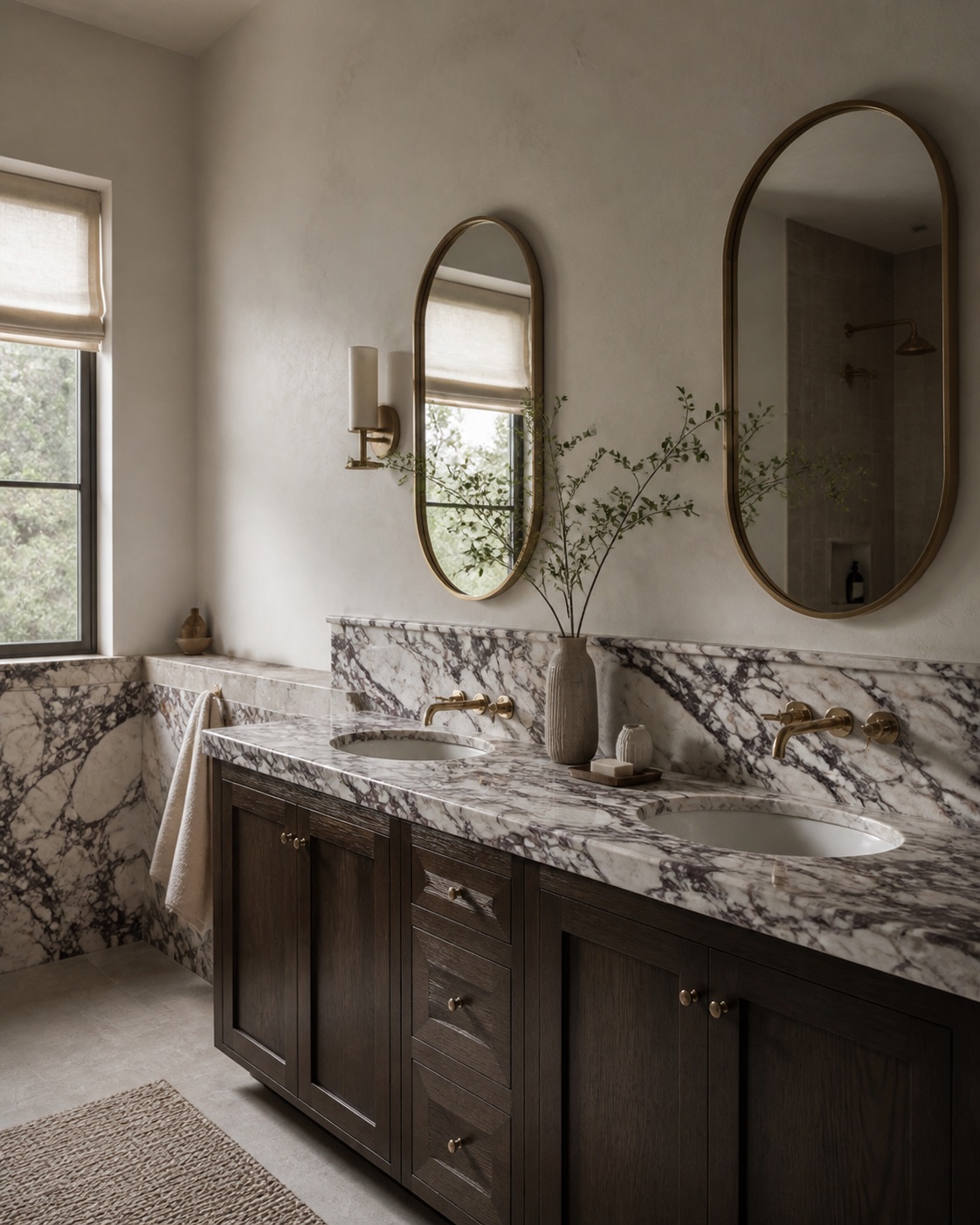
The Italian Calacatta Viola in the first photos has a creamy white ground broken by large pale fragments and deep wine-red to plum-coloured breccia. The contrast is rich rather than graphic. In warm light, the dark areas can read more burgundy; in cooler daylight, they can lean more violet.
This is the version people usually mean when they want the recognisable Calacatta Viola mood: dramatic, warm, and slightly historic. It works beautifully with walnut, dark oak, brushed brass, muted green, plaster, and other materials that can hold their own beside a strong stone.
Our starting reference for this Italian option is US$600 per square metre for raw slab material. Exceptional lots can cost more, especially where the background is cleaner, the burgundy is stronger, and the slabs are large enough to make a continuous feature.
Turkish Calacatta Viola: brighter, sharper, and more graphic
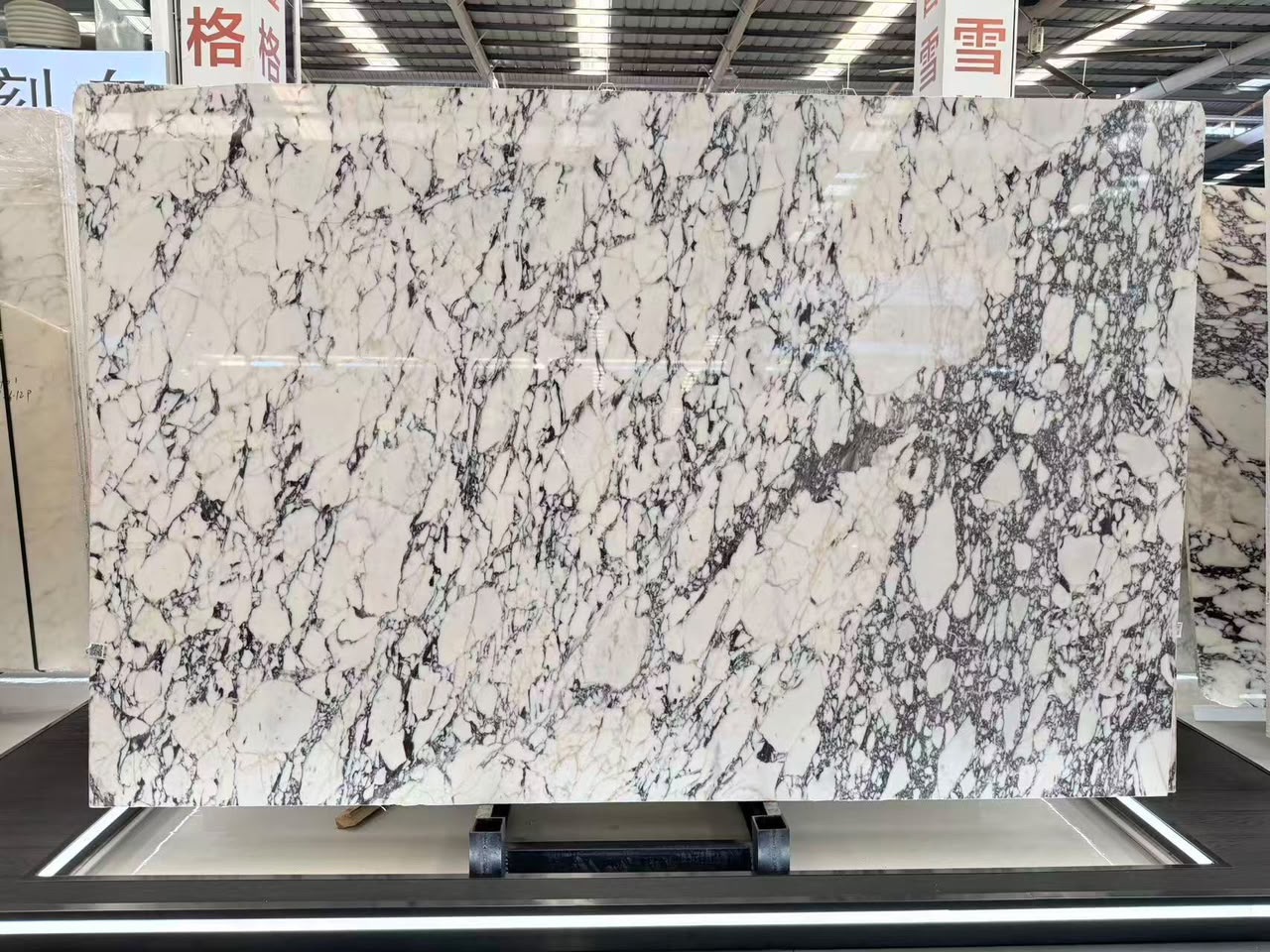
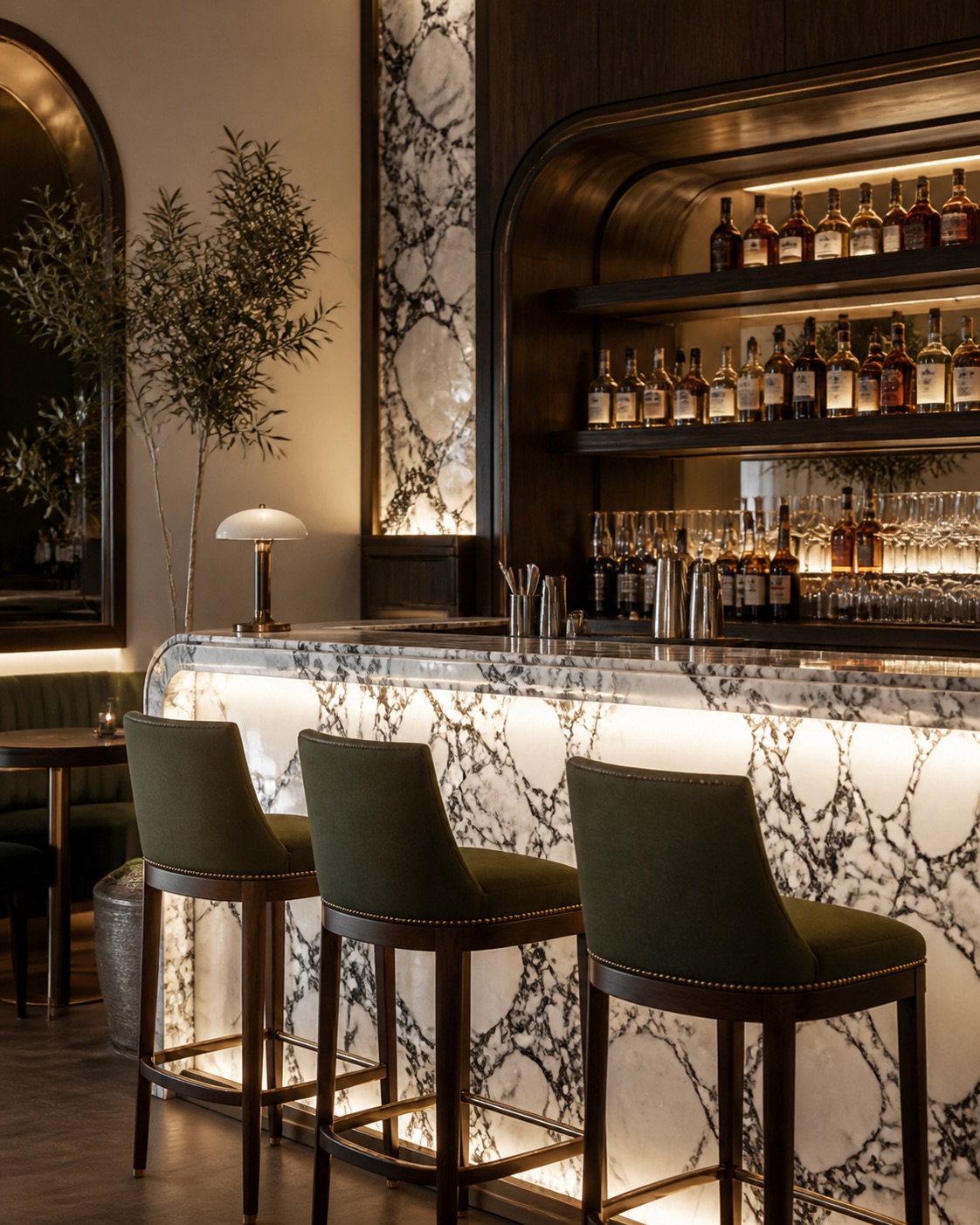
The Turkish option shown here is visually different at first glance. Its base is brighter white, while the movement is a tighter black-to-charcoal network with occasional warm beige shadows. Instead of the Italian material’s wine-red pools, it reads more like a graphic drawing across the slab.
That makes it a compelling choice for a project that wants contrast but less of the traditional burgundy mood. With blackened steel, dark timber, olive upholstery, or a contemporary bathroom, this sharper pattern can look intentional and modern.
The current starting reference for this Turkish option is US$300 per square metre for raw slab material. It is about US$300 per square metre, or 50%, below the Italian starting point in this comparison. That does not make it a lesser choice. It is a different visual result at a different material budget.
The price is only useful when the scope is the same
US$600 per square metre versus US$300 per square metre is a helpful first filter, not a finished project quotation. A bookmatched shower wall, a mitred vanity, a large island, or a bar front may need extra material to place the movement well. Slab dimensions, cuts, breakage risk, edge details, and the amount of stone you can actually use all change the final number.
The comparison in this article is for the raw slab material only. Fabrication, packing, freight, local taxes, and installation are quoted separately. When you compare two offers, make sure the thickness, finish, number of slabs, and fabrication scope are all visible before deciding which one is cheaper.
Both are marble: choose the look, then plan for real life
Both options are marble, so they deserve the same honest conversation about use. Marble can etch when it meets acidic food or cleaners, and a polished surface will develop character over time. That may be exactly what you want in a powder room, bar, fireplace, or low-traffic statement surface. In a hard-working kitchen, it is a preference worth deciding consciously.
Ask for current full-slab photos and video, not only an old sample image. Then choose based on the colour you want to see every day: warmer burgundy depth from the Italian material, or a brighter black-and-white graphic composition from the Turkish one. Send John your room image, rough dimensions, and country, and he can check which current bundle fits the project.
Public price references
Italian supplier reference for the Italian commercial names, Tuscan origin, and characteristic coloured veining.
Italian supplier reference for Vagli, Lucca origin and the natural variation of purple, violet, burgundy, and wine-red veining.
Questions people usually ask
Is Turkish Calacatta Viola the same as Italian Calacatta Viola?
No. They may be sold under similar trade names and share a white ground with dark coloured movement, but they are different origins and should not be treated as identical stones. Always approve the actual full slabs you intend to buy.
How much does Calacatta Viola marble cost?
For the current raw slab options compared here, Italian Calacatta Viola starts around US$600 per square metre and the Turkish Calacatta Viola option starts around US$300 per square metre. Final costs depend on the selected lot, fabrication, packing, shipping, taxes, and installation.
Which Calacatta Viola is better for a bathroom?
Neither is universally better. Italian Calacatta Viola suits a warmer, wine-red, more atmospheric scheme. The Turkish option suits a brighter, sharper black-and-white graphic scheme. Choose from full slabs and plan the fabrication around the movement.
Can Calacatta Viola marble be used in a kitchen?
Yes, but it is marble and can etch or develop patina with acidic food and daily use. It can be an excellent kitchen choice when that natural ageing is understood and accepted. Consider your use, finish, sealing plan, and cleaning routine before specifying it.