Marble vs Quartzite: Which Is Better for a Hard-Working Kitchen?
Calacatta Viola offers unmatched drama, while true quartzite such as Taj Mahal is generally the more practical choice for a heavily used kitchen. Compare appearance, acid sensitivity, scratching, care, and current material references.
Public price snapshot
Recent raw-slab material references
| Market | Public price | What it covers |
|---|---|---|
| Calacatta Viola Marble | About US$1,400/m² (US$130.06/ft²) local vs from US$800/m² (US$74.32/ft²) through China | Selected raw-slab material only. Origin, background, burgundy colour, pattern scale, dimensions, repairs, finish, and usable yield affect the price. Packing, freight, duties, fabrication, delivery, and installation are additional unless quoted. |
| Taj Mahal Quartzite | From about US$250/m² (US$23.23/ft²) through China | Selected raw-slab material only. Confirm that the slab is true quartzite and compare tone, movement, thickness, finish, soundness, repairs, dimensions, and usable yield before ordering. |
Marble or quartzite: which one is better for your kitchen?
The answer depends on how the kitchen will be used. Marble offers depth, warmth, and movement that many owners consider irreplaceable. True quartzite can provide similarly elegant natural veining with stronger resistance to everyday scratching and most common kitchen acids.
Neither name guarantees performance. Some stones are sold under confusing commercial labels, and individual slabs can contain different minerals, fissures, resin, or repairs. Confirm the geological type and test the exact slab when durability is a major reason for choosing it.
For a hard-working preparation surface, true quartzite is generally the more practical direction. For an island used mainly for serving, gathering, or display—or for a client who accepts patina—marble can still be a deliberate and beautiful choice.
Calacatta Viola: beauty that asks for realistic expectations
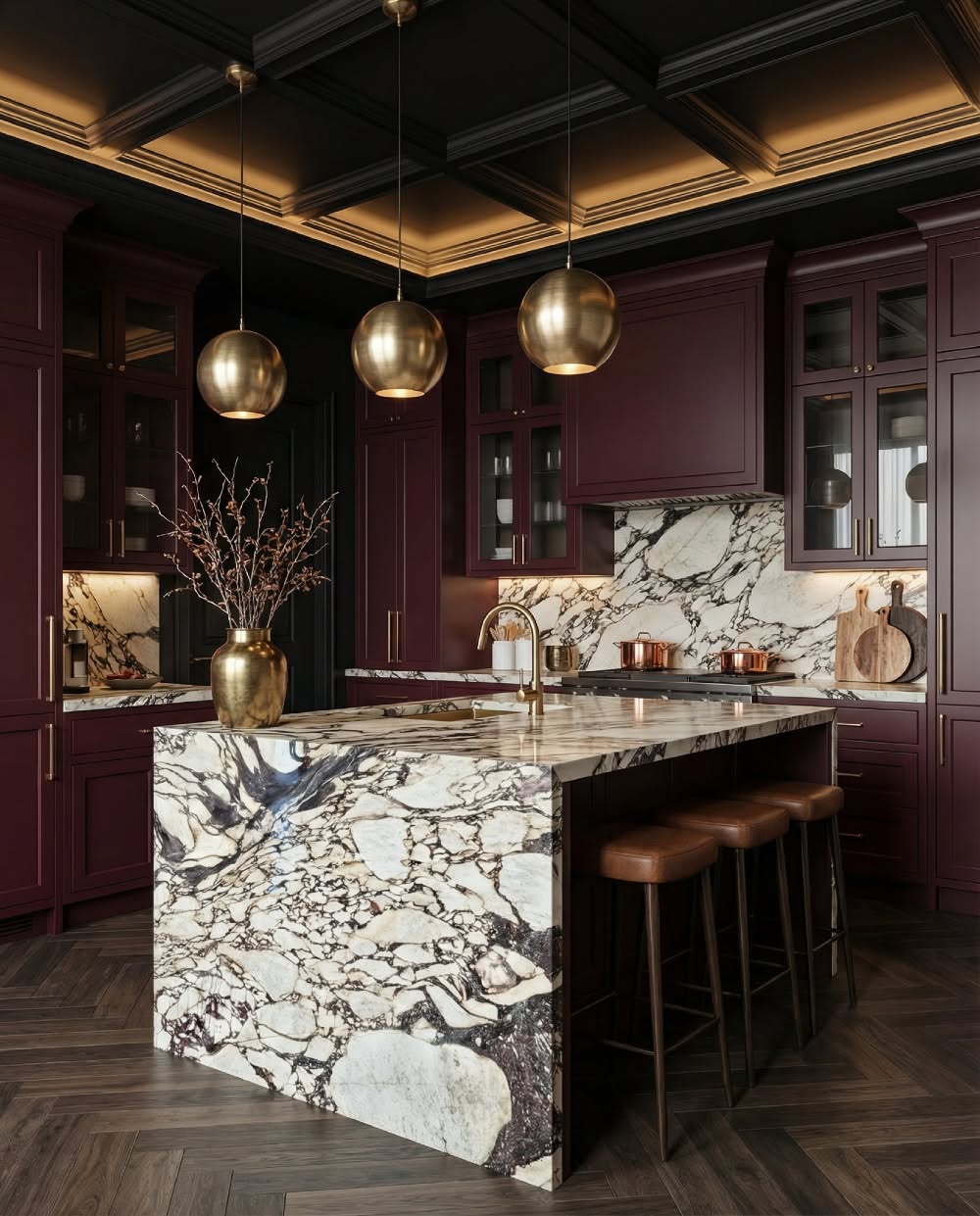
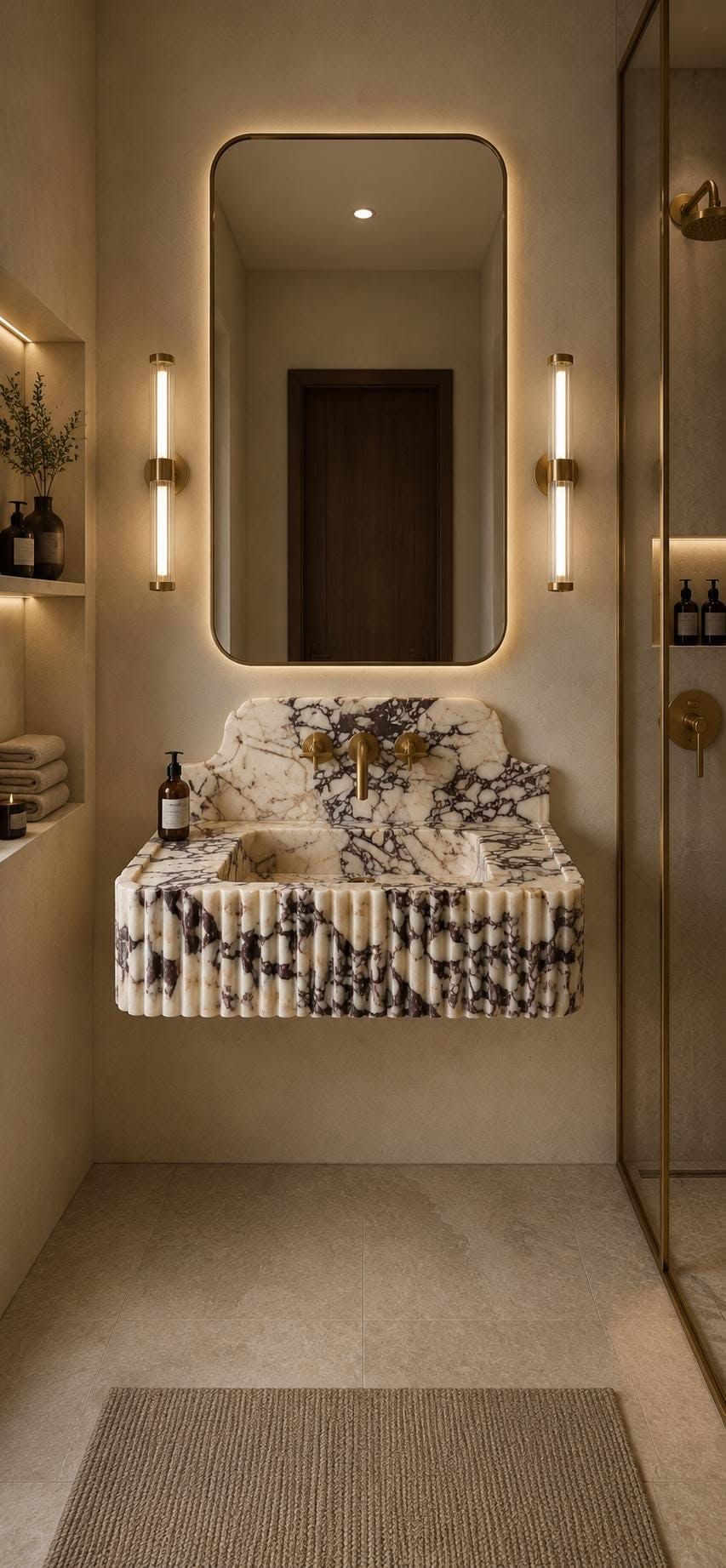
Calacatta Viola is famous for its creamy background and bold violet, plum, and burgundy movement. It can work in modern, classical, and richly layered interiors because the warm base connects easily with timber, plaster, brass, and coloured cabinetry.
It is also marble. Its calcite content makes it vulnerable to acidic ingredients such as lemon juice, vinegar, wine, and tomato, which can etch the finish. Sealing may improve stain resistance, but it does not prevent a chemical etch. Knives, grit, and heavy impact can also mark or damage the surface.
People still choose Calacatta Viola because they see the beauty first. That is a valid decision when the owner understands that the surface may develop a patina. A honed finish often makes gradual wear feel softer, and using the material on a serving island, bathroom vanity, fireplace, or wall reduces some of the pressure placed on a primary food-preparation run.
A recent local raw-material reference was approximately US$1,400 per square metre (US$130.06 per square foot), while selected China-sourced material starts around US$800 per square metre (US$74.32 per square foot), before the remaining project costs.
True quartzite: marble-like movement with harder minerals
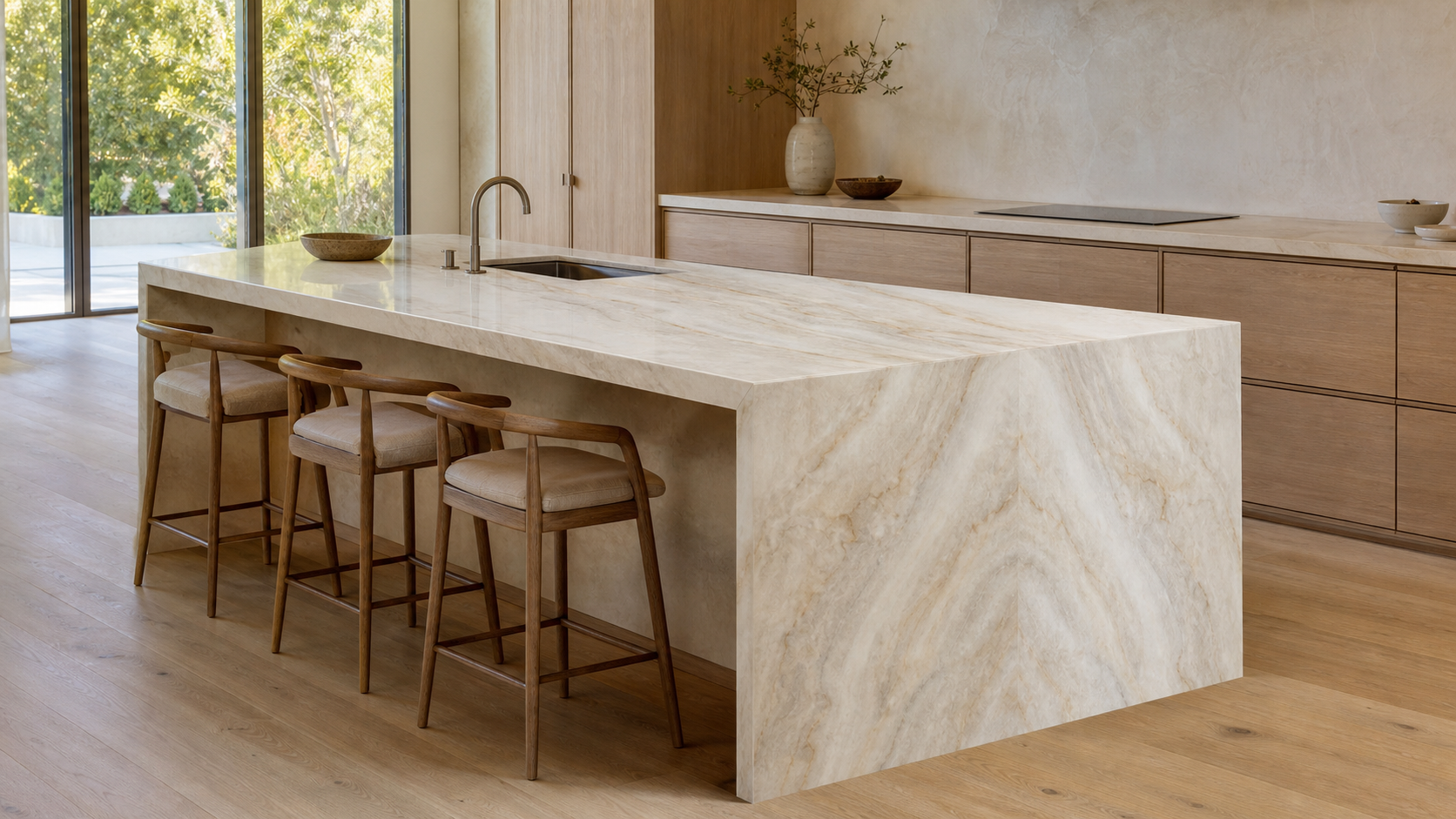
True quartzite is a metamorphic stone formed from quartz-rich sandstone. In design terms, it can feel like a bridge between marble and granite: many selections have the flowing movement associated with marble, while the quartz-rich structure provides the harder, more scratch-resistant character expected from a working kitchen surface.
Taj Mahal is the best-known warm example. Its beige, cream, taupe, and soft gold movement coordinates with white, oak, walnut, greige, and many coloured cabinets. A honed finish can make the surface feel quieter and more architectural, although the finish and exact slab should always be tested for the intended use.
Quartzite is not maintenance free. It can still stain, chip at vulnerable edges, or contain acid-sensitive accessory minerals, and all natural stone benefits from sensible cleaning and trivets. The practical advantage is that confirmed true quartzite is generally more resistant to the scratches and common food acids that quickly change a marble finish.
Selected Taj Mahal raw slabs sourced through China start around US$250 per square metre (US$23.23 per square foot). Price varies with colour, movement, quarry lot, slab size, finish, soundness, reinforcement, and usable yield.
Choose according to the surface, not only the room
Use true quartzite for the primary working run when resistance to daily preparation, scratching, and common food acids is the priority. Ask the supplier how the stone was classified and request testing if the commercial name is ambiguous.
Use marble when its appearance is the priority and the owner accepts etching, wear, and eventual patina. It can be particularly successful on a secondary island, baking or serving zone, vanity, fireplace, shower wall, or other surface that is not treated like a chopping board.
Whichever material you choose, use cutting boards rather than chopping directly on the stone. Blot spills promptly, clean with a neutral product, use trivets, and confirm sealing recommendations for the exact slab and finish.
Public price references
Explains that true marble is calcite based, vulnerable to mild acids, and expected to develop maintenance needs and patina in kitchen and bar applications.
Distinguishes calcareous and siliceous stones and provides general cleaning, sealing, spill, scratch, and acid guidance.
Consumer guidance on countertop selection and the acid-etching vulnerability of marble in kitchens.
Questions people usually ask
Is quartzite completely resistant to acids?
No stone should be treated as chemically indestructible. True quartzite is generally more resistant to common kitchen acids than calcite-based marble, but accessory minerals, treatments, and mislabelled stones can behave differently. Test the exact slab when performance is critical.
Will sealing stop marble from etching?
No. An impregnating sealer can improve resistance to staining, but it does not stop acid from reacting with calcite and dulling or etching the marble finish.
Can Calacatta Viola still be used for a kitchen island?
Yes, when the owner accepts its maintenance and patina. It is better suited to serving, gathering, or display than direct chopping, and a honed finish can make gradual wear less visually abrupt.
Is every slab sold as Taj Mahal true quartzite?
Trade names are not a geological guarantee. Ask for reliable classification information and test the actual slab if acid and scratch resistance are central to the decision.