Nacarado vs Blue Roma: Which Statement Stone Is Right for Your Kitchen?
Nacarado feels warm, layered, and organic. Blue Roma feels cooler, sharper, and more architectural. Here is how to choose between them before approving a slab.
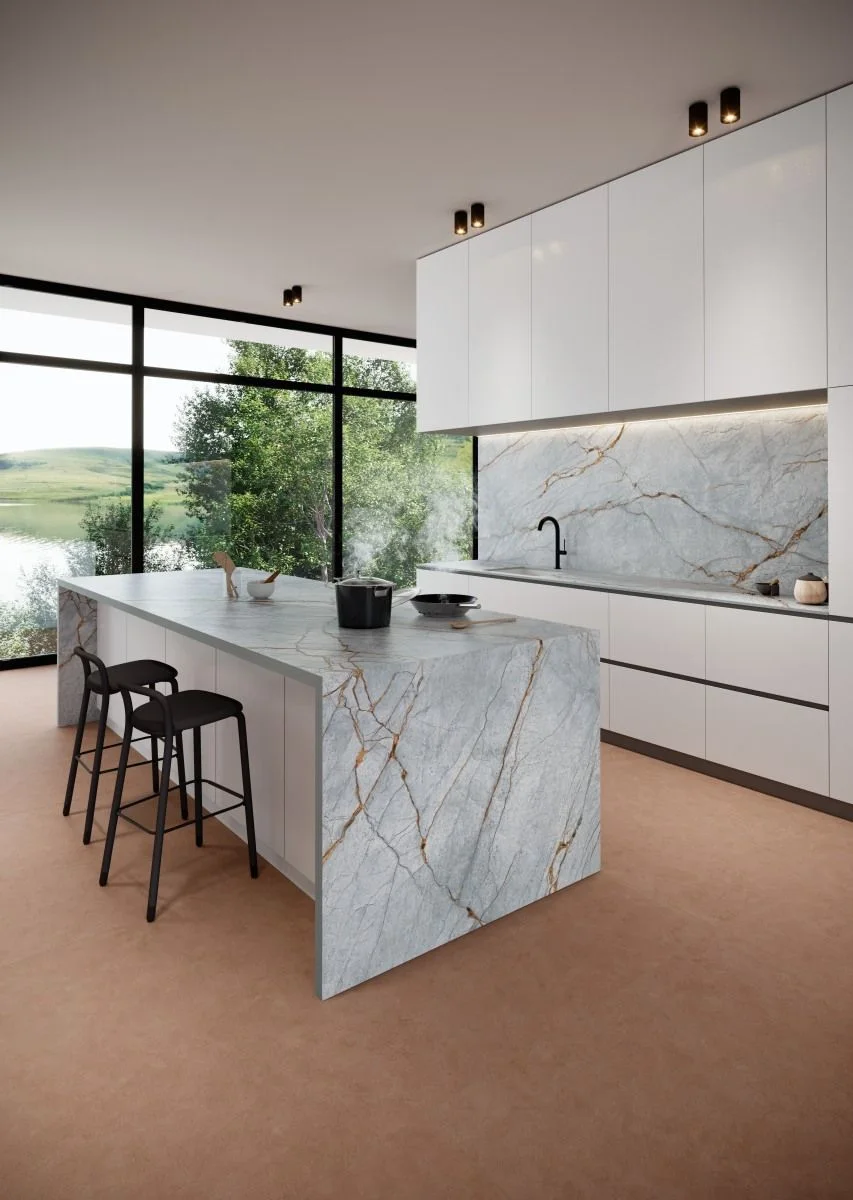
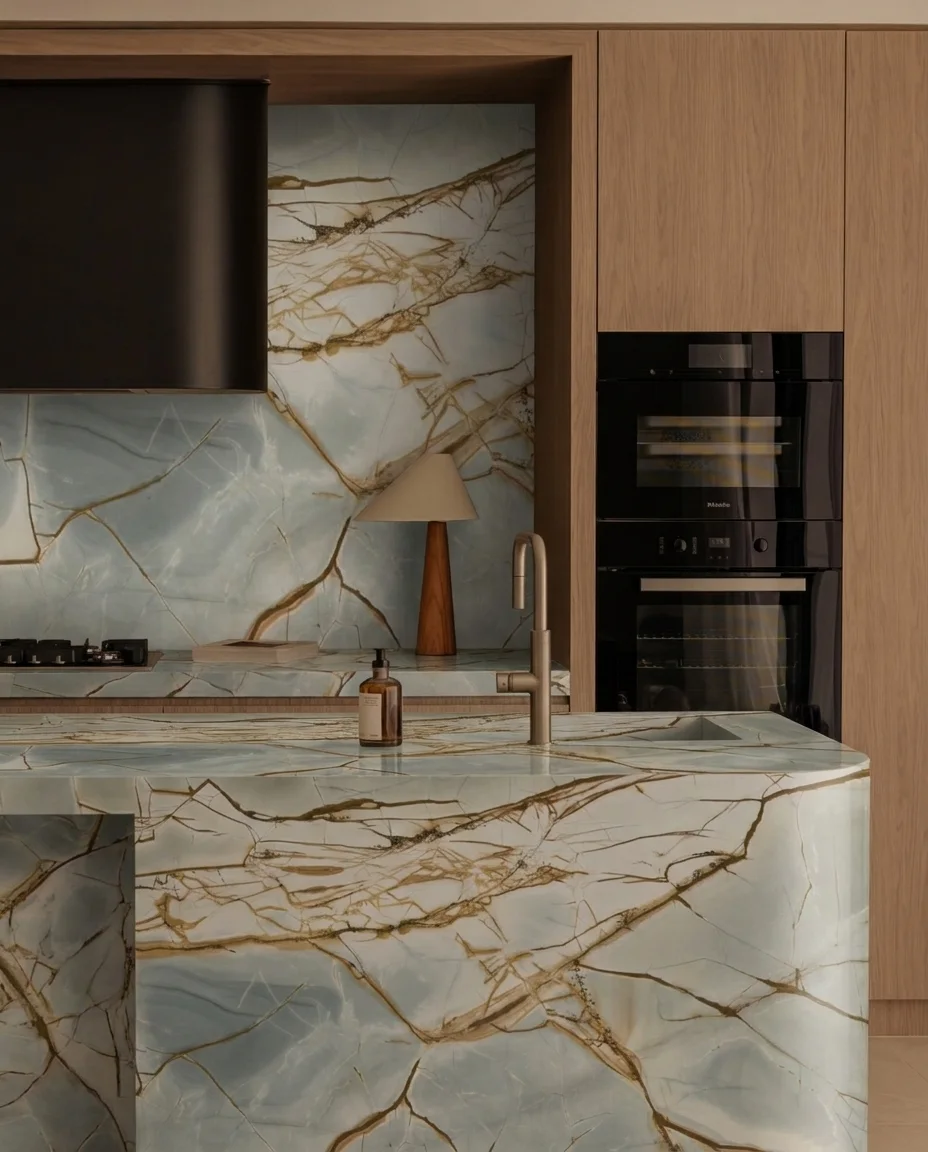
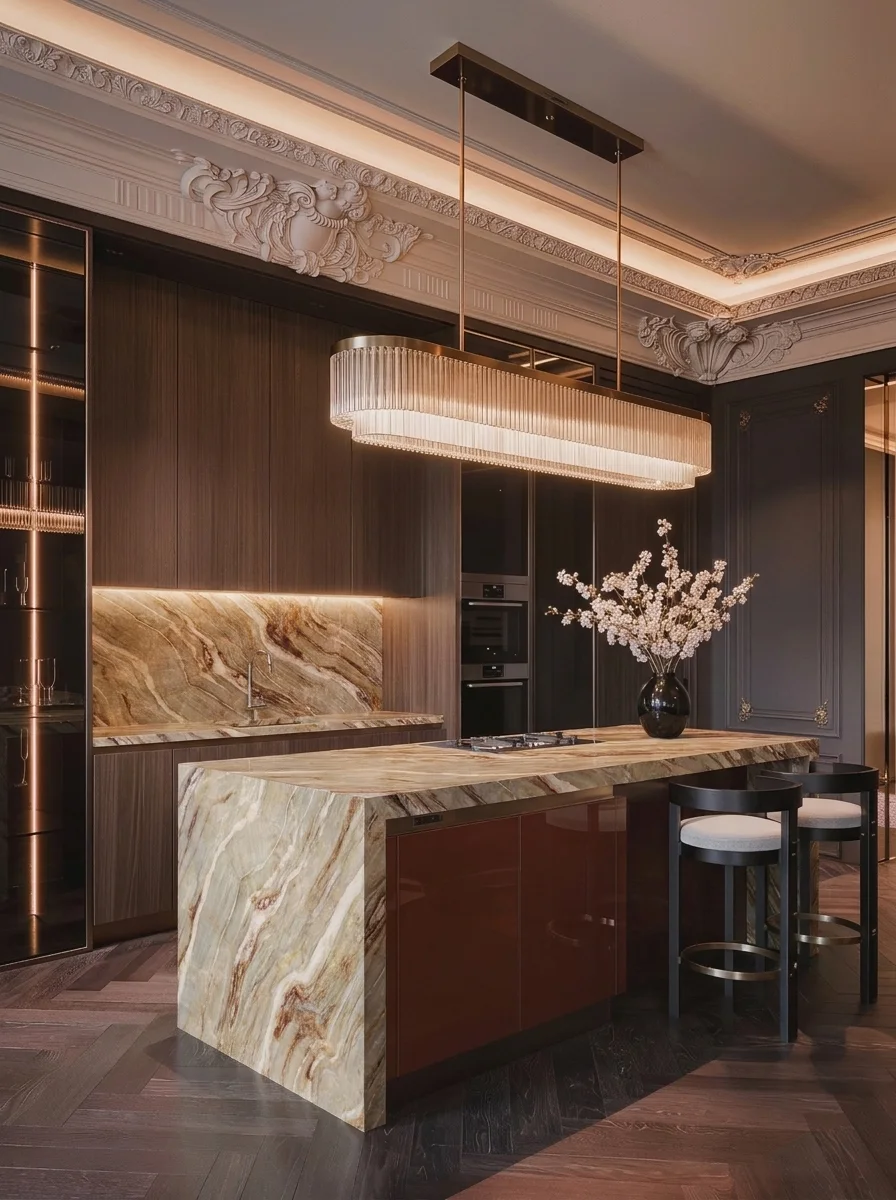
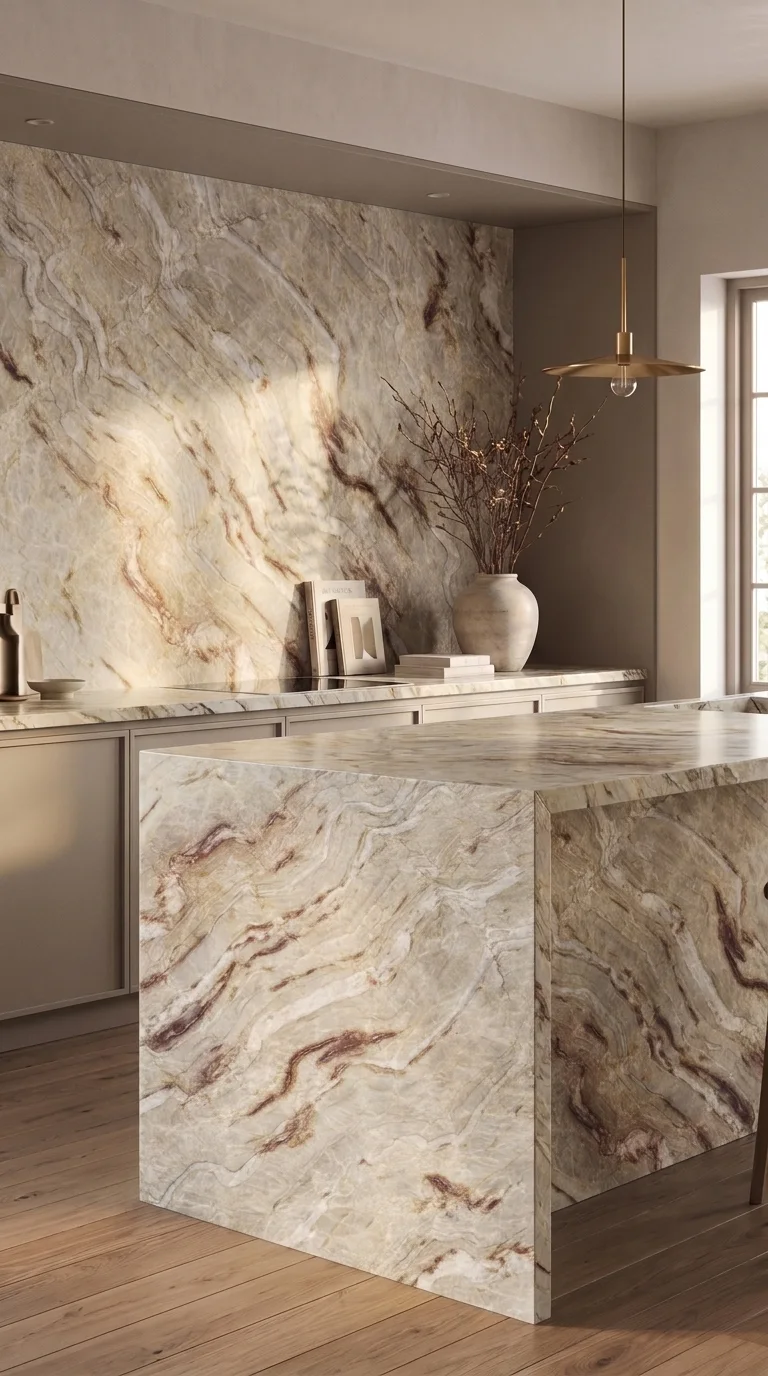
Two dramatic Brazilian stones with very different personalities
Some stones complete a kitchen. Others define its entire personality. Nacarado and Blue Roma belong to the second group: both are expressive Brazilian natural stones often selected for statement islands, full-height backsplashes, and feature walls where their large-scale movement can be seen clearly.
They do not, however, create the same room. Nacarado is warm, layered, and earthy. Blue Roma is cooler, more graphic, and more architectural. The better choice is not simply the slab that looks most impressive on a rack. It is the one that supports the atmosphere, cabinetry, and layout of the complete kitchen.
Natural stone trade names describe a family of appearances, not a guaranteed pattern. Always approve the actual slabs or bundle, including full-slab photographs, close-ups, dimensions, finish, repairs, and an annotated cutting layout before fabrication.
1. Nacarado: warm, layered, and atmospheric
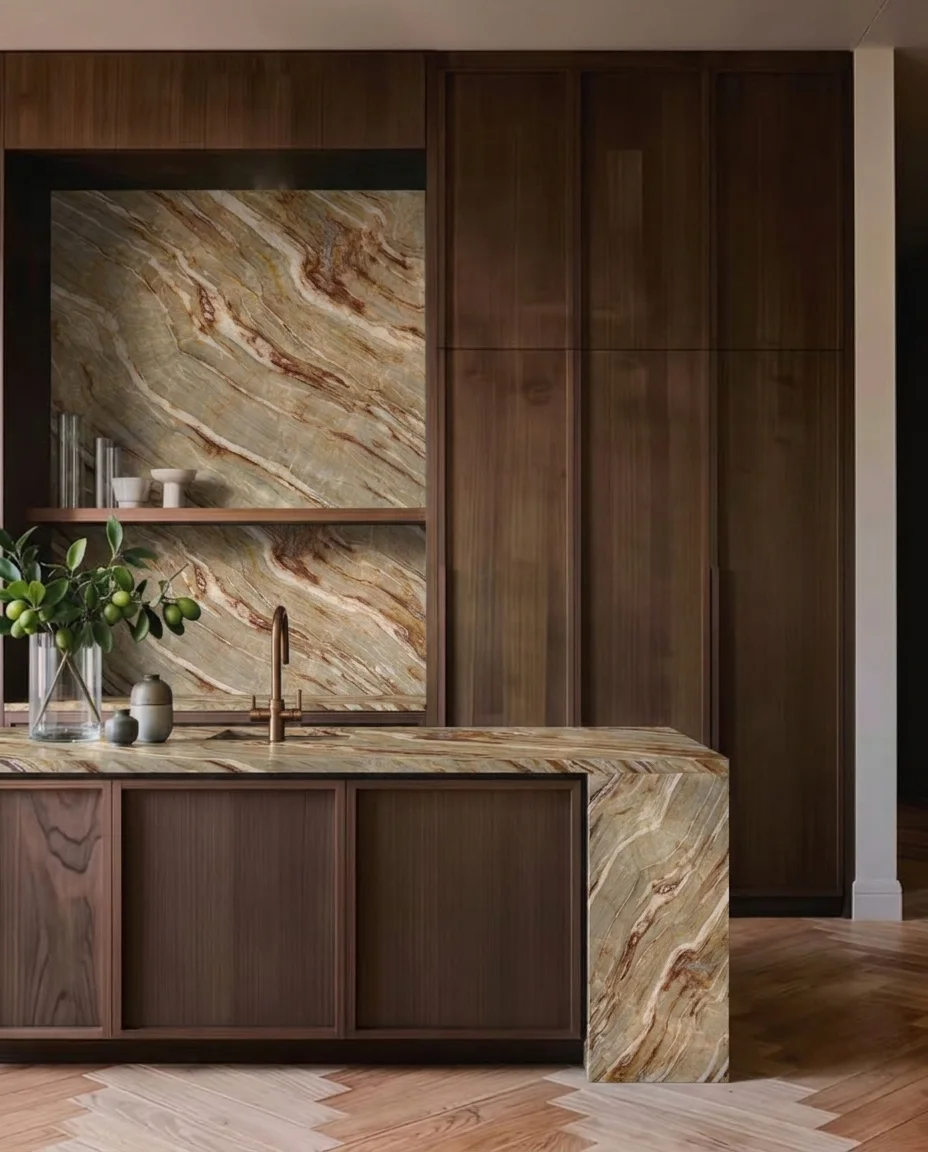
Nacarado is known for a luminous, almost pearlescent appearance. Its background can move through cream, beige, soft grey, and muted green, while the veins may introduce gold, rust, plum, or burgundy. One bundle can look sandy and quiet; another can have much stronger wine-coloured movement.
That warmth makes Nacarado especially effective with walnut, smoked oak, bronze, burgundy lacquer, or dark cabinetry. It brings light into a darker interior without creating a cold contrast. In a pale neutral room, the stone can become the main source of colour and texture.
Nacarado is best given enough surface area for its layered movement to read continuously. Long islands, full-height splashbacks, and carefully aligned waterfall ends usually show it better than several small, disconnected pieces. Ask the fabricator to position the strongest veins deliberately rather than letting them disappear into cut-outs or seams.
2. Blue Roma: cool blue with golden movement
Blue Roma is immediately recognisable for its blue-grey field and strong veins in gold, copper, brown, and sometimes black. Depending on the slab, the movement may look linear and fractured, or it may form larger angular mineral concentrations.
With white cabinetry, Blue Roma looks crisp and graphic: the blue becomes clearer and the golden veins behave almost like drawn lines. With natural timber, the same stone feels warmer because its brown and gold details connect with the wood.
Blue Roma is rarely a background material. It works best when competing finishes are restrained and the stone is allowed to become the focal point. A waterfall island, full-height backsplash, or carefully planned feature wall will usually show its character better than a collection of narrow pieces.
Which one works better with your kitchen?
Choose Nacarado if you want the room to feel warmer, richer, and more organic. It is particularly convincing with dark wood, warm metals, earthy paint colours, and interiors that need a softer transition between cabinetry and stone.
Choose Blue Roma if you want clearer contrast and a more contemporary architectural statement. It is especially strong with white, light oak, black, bronze, and simple cabinet profiles that leave room for its blue-and-gold pattern.
Neither stone is visually quiet. If you prefer a subtler result, do not reject the material name immediately. Instead, look for a specific slab with a calmer area and confirm whether the cutting layout can place that area on the most visible surfaces.
An important note about the name Blue Roma Quartzite
Blue Roma is widely sold under the commercial description Blue Roma quartzite. However, Vermont Mineração, the quarry owner, identifies its Blue Roma geologically as an exotic trachyte, while commercial distributors such as Brachot classify the material as quartzite.
This naming difference does not automatically make the stone unsuitable for a kitchen, but it means the trade name alone should not be treated as a technical specification. Request information for the exact batch you are considering, including any available test data, recommended fabrication methods, sealing, and maintenance. The advice should relate to the slabs you are buying, not only to the name shown on an invoice.
What to check before ordering either stone
Approve the actual full slabs rather than choosing from a small sample or inspiration photograph. Confirm whether consecutive slabs are available if the project needs multiple surfaces, mirrored pieces, or bookmatching. Ask for slab dimensions, thickness, finish, reinforcement, repairs, and usable yield.
Request a labelled cutting layout before fabrication, especially for waterfall ends and full-height backsplashes. Check where the main veins will meet, where seams will fall, and whether sinks, hobs, outlets, and other cut-outs remove important areas of the composition.
Finally, compare complete project scopes rather than raw slab prices alone. Material, fabrication, edge work, cut-outs, reinforcement, packing, freight, duties, delivery, and installation can all change the final cost. A lower square-metre price is not necessarily a lower finished-project price.
The final choice is about mood, not only colour
Nacarado and Blue Roma are not interchangeable alternatives. Nacarado brings warmth, depth, and flowing movement. Blue Roma brings contrast, structure, and a much clearer blue-and-gold identity.
If you are still deciding, send us a photograph of the room, approximate dimensions, and the country where the project is located. We can compare current slabs, review likely cutting layouts, and prepare a quotation for the stone, fabrication, packing, and shipping.
Public price references
Reference for Nacarado's Brazilian origin, pearlescent appearance, colour range, and common applications.
Quarry-owner reference describing Blue Roma's blue field, gold-brown movement, origin, finishes, and geological classification as trachyte.
Commercial reference listing Blue Roma as Brazilian quartzite with a blue-grey base and black-gold mineral movement.
Questions people usually ask
What is the main difference between Nacarado and Blue Roma?
Nacarado usually has a warmer cream, beige, grey-green, and burgundy palette with flowing layered movement. Blue Roma normally has a cooler blue-grey background with stronger gold, copper, brown, or black fractured veining. Exact slabs vary significantly.
Which stone works better with dark wood cabinetry?
Nacarado is often the easier pairing because its cream, gold, rust, and burgundy colours connect naturally with walnut and other dark warm woods. Blue Roma can also work with timber, but it normally creates a stronger cool-versus-warm contrast.
Is Blue Roma really quartzite?
Blue Roma is commonly marketed as quartzite, but the quarry owner Vermont Mineração identifies its material geologically as trachyte. Ask for technical information and fabrication guidance for the exact slabs being offered rather than relying only on the commercial name.
What should I approve before fabrication?
Approve full-slab images, dimensions, finish, repairs, usable areas, seam positions, and a labelled cutting layout. For a multi-slab project, also confirm that the slabs belong to a compatible bundle and that enough matching material is reserved.