3 Exotic Stones for Statement Interiors: Onyx, Semi-Precious Stone, and Travertine
Onyx glows, semi-precious slabs behave like jewellery, and travertine brings unmistakable texture—but the last material needs the right finish and detailing for its intended use.
Three materials that immediately change a room
If I walk into your home and see one of these three exotic stones, I already know you have great taste. But if the last one is specified incorrectly, I also know the project may become unnecessarily expensive or difficult to maintain.
Onyx, semi-precious slabs, and travertine all have strong personalities, but they create impact in different ways. Onyx uses translucency, semi-precious stone uses real mineral colour, and travertine uses pores, bands, and quiet natural movement.
None should be selected from a small sample alone. Review the actual slabs or panels, intended lighting, edge details, support, finish, installation method, and maintenance expectations before fabrication begins.
1. Onyx: natural stone that becomes light
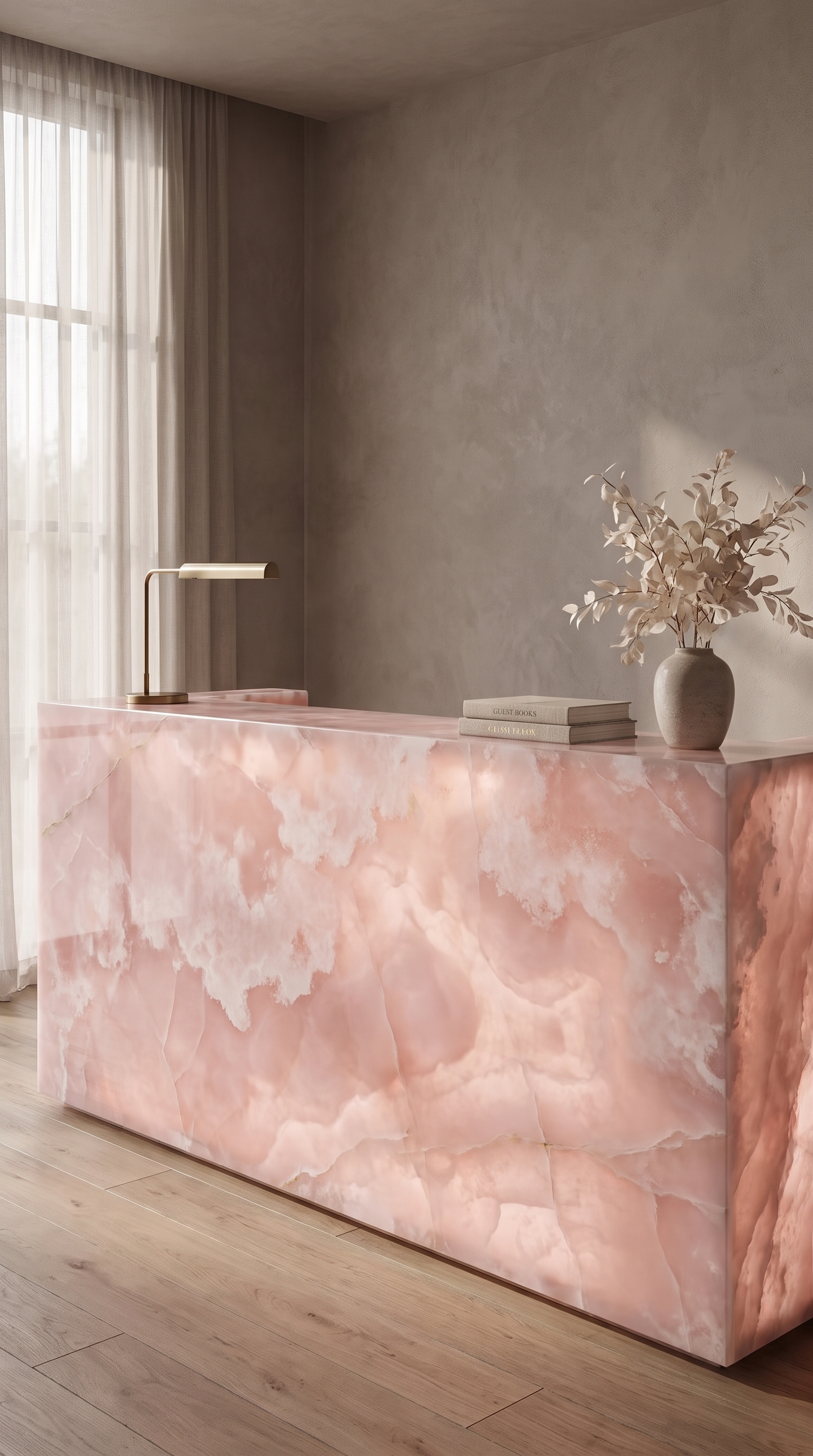
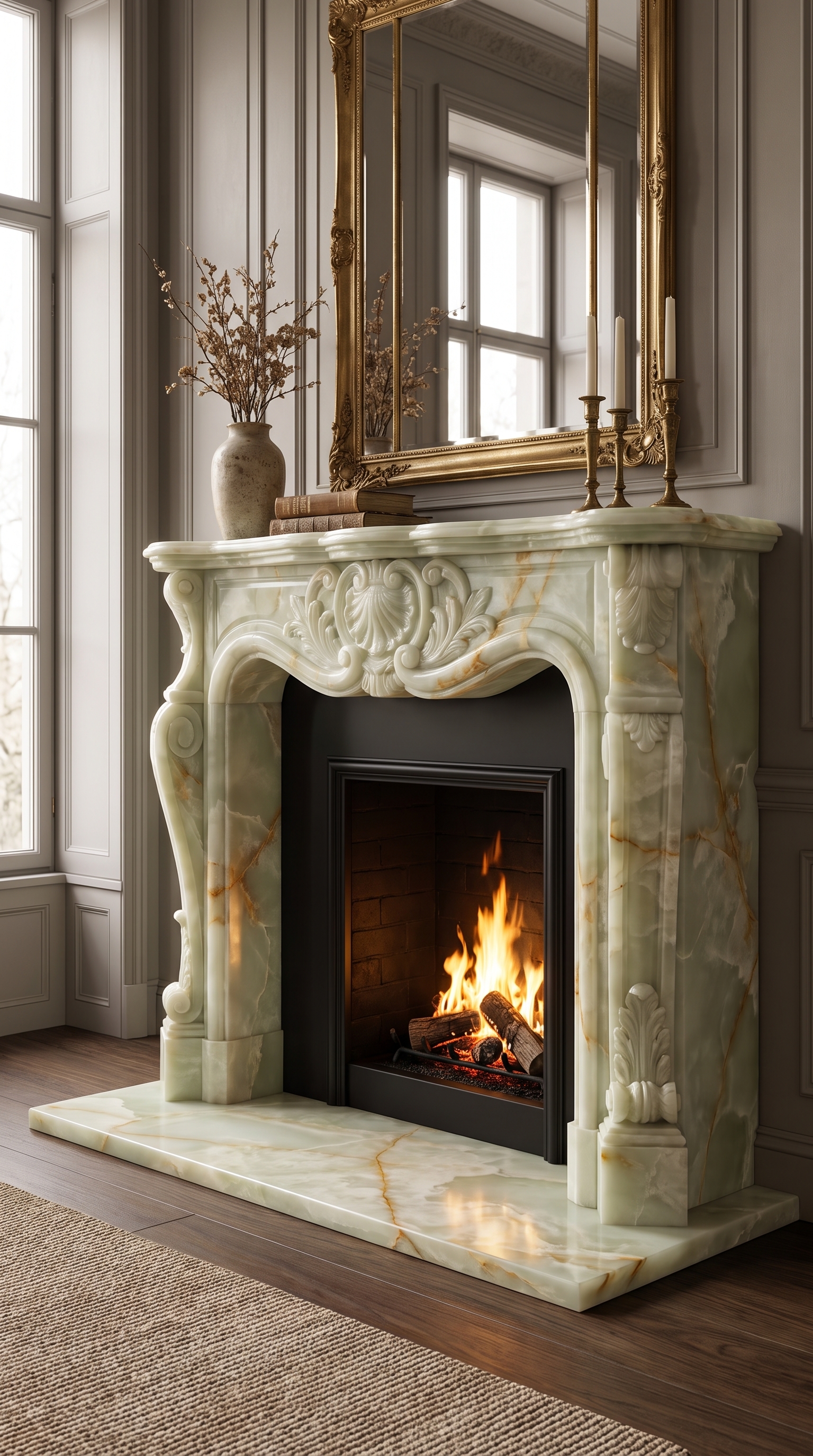
Commercial onyx is valued for its translucency. Place a properly designed light source behind a suitable slab, and a bar, vanity, fireplace, island, or feature wall can glow from within rather than simply reflect light from the room.
The effect changes with every colour and slab. Pink onyx feels soft and romantic; honey and yellow varieties create warmth; green and blue material can become much more dramatic. Even without backlighting, the bands, clouds, and depth can be beautiful enough to carry a room.
Onyx is also relatively delicate and can be sensitive to scratching and acids. It is best used where the visual impact justifies the extra care, with the support, lighting system, seams, ventilation, access, and future maintenance designed before fabrication.
2. Semi-precious stone: jewellery scaled up for architecture
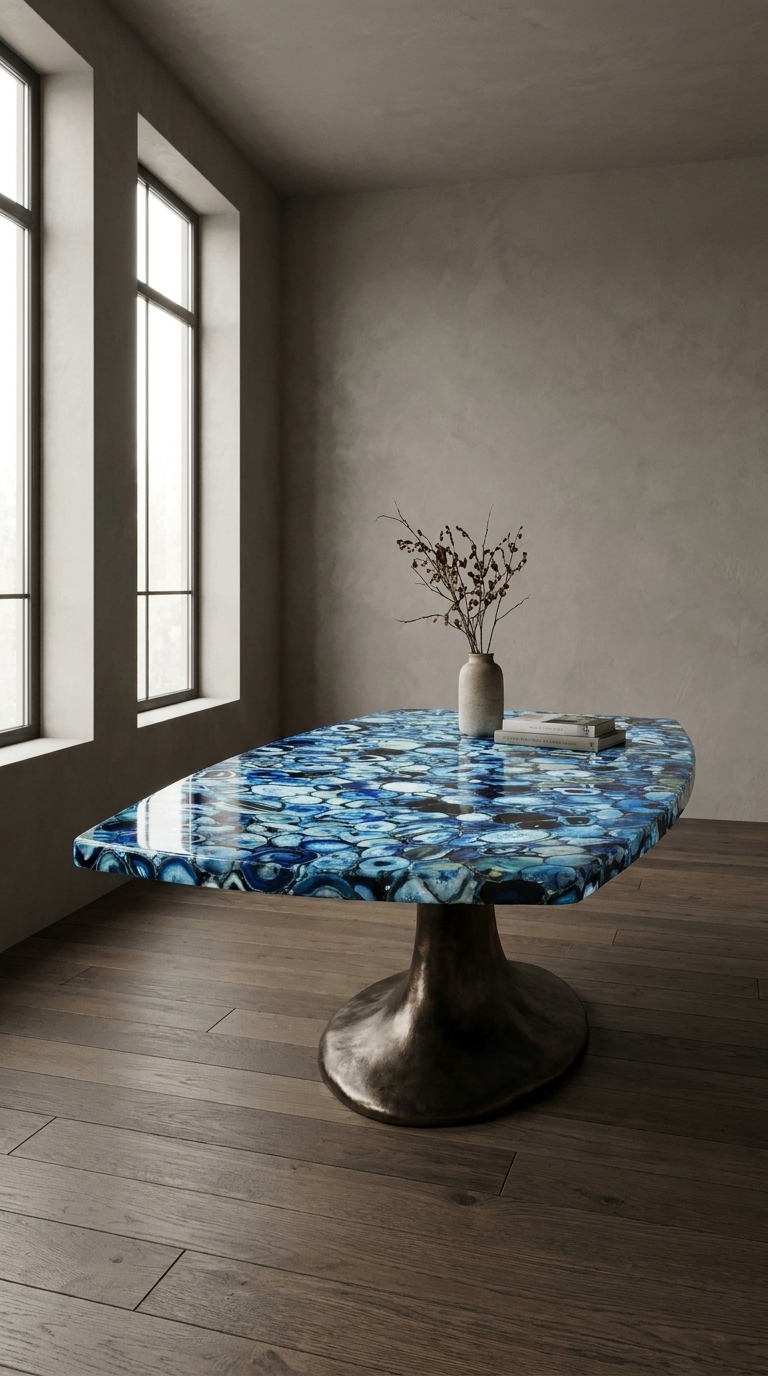
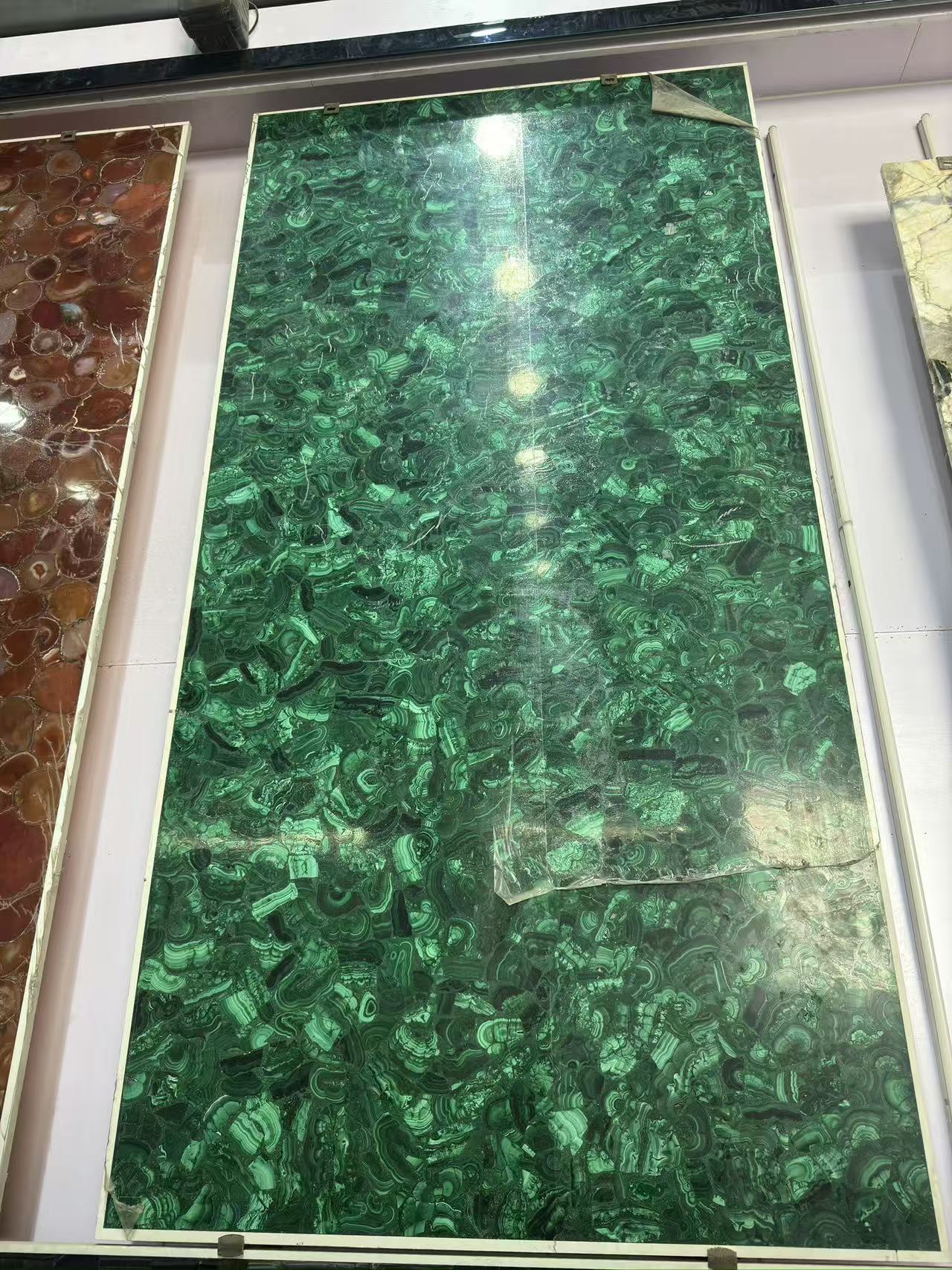
Semi-precious slabs are decorative surfaces assembled from selected mineral pieces such as agate, malachite, lapis lazuli, tiger eye, and labradorite. The individual pieces are arranged and bonded into panels large enough for furniture, counters, bars, wall features, and other statement applications.
Some varieties can be backlit, while others are chosen for colour, reflection, or optical movement. Labradorite can flash blue and green as the viewing angle changes; malachite creates saturated green pattern; agate can reveal translucent bands when illuminated.
Treat these panels as luxury decorative material rather than an ordinary commodity slab. Confirm the exact composition, backing or resin system, thickness, reinforcement, edge treatment, maximum unsupported span, heat and chemical limitations, and whether the specific panel is suitable for the intended application.
3. Travertine: beautiful texture that needs the right specification
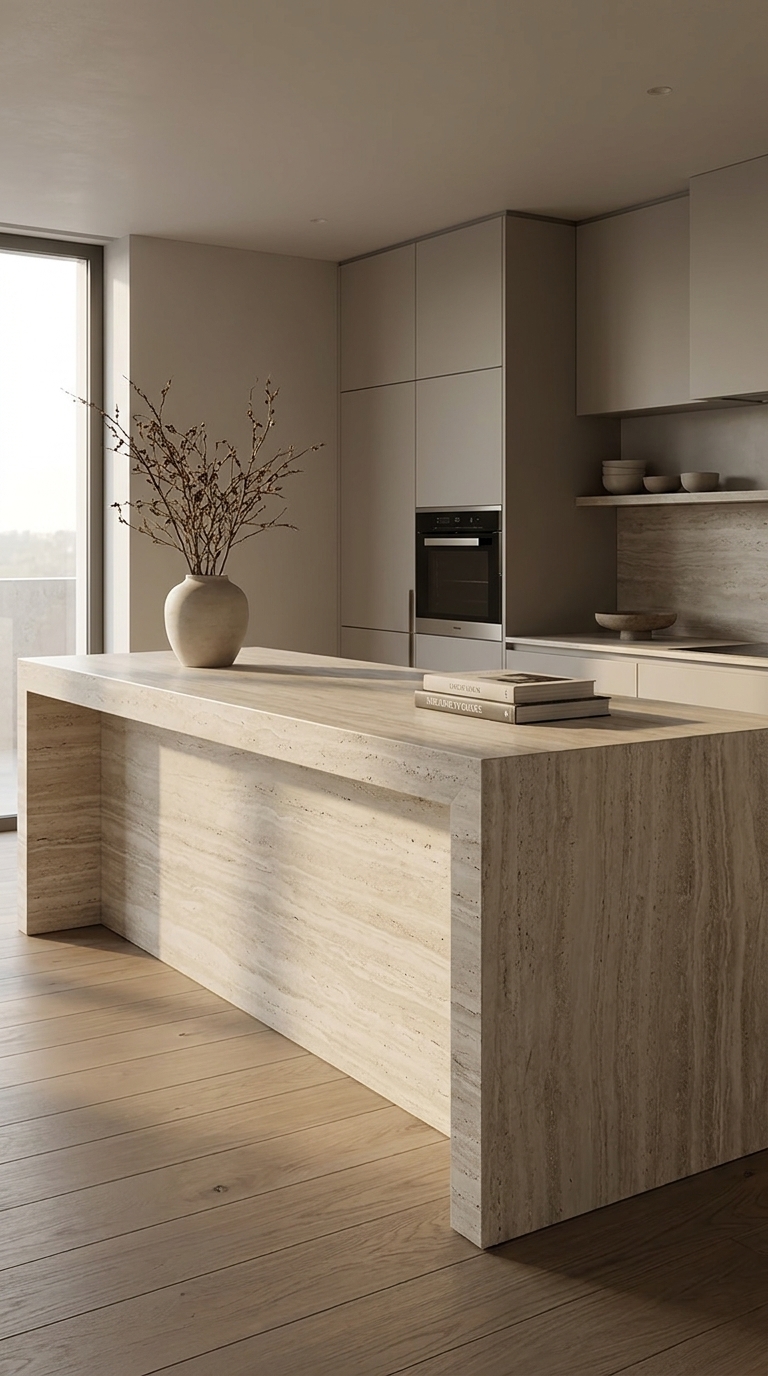
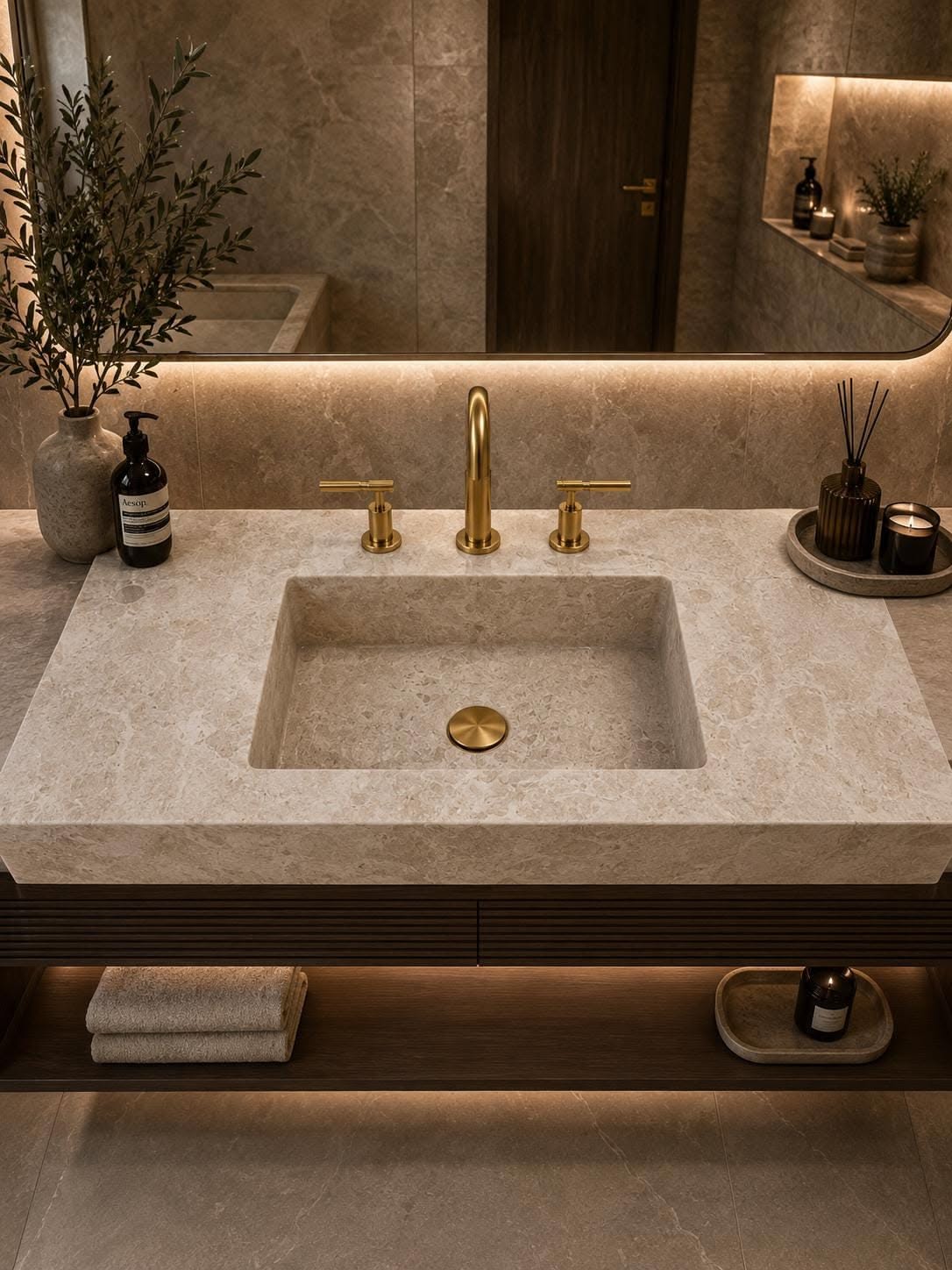
Travertine can be used across walls, floors, tables, fireplaces, vanities, islands, and countertops. Its warm neutral colour and natural voids give it more personality than many uniform beige surfaces, but different applications require different decisions about filling, finish, sealing, support, and maintenance.
For surfaces such as countertops, islands, and vanities, I would normally ask the fabricator to fill the holes. Open voids can quickly collect food, oil, water, soap, and dirt, making a frequently used horizontal surface much harder to keep clean.
Travertine can be used in wet areas, but it should not be treated as a substitute for proper waterproofing. Poor drainage, detailing, ventilation, cleaning, or maintenance may allow moisture and organic growth to darken the surface over time. The substrate and waterproofing system should be designed by qualified project professionals.
The open texture is exactly what makes travertine so attractive. In the end, specifying it well is an informed balance between the natural appearance you want and the practical demands of the location.
How to choose between them
Choose onyx when light is part of the design and you are comfortable treating the surface with care. Choose semi-precious stone when the project needs concentrated colour, rare mineral character, or a small feature that should feel like jewellery.
Choose travertine when you want warm architectural texture across a larger area. It can be the most versatile of the three, but the exact finish and construction should respond to whether the surface is vertical, horizontal, dry, wet, decorative, or heavily used.
Before ordering any of them, ask for current full-slab or full-panel images, close-ups, dimensions, thickness, repair information, finish samples, and a proposed cutting layout. For translucent work, also approve a lighting mock-up using the actual material whenever possible.
Public price references
General guidance on commercial onyx, translucency, typical interior applications, acid sensitivity, scratching, and care expectations.
General information on limestone and travertine characteristics, selection, finishes, and applications.
Industry discussion of natural voids, factory filling, installation filling, and how voids may appear or change in service.
Questions people usually ask
Can every onyx slab be backlit?
Many commercial onyx slabs are translucent, but the result varies with colour, thickness, veining, repairs, backing, and the lighting system. Test the actual slab with a full-size lighting mock-up before fabrication.
Are semi-precious stone slabs made from real gemstones?
They can be assembled from real mineral pieces such as agate, malachite, tiger eye, lapis lazuli, or labradorite, typically bonded into a decorative panel. Confirm the exact composition and resin or backing system with the supplier.
Should travertine holes be filled on a countertop or vanity?
For frequently used horizontal surfaces, filling is normally more practical because open voids can collect food, oil, water, soap, and dirt. Approve the fill colour and finish with the fabricator.
Can travertine be used in a shower or other wet area?
It can, but performance depends on the stone, finish, filling, waterproofing, drainage, ventilation, detailing, cleaning products, and maintenance. The stone is a finish layer and does not replace a correctly designed waterproofing system.