3 Countertop Stones You Will Never Regret Choosing
Taj Mahal feels warm and quiet, White Macaubas brings clean linear movement, and Calacatta Viola remains the dramatic classic. Compare their appearance, use, and recent material price references.
Public price snapshot
Recent starting references for comparable raw slabs
| Market | Public price | What it covers |
|---|---|---|
| Taj Mahal Quartzite | About US$500/m² (US$46.45/ft²) locally vs from US$250/m² (US$23.23/ft²) through China | Raw-slab material reference only. Grade, background colour, movement, slab dimensions, repairs, finish, usable yield, packing, freight, duties, fabrication, delivery, and installation affect the final price. |
| White Macaubas Quartzite | About US$500/m² (US$46.45/ft²) locally vs from US$250/m² (US$23.23/ft²) through China | Raw-slab material reference only. Line direction, colour consistency, slab size, fissures, repairs, finish, usable yield, logistics, fabrication, and installation affect the final quote. |
| Calacatta Viola Marble | About US$1,400/m² (US$130.06/ft²) locally vs from US$600/m² (US$55.74/ft²) through China | Raw-slab material reference only. Origin, creamy background, burgundy colour, pattern scale, bundle matching, repairs, dimensions, and usable yield strongly influence grade and price. |
Three dependable looks for three very different kitchens
These three stones are popular for a reason, but they do not create the same room. Taj Mahal is warm and restrained, White Macaubas is cooler and more linear, and Calacatta Viola turns the surface into the main decorative feature.
The first two are true quartzites and are commonly selected for hard-working kitchens because they are generally more resistant to scratching and everyday kitchen acids than marble. Calacatta Viola is marble, so its beauty comes with a greater need for care around acids, abrasion, and staining.
Stone names describe a family rather than one guaranteed appearance. Always approve current full-slab photographs, close-ups, dimensions, repair information, and a labelled cutting layout before fabrication.
1. Taj Mahal Quartzite: warm, calm, and easy to build around
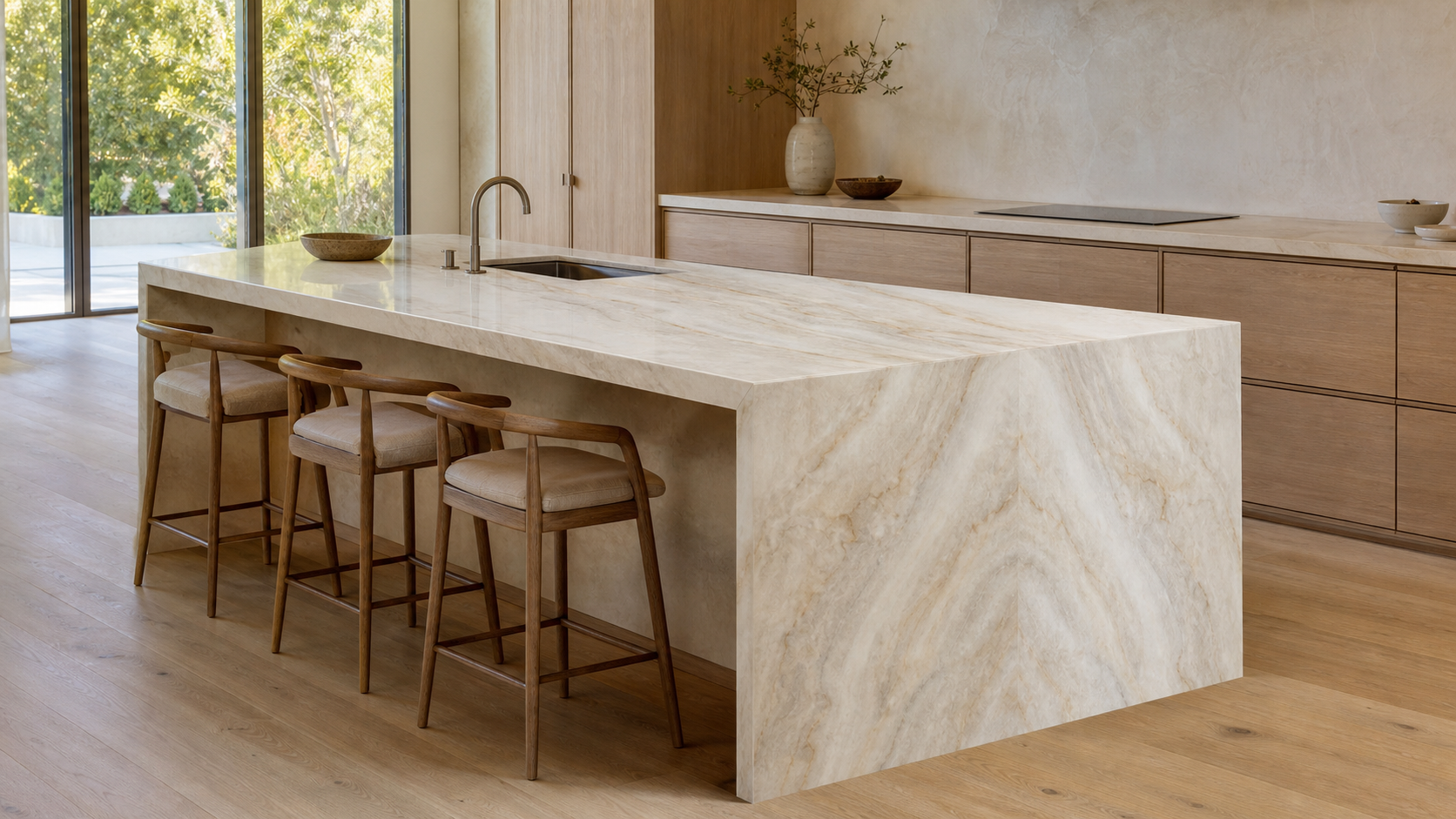
Taj Mahal combines a cream-to-beige background with soft taupe and golden movement. It has some of the elegance people associate with marble, but its quieter pattern allows cabinetry, lighting, timber, and furniture to remain part of the composition.
It works especially well with warm oak, walnut, off-white, taupe, bronze, and aged brass. On an island, continue the movement deliberately across the top and waterfall ends instead of treating each cut as an isolated rectangle.
A recent local reference may be around US$500 per square metre (US$46.45 per square foot), while sourcing comparable raw slabs through China starts around US$250 per square metre (US$23.23 per square foot). These figures exclude the variables listed in the price table above.
2. White Macaubas Quartzite: cleaner lines and a cooler mood
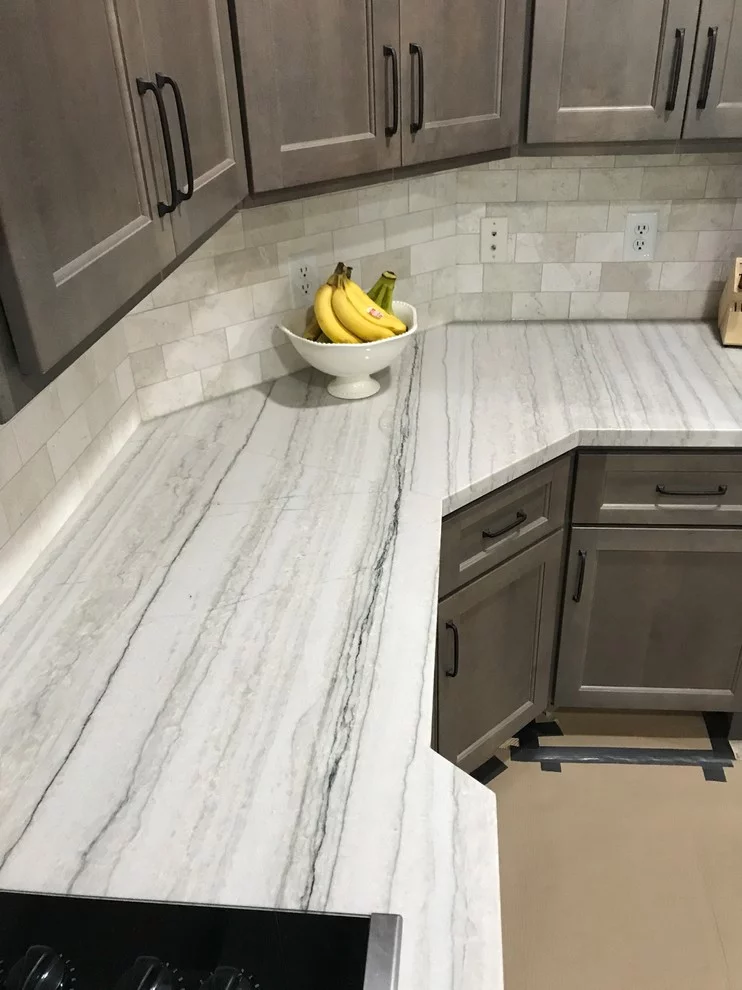
White Macaubas usually has a pale white-to-grey background crossed by long, relatively parallel grey lines. The effect is more directional than Taj Mahal and less dramatic than a strongly brecciated marble, making it well suited to contemporary kitchens.
The line direction matters. A carefully planned layout can make an island feel longer, connect a backsplash across several panels, or create controlled movement over a waterfall edge. A poor layout can interrupt the bands and make the installation feel fragmented.
A recent local reference may be around US$500 per square metre (US$46.45 per square foot), while sourcing through China starts around US$250 per square metre (US$23.23 per square foot) for comparable raw-slab material.
3. Calacatta Viola: the classic statement
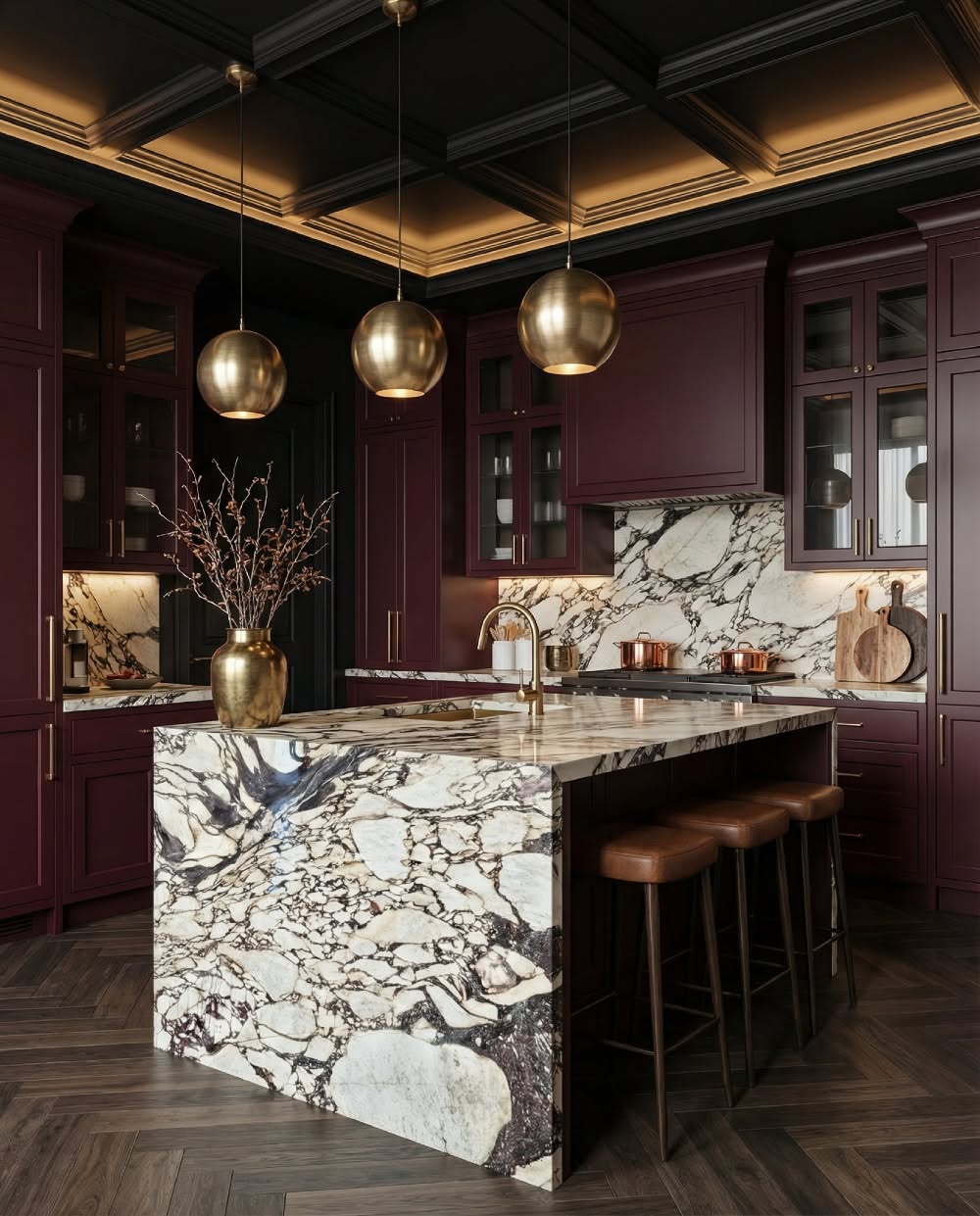
Calacatta Viola pairs a creamy ground with deep burgundy, plum, and violet movement. It works in modern, classical, and old-world interiors because the palette feels historic while the large broken pattern can look surprisingly contemporary.
For a lightly used island, bar, vanity, fireplace, or feature wall, its visual impact may be worth the extra care. In a heavily used kitchen, the owner should understand that acidic foods can etch marble and that scratches and patina will develop differently from quartzite.
A recent local reference may be around US$1,400 per square metre (US$130.06 per square foot). Sourcing through China starts around US$600 per square metre (US$55.74 per square foot), depending strongly on the exact origin, grade, colour, pattern, and slab yield.
Which one should you choose?
Choose Taj Mahal when you want warmth and versatility. Choose White Macaubas when you prefer a paler surface with clear linear movement. Choose Calacatta Viola when the stone should become the artwork and you accept the care expectations of marble.
Compare like for like before treating the price difference as a saving. Confirm the exact slab, usable square metres, repairs, finish, fabrication, edge details, cut-outs, packing, freight, duties, local delivery, and installation scope.
Questions people usually ask
Are Taj Mahal and White Macaubas marble?
They are commonly sold as quartzites. Because trade names can be used inconsistently, ask the supplier to confirm the geological material and review the exact slab rather than relying on the name alone.
Which of these three is the most practical for a busy kitchen?
A properly identified true quartzite such as Taj Mahal or White Macaubas is generally the more practical starting point. Fabrication quality, sealing, finish, edge design, and daily use still matter.
Why can two slabs with the same name have different prices?
Background clarity, pattern, colour, slab dimensions, fissures, repairs, finish, quarry lot, matching potential, and usable yield can all change the grade and price.