3 Italian Marbles That Make a Home Look Expensive
Arabescato, Rosso Levanto, and Verde Alpi are three very different ways to give a room the presence of a high-end hotel or a carefully designed home. Here is what each one does best, plus recent local-versus-source material price references.
Public price snapshot
Recent raw-slab material reference prices per square metre
| Market | Public price | What it covers |
|---|---|---|
| Arabescato Italian marble | About US$1,000 local vs under US$500 from China | Around 50% below the local reference for the selected source material. Stronger pattern, slab size, and grade can change the price. |
| Rosso Levanto Italian marble | About US$800 local vs around US$300 from China | About US$500/m2, or roughly 63%, below the local reference for the selected source material. |
| Verde Alpi Italian marble | About US$800 local vs under US$500 from China | At least US$300/m2, or roughly 38%, below the local reference for the selected source material. |
What actually makes a room look expensive
It is rarely just the name on a stone label. A room looks expensive when the stone has real depth, enough movement to read at room scale, and a fabrication plan that lets the material stay continuous across the parts people notice first: an island face, a splash, a vanity front, a fireplace, or a wall panel.
These three Italian marbles do that in completely different ways. Arabescato is light and architectural. Rosso Levanto is dark, warm, and cinematic. Verde Alpi is mineral green with the intensity of a jewel. None needs a busy room around it; each one can carry the design by itself.
1. Arabescato: dramatic white marble without a cold feeling
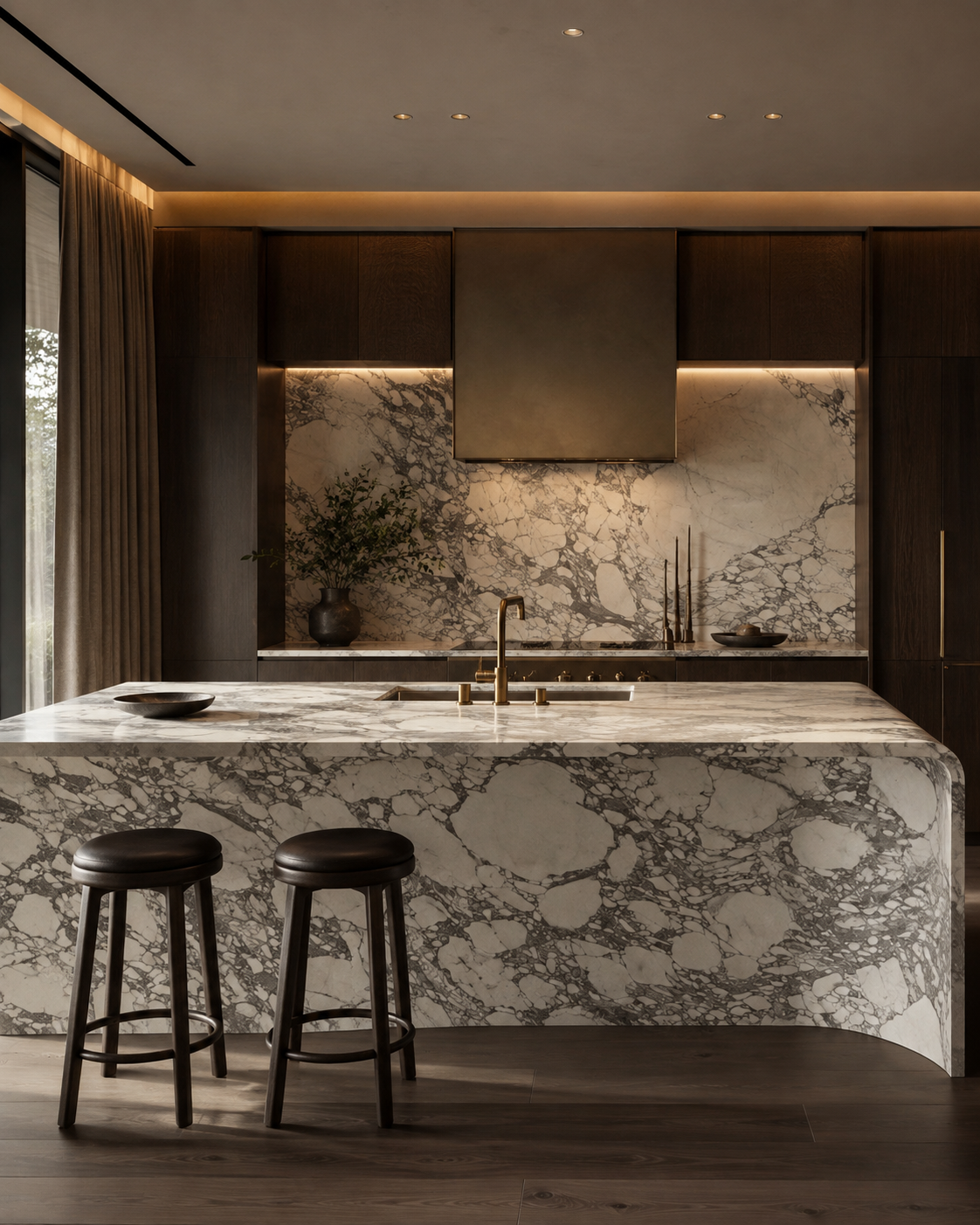
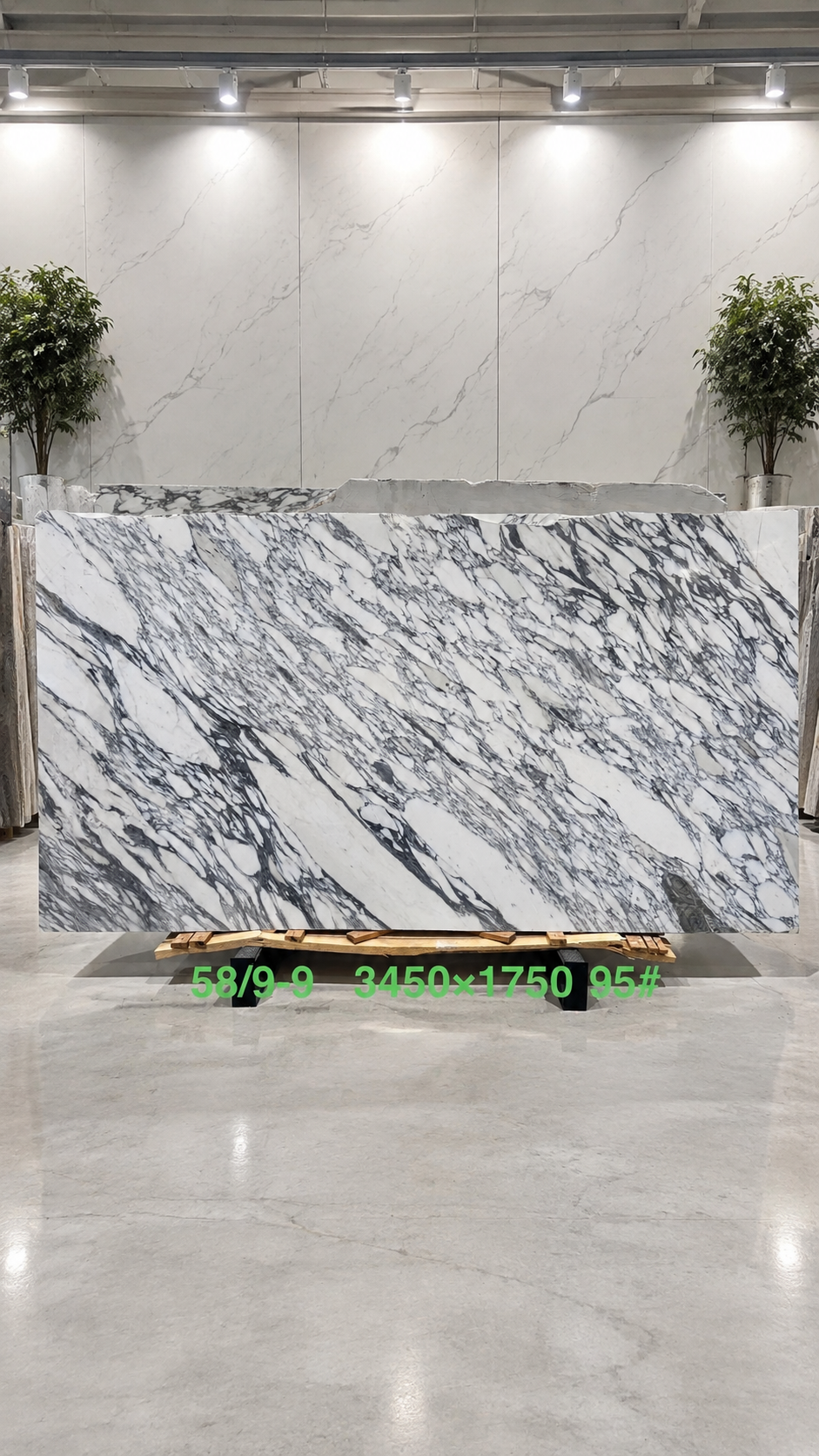
Arabescato is a classic Italian white marble, generally recognised by its white to soft ivory ground and flowing grey, charcoal, or blue-grey arabesque movement. It is more expressive than a quiet Carrara, but it still feels calm enough for a large kitchen, a bookmatched wall, or a vanity that needs to stay timeless.
The most effective use is to let its movement continue. A waterfall island, a long backsplash, or a framed shelf niche gives the veining enough surface to become part of the architecture. Pair it with pale oak for a softer look, or dark walnut and aged brass when you want more contrast.
A recent local reference for selected Arabescato was around US$1,000 per square metre. Sourcing the selected raw slab material through us in China was under US$500 per square metre. That is a material reference, not a finished installed price, and the exact pattern quality still matters enormously.
2. Rosso Levanto: the shortcut to a hotel-like interior
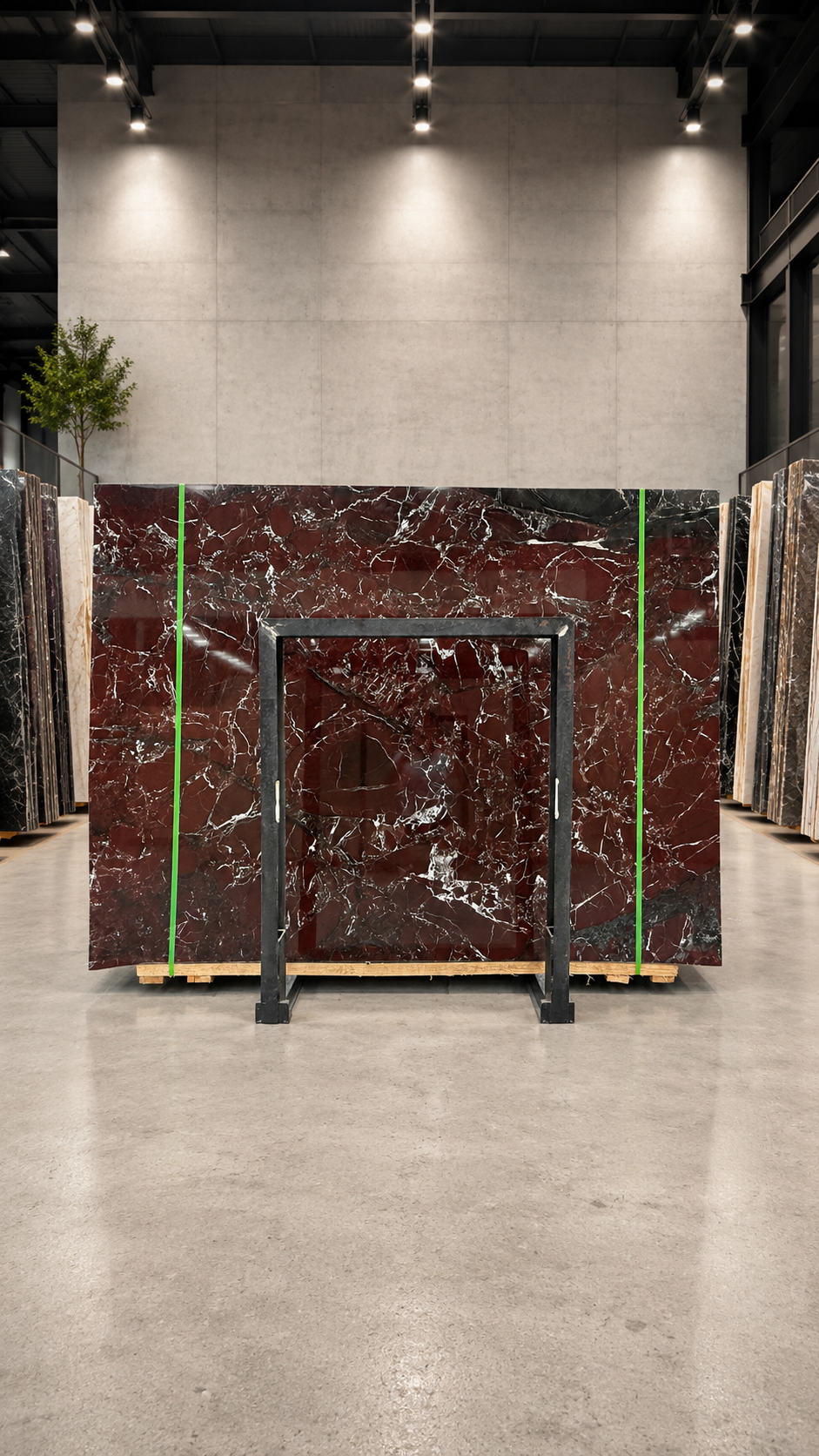
Rosso Levanto, also called Rosso Lepanto, is an Italian marble from Liguria. Its deep wine-red to amaranth ground is cut by irregular white calcite veining, sometimes with very dark areas. It feels rich before you add any decoration, which is why it works so well in boutique hotel bathrooms, bars, powder rooms, fireplaces, and feature walls.
This is not a stone to use timidly. A single framed splash can be beautiful, but a floor-and-wall composition or a large vanity lets the colour feel intentional rather than ornamental. Warm brass, black oak, smoky mirror, and low lighting are natural partners.
The recent local reference was around US$800 per square metre. We can source selected Rosso Levanto material at around US$300 per square metre from China. The difference is substantial, but it is only meaningful when you compare the actual red depth, white veining, thickness, repair level, and usable slab size.
3. Verde Alpi: dark green marble with real depth
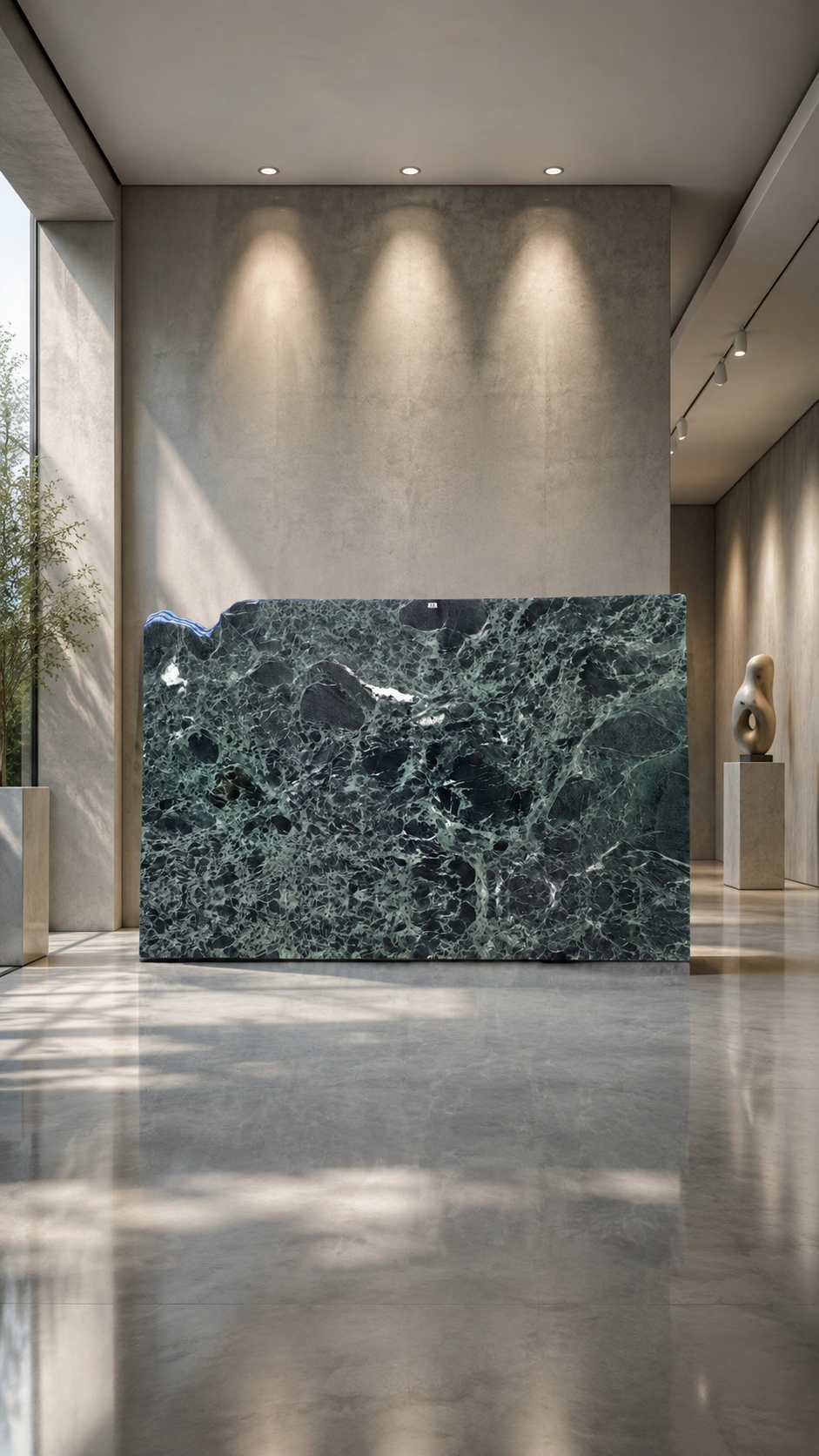
Verde Alpi is another historic Italian marble, associated with the Alpine region of northern Italy. It can range from near-black forest green to clearer dark green, with lighter green, white, and mineral-looking veins. In a polished finish it has a deep reflective quality; honed or brushed, it becomes quieter and more tactile.
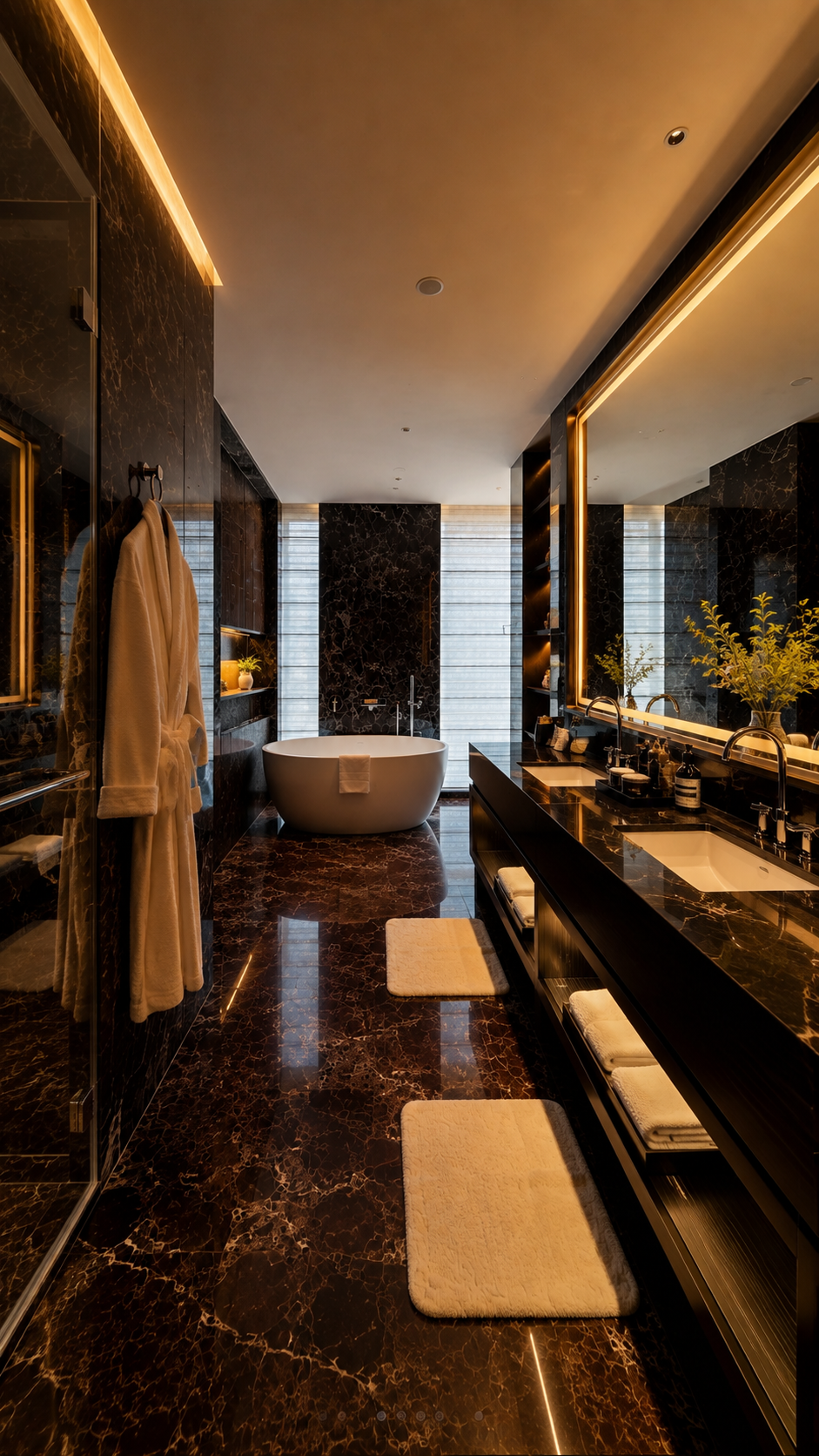
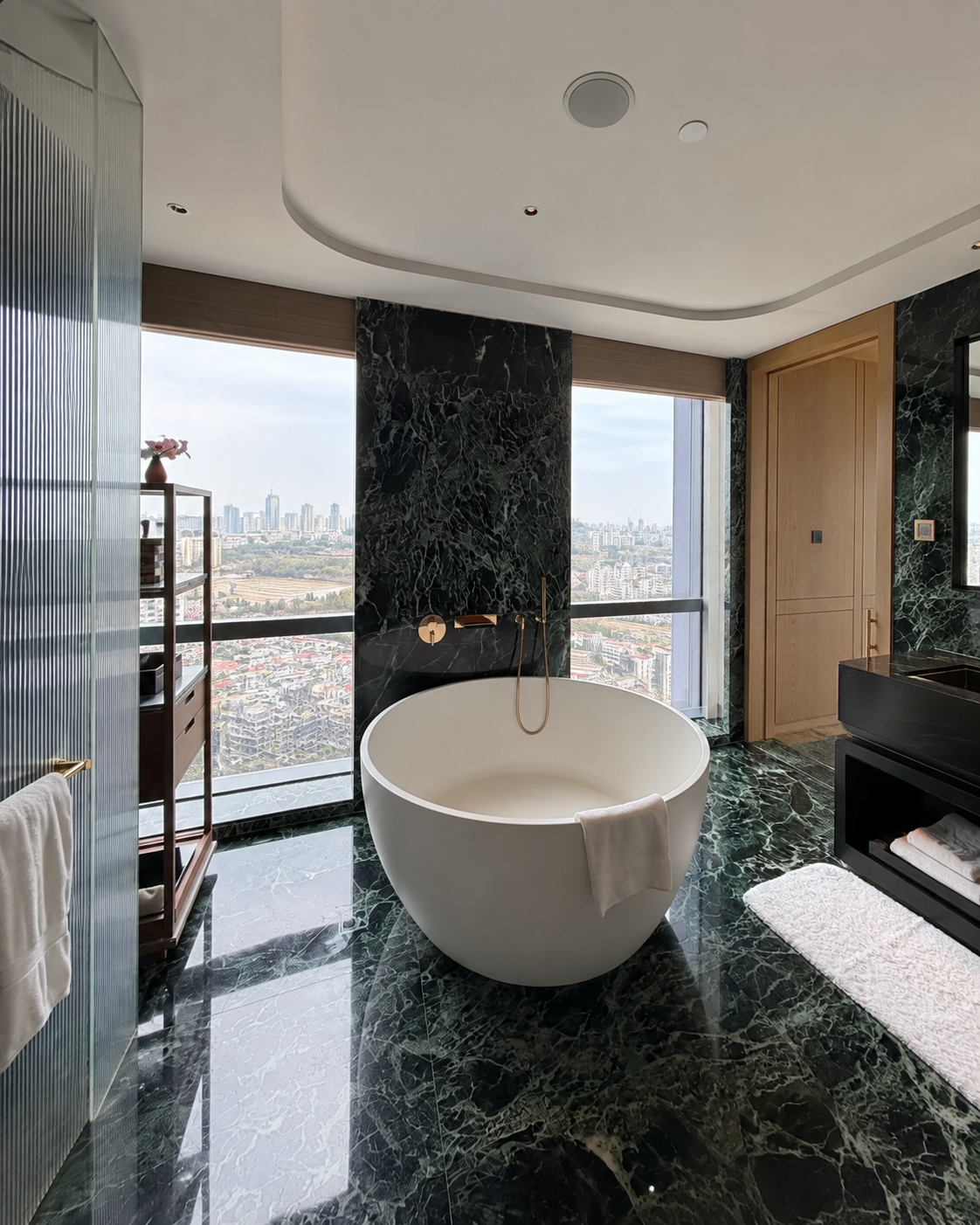
It is especially strong in bathrooms, bars, entrance spaces, and fireplace surrounds. In a bathroom, green marble floor and wall panels can make a plain white tub look sculptural. In a living room, a deep green fireplace or plinth adds colour without relying on a bright accent wall.
The local reference for a selected Verde Alpi was about US$800 per square metre. Through us in China, selected raw slab material is under US$500 per square metre. As with all natural stone, a darker, more consistent green and larger usable slabs will affect the final selection price.
Why source price and local price can be so far apart
Italian stone still has to travel through a supply chain before it reaches a local showroom. Importing, stocking, displaying, distribution, and retail all add cost. Working from China does not change the Italian origin of these marbles; it changes the sourcing route and makes it possible to select from wholesale stock closer to the processing and export side of the trade.
The figures above are recent raw-material references for selected slabs. They do not include fabrication, packing, freight, local taxes, customs charges, or installation. For a real project, we first confirm the exact slabs and the material quantity, then quote cutting and logistics separately so the scope stays visible.
Choose the mood first, then approve the full slabs
Choose Arabescato if you want light, movement, and a classic Italian white marble with more character than a plain Carrara. Choose Rosso Levanto if you want a warm, moody, hotel-like statement. Choose Verde Alpi if you want a deep natural colour that makes a bathroom or bar feel collected and architectural.
Then ask for real full-slab photos and video. Natural stone is not wallpaper: the individual slab is the design. Send John an inspiration image, rough dimensions, and your country, and he can check the current bundles and help you compare the material with a clear project scope.
Public price references
Italian supplier reference for Arabescato Corchia from the Apuan Alps in Tuscany and its flowing grey-and-white movement.
Italian supplier reference for Rosso Levanto from Liguria, its wine-red to amaranth ground, and irregular white veining.
Italian supplier reference for Verde Alpi as a dark green marble with black through lighter veining and polished, honed, or brushed finishes.
Questions people usually ask
Are Arabescato, Rosso Levanto, and Verde Alpi all Italian marbles?
Yes. Arabescato is associated with the Apuan Alps of Tuscany, Rosso Levanto comes from the Levanto area of Liguria, and Verde Alpi is associated with northern Italy and the Alpine region. Trade names can cover visual variation, so always confirm the actual slabs you are buying.
Do these prices include fabrication and shipping?
No. The article gives recent raw-slab material references per square metre only. Fabrication, packing, freight, local taxes, customs charges, and installation depend on the drawings and destination and are priced separately.
Which of the three marbles is best for a kitchen?
Arabescato is the most natural fit when you want a bright kitchen with statement movement. Rosso Levanto and Verde Alpi can also be used for kitchens, but they create a much darker, more dramatic result. All three are marble, so understand the possibility of etching and patina before choosing them for hard-working food-prep areas.
How do I know I am comparing the same stone quality?
Compare full-slab photos or video, origin, thickness, finish, background colour, pattern, repairs, slab dimensions, and usable yield. A material name and a price alone are not enough to make two offers equivalent.