3 Timeless Countertop Stones That Create Different Moods
Travertine brings texture, Taj Mahal adds quiet warmth, and Calacatta Viola supplies the boldest contrast. Here is what changes when each one becomes a countertop.
Public price snapshot
Recent starting references for comparable raw slabs
| Market | Public price | What it covers |
|---|---|---|
| Travertine | About US$400/m² (US$37.16/ft²) locally vs from US$200/m² (US$18.58/ft²) through China | Raw-slab material reference only. Colour, cut direction, pore structure, filled or unfilled finish, slab dimensions, treatment, usable yield, logistics, and fabrication affect the final quote. |
| Taj Mahal Quartzite | About US$500/m² (US$46.45/ft²) locally vs from US$250/m² (US$23.23/ft²) through China | Raw-slab material reference only. Grade, background colour, movement, slab size, repairs, finish, usable yield, packing, freight, fabrication, and installation affect the final project price. |
| Calacatta Viola Marble | About US$1,400/m² (US$130.06/ft²) locally vs from US$600/m² (US$55.74/ft²) through China | Raw-slab material reference only. Origin, creamy background, burgundy colour, pattern scale, matching potential, repairs, dimensions, and usable yield strongly influence price. |
The same neutral palette can produce three completely different rooms
Travertine, Taj Mahal, and Calacatta Viola can all sit beside warm timber and neutral cabinetry, but their personalities are very different. Travertine is architectural and tactile, Taj Mahal is calm and fluid, and Calacatta Viola is graphic and unmistakable.
Practicality also changes. Travertine needs the right decision about filling and finish; Taj Mahal is usually chosen as the hard-working quartzite option; Calacatta Viola is marble and rewards owners who accept etching and patina as part of living with it.
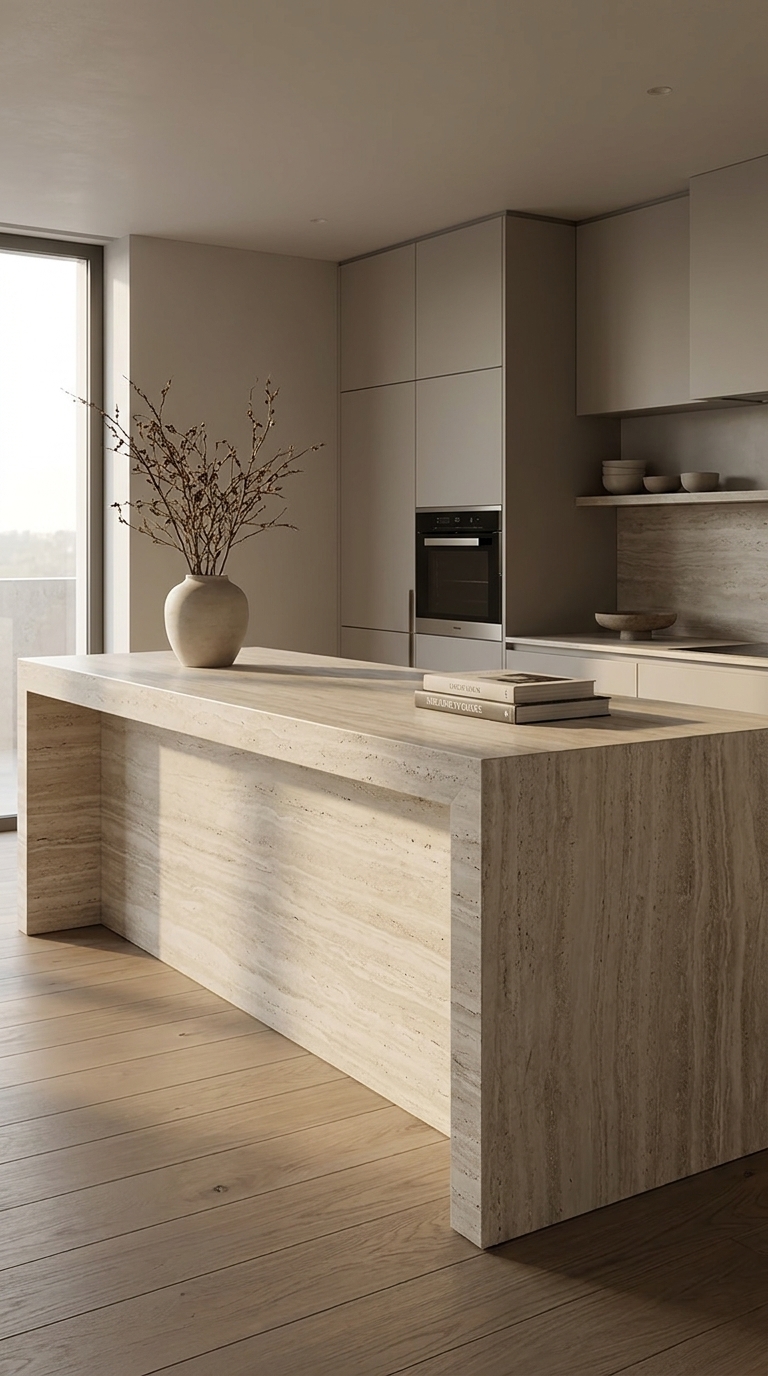
1. Travertine: several colours, cuts, and surface textures
Travertine is not one uniform beige stone. It can appear cream, ivory, silver-grey, walnut, gold, or rust-toned, and vein-cut material looks very different from cross-cut material. Filling, honing, brushing, tumbling, and leaving selected pores open can create very different textures from the same stone family.
For surfaces such as countertops, islands, and vanities, I would normally ask the fabricator to fill the holes. Open pores can collect food, oil, water, soap, and dirt, making a frequently used horizontal surface harder to clean.
A recent local reference may be around US$400 per square metre (US$37.16 per square foot), while sourcing through China starts around US$200 per square metre (US$18.58 per square foot). Confirm whether the quote includes filling, finish, reinforcement, fabrication, and sealing.
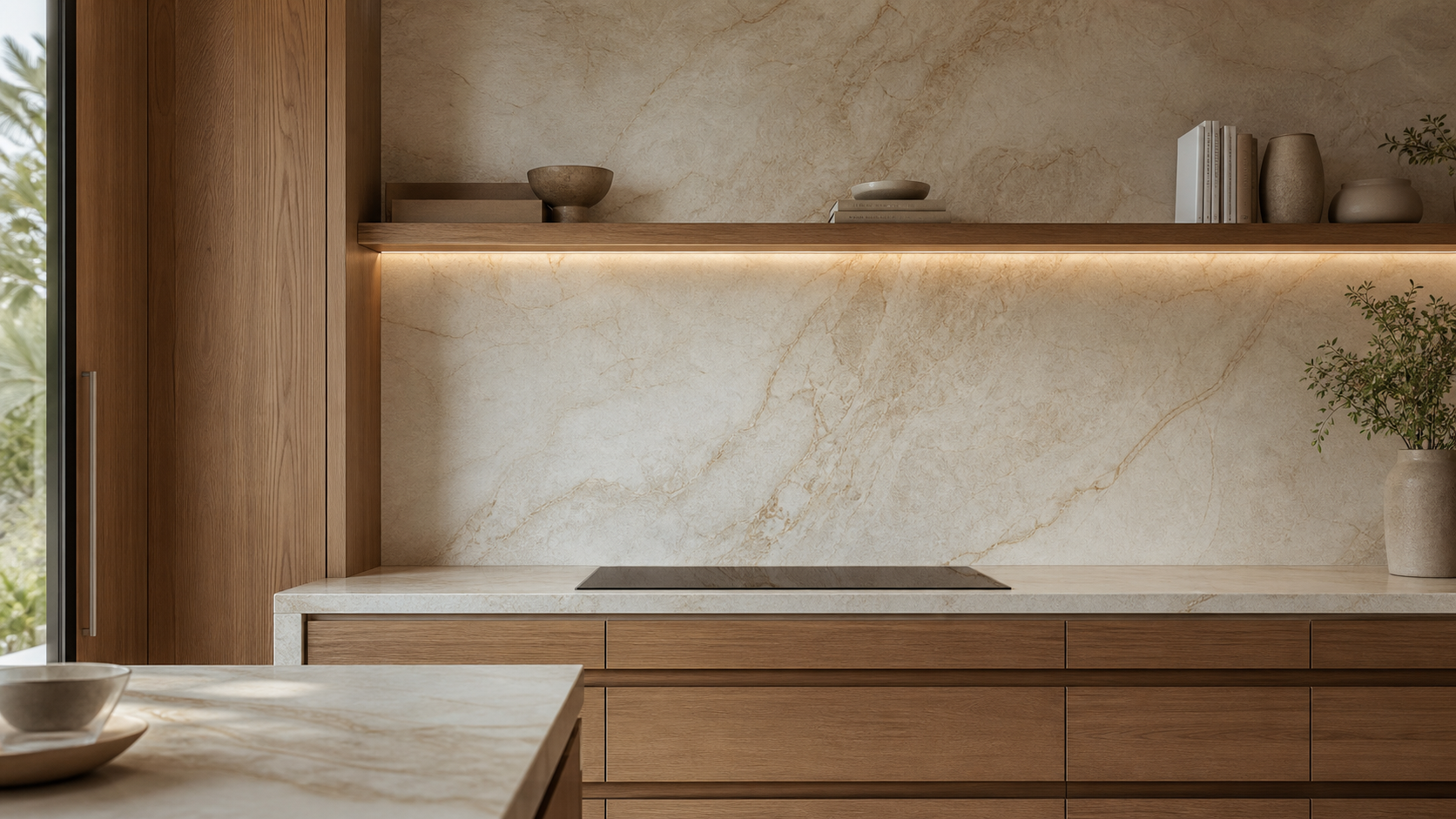
2. Taj Mahal Quartzite: the practical warm neutral
Taj Mahal brings cream, beige, taupe, and occasional gold into soft flowing movement. It has enough variation to feel natural without forcing the rest of the kitchen to compete for attention.
True quartzite is generally better suited than marble to scratching and everyday kitchen acids, which is why Taj Mahal is so often chosen for busy counters. It still needs correct fabrication, sensible care, and an appropriate sealing plan.
A recent local reference may be around US$500 per square metre (US$46.45 per square foot), while sourcing comparable raw slabs through China starts around US$250 per square metre (US$23.23 per square foot).
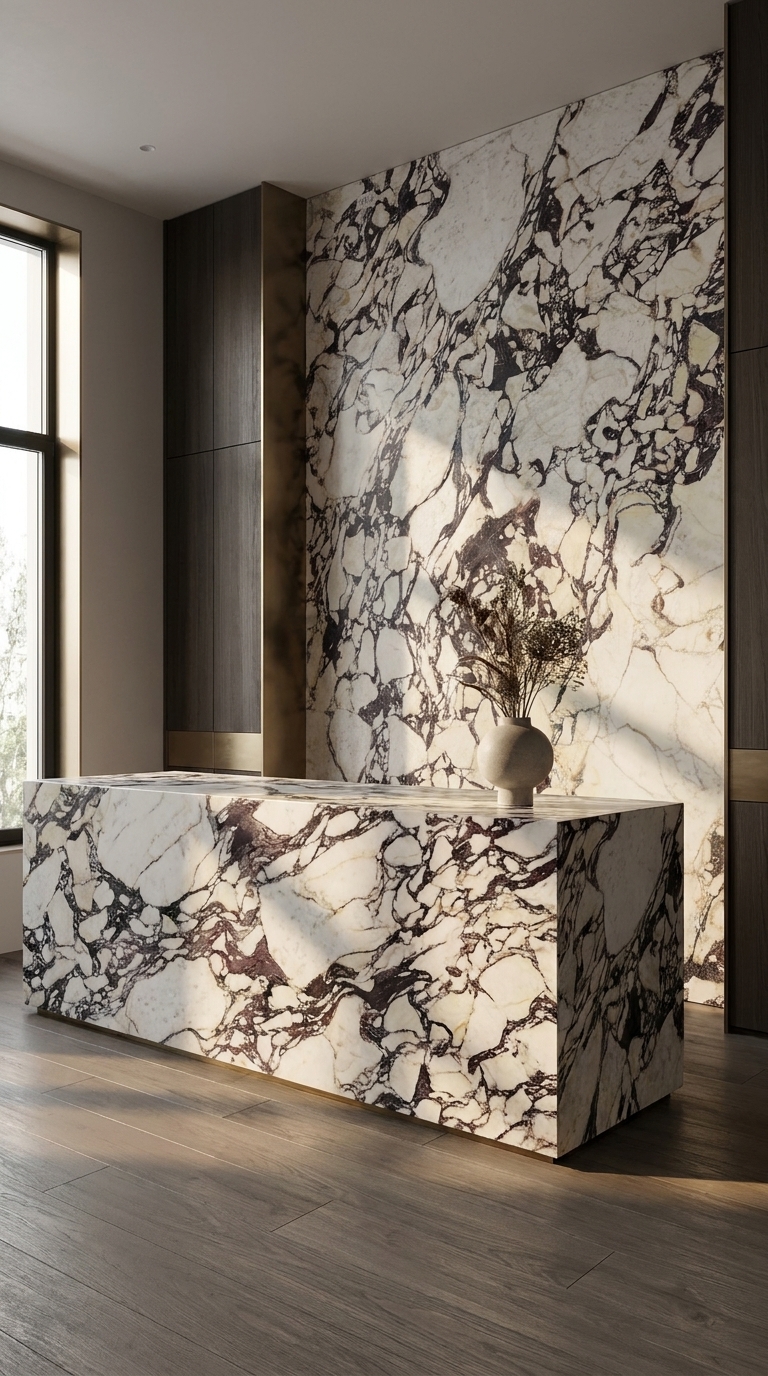
3. Calacatta Viola: timeless because it refuses to disappear
Calacatta Viola combines a creamy field with burgundy, plum, and violet movement. It can suit modern, traditional, and old-world rooms, but it always asks to be noticed.
It is not the most forgiving choice for a heavily used kitchen because acidic foods can etch marble. It can still work beautifully on an island, bar, vanity, fireplace, or feature surface when the owner understands the maintenance and chooses it for the appearance.
A recent local reference may be around US$1,400 per square metre (US$130.06 per square foot), while sourcing through China starts around US$600 per square metre (US$55.74 per square foot).
Decide whether you want texture, balance, or drama
Choose travertine for texture and architectural warmth, Taj Mahal for a versatile hard-working neutral, and Calacatta Viola for maximum visual impact. The right answer depends on how the surface will be used and how much natural variation and ageing you want to see.
Before ordering, approve the exact slabs, finish sample, filled or unfilled treatment, edge profile, cut-outs, vein direction, and labelled cutting layout. Confirm the complete price scope before comparing a local quote with a sourcing quote.
Questions people usually ask
Should travertine countertop holes be filled?
For countertops, islands, and vanities, filling is usually the more practical choice because open pores can collect food, oils, water, soap, and dirt. Confirm the fill colour and finish with the fabricator.
Can travertine be used in wet areas?
It can, but the complete assembly needs suitable stone selection, waterproofing, drainage, ventilation, filling or joint treatment, sealing, and maintenance. Stone alone is not the waterproofing system.
Which one is best for a heavily used kitchen?
A properly identified true quartzite such as Taj Mahal is generally the most practical starting point of these three, although fabrication, finish, sealing, and daily care still matter.